
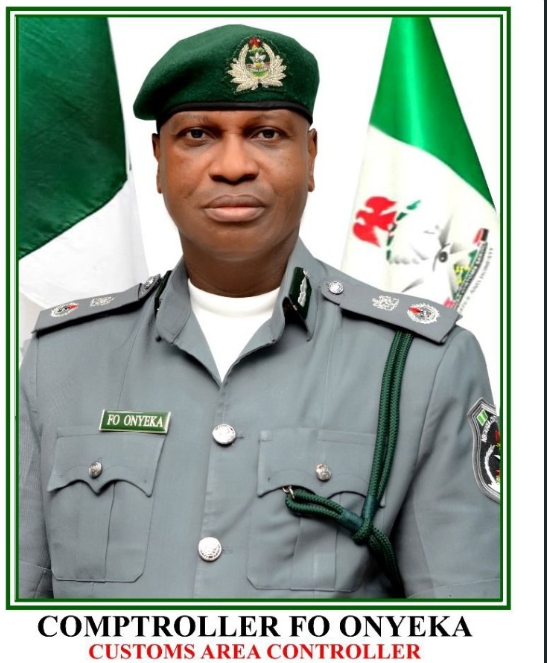
At Tin-Can Island Port, operational performance is increasingly being defined not by enforcement alone but by a deliberate fusion of collaboration, clarity and institutional coordination. Under the leadership of Comptroller Frank Okechukwu Onyeka, the Command has repositioned stakeholder engagement as a core driver of efficiency, compliance and revenue growth.
This evolving approach is reflected in the Command’s impressive revenue profile, with the N120.46 billion generated in February 2026 standing as a clear indicator of progress. Yet beyond the figures lies a more profound transformation anchored on sustained interaction with key actors across the maritime ecosystem.
Onyeka has placed engagement at the centre of enforcement strategy, fostering regular dialogue with freight forwarders, licensed customs agents, terminal operators and importers. This has helped reshape the compliance environment into one defined by transparency and predictability.
Rather than relying heavily on punitive enforcement measures, the Command has prioritised process clarity and open communication. This shift has reduced ambiguity in procedures and strengthened trust between Customs and port users.
The outcome is a growing culture of voluntary compliance. Stakeholders who once navigated opaque systems are now more willing to align with regulatory expectations, leading to fewer disputes and faster cargo clearance processes.
In a port environment where delays often translate into significant revenue losses, this alignment between regulator and operator has enhanced both operational efficiency and fiscal outcomes.
A notable strength of Onyeka’s model lies in its institutional depth. Engagement has moved beyond routine meetings to structured partnerships with freight forwarding associations and port user groups, creating a platform for continuous feedback and rapid problem-solving.
These feedback mechanisms have enabled the Command to identify operational bottlenecks in real time and implement targeted interventions, ensuring that challenges are addressed before they escalate into systemic issues.
The benefits are particularly evident in anti-smuggling operations. Enhanced intelligence sharing between Customs and industry players has improved the identification of suspicious consignments and curtailed opportunities for concealment and under-declaration.
Improved documentation practices among compliant traders have further tightened the system, fostering a more transparent trade environment where illicit activities are increasingly difficult to sustain.
Equally important is the Command’s collaboration with other government agencies within the port. Coordinated multi-agency operations have reduced duplication, streamlined inspections and ensured that enforcement actions are both swift and consistent.
This integrated framework has strengthened the port’s control architecture, closing institutional gaps that could otherwise be exploited by illicit trade networks.
Technology has also played a critical role in reinforcing these gains. The deployment of the Vehicle Identification Number valuation platform has enhanced accuracy in duty assessment while boosting importer confidence through consistent valuation standards.
By reducing discretionary processes, the system has minimised friction points that often undermine relationships between Customs and stakeholders, further strengthening compliance.
Onyeka’s strategy extends to information management and public engagement.
Capacity-building initiatives for maritime journalists underscore a recognition that transparency and informed reporting are vital to institutional credibility and stakeholder trust.
Industry observers maintain that this layered engagement approach has directly influenced revenue performance. When processes are clear and enforcement is consistent, compliance improves organically, expanding the revenue base while reducing enforcement costs.
Beyond immediate gains, the long-term impact is profound. The Command is embedding a culture of shared responsibility, positioning Customs not merely as an enforcement body but as a central coordinator within the trade facilitation ecosystem.
This transformation is particularly significant as Nigeria intensifies efforts to boost non-oil revenue. Efficient port operations remain critical to economic growth, and Tin-Can Island Port is emerging as a model of how collaboration can drive sustainable results.
Ultimately, Onyeka’s leadership underscores a broader lesson in modern customs administration. Success in complex trade environments depends not only on control mechanisms but on the ability to build trust, align interests and sustain meaningful engagement.
At Tin-Can Island Port, that philosophy is delivering measurable outcomes, redefining operational standards and strengthening the foundation for long-term revenue resilience in Nigeria’s maritime sector.