
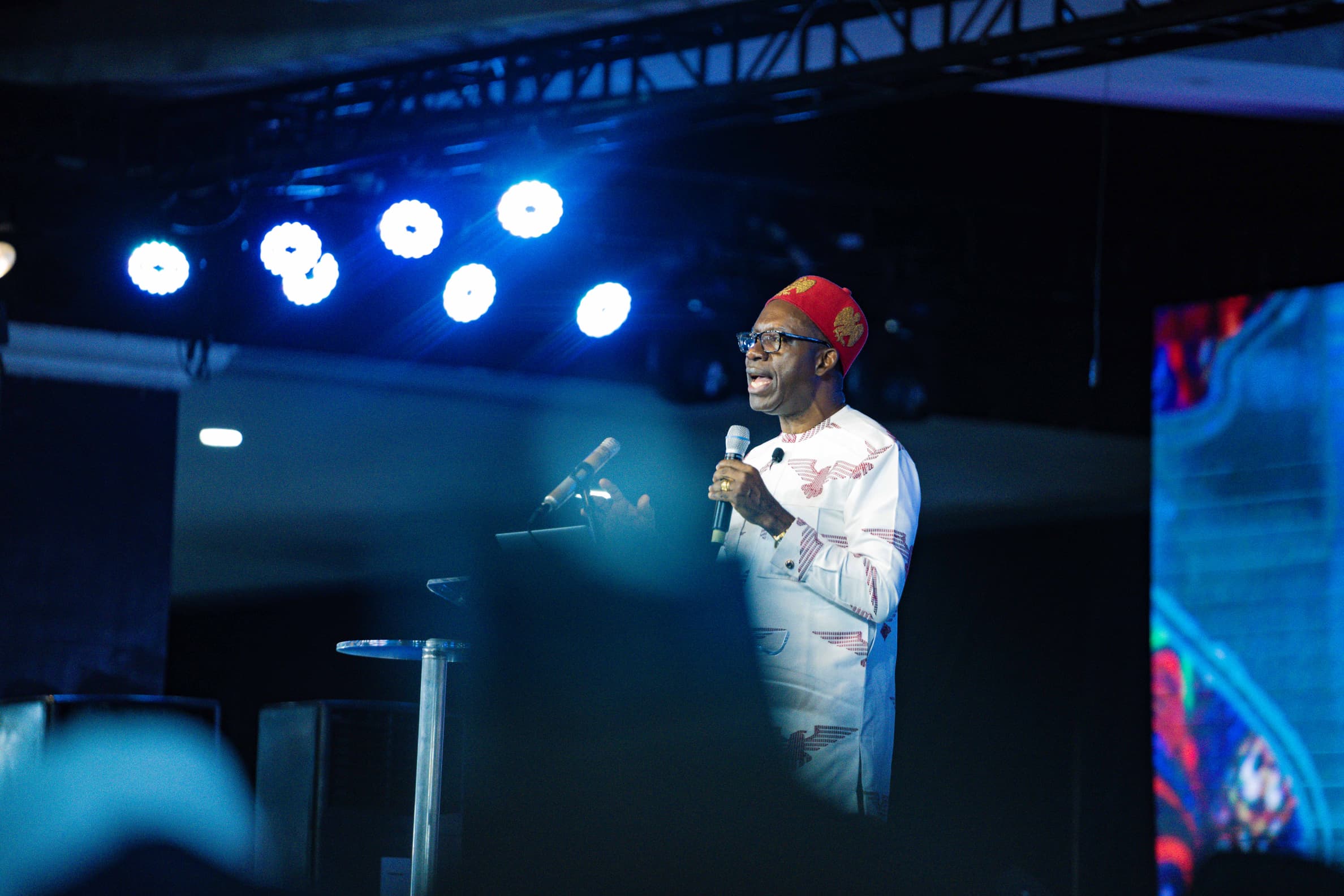
As the nation marked Democracy Day on Thursday, June 12, 2025, Anambra State Governor, Prof. Chukwuma Charles Soludo, delivered a rousing call for ethical rebirth and progressive reforms during a keynote address at The Platform, a national policy dialogue hosted in Lagos.
The event brought together notable leaders and policy thinkers, including President Ameenah Gurib-Fakim of Mauritius, former INEC Chairman Prof. Attahiru Jega, and former Lagos State Governor Babatunde Raji Fashola. Each speaker reflected on Nigeria’s democratic journey and the urgent need for institutional reforms.
Speaking on the theme *“Rebuilding Our Nation,”* Governor Soludo emphasized that Nigeria’s aspiration to true nationhood remains a work in progress. Referencing the national anthem’s plea for a nation where “no one is oppressed,” he called for a deliberate commitment to building unity amid ethnic, religious, and cultural diversity.
The Governor acknowledged the economic reforms introduced by the current administration under President Bola Ahmed Tinubu, describing them as bold and necessary steps backed by institutions such as the IMF and World Bank. While acknowledging hardships, he urged critics to offer constructive alternatives rather than engage in endless lamentation.
On Nigeria’s political system, Soludo decried the absence of ideology in contemporary party politics, likening the current state to a “Nigerian Elite Plc” dominated by opportunism. He called for the creation of a new *Progressive People’s Alliance (PPA)* — a coalition of like-minded, development-driven parties to offer a credible alternative ahead of the 2027 elections.
“We must return to principled, ideological politics where parties stand for clear policy direction, not personalities,” Soludo said, citing the legacy of political thought during Nigeria’s second and third republics.
He also called for a national ethical and value renaissance, urging Nigerians to uphold values of hard work, integrity, and discipline over corruption and materialism. He highlighted Anambra’s own reforms in areas such as security, transparency, and moral education. Measures such as the Homeland Security Law and the criminalisation of money ritual practices were cited as examples of his administration’s commitment to value-based governance.
Describing himself as a pan-Nigerian at heart, Soludo stressed the importance of promoting inclusive citizenship, religious tolerance, and national cohesion. He pointed to Anambra’s inclusive governance model as a case study for bridging ethnic and religious divides.

In his closing remarks, the governor urged civil society, political leaders, religious groups, and everyday citizens to unite in challenging corruption and championing progressive values. “This is a call for a mass movement — not of protest, but of purpose,” he stated.
Governor Soludo’s address was widely received as a timely intervention, offering a forward-looking blueprint for national transformation built on unity, ethical governance, and progressive politics.