
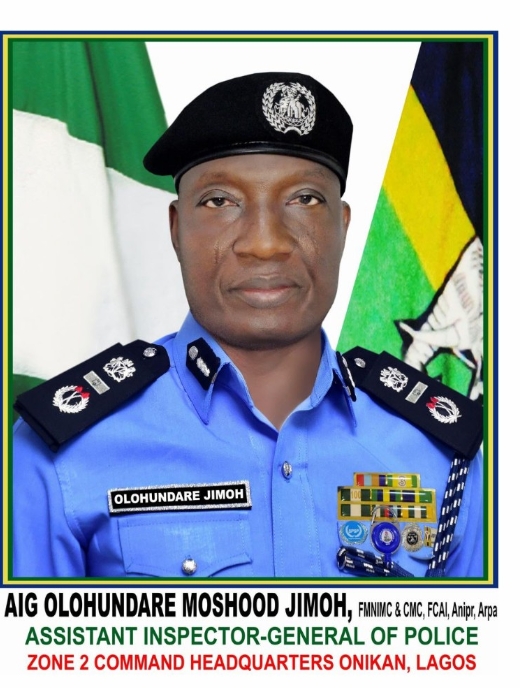
Fresh official records have provided new insight into the investigation of the Ajiran double murder, with documents indicating that Assistant Inspector General of Police, Zone 2, AIG Olohundare Moshood Jimoh, acted within the framework of the law and under directives from the Inspector General of Police.
The records have emerged amid allegations of corruption and abuse of office levelled against the senior police officer on social media.
However, documents reviewed by this newspaper suggest that the investigation was initiated through established institutional procedures rather than personal interest.
The records show that the matter originated from a formal petition submitted to the Inspector General of Police by Chief Rotimi Williams’ Chambers on behalf of the Ojomu Chieftaincy Family of Ajiran.
Following the petition, Police Headquarters reportedly directed the then Lagos State Commissioner of Police, Olohundare Jimoh, to investigate the allegations surrounding the killings.
An official communication dated January 8, 2026, reportedly conveyed the Inspector General’s directive, underscoring that the investigation was carried out in compliance with lawful instructions.
The documents indicate that the police hierarchy, rather than an individual officer, initiated the investigative process.
The controversy intensified after activist Martins Vincent Otse, popularly known as VeryDarkMan, publicly accused Jimoh of corruption, bias and abuse of office.
While the allegations generated widespread public discussion, no documentary material has been publicly presented to support the accusations.
Official investigation files reportedly contain statements from eyewitnesses and relatives of the deceased, detailing the circumstances surrounding the deaths of Prince Ademola Akinloye and Sheriff Ishola Salami.
Investigators also obtained statements from two arrested suspects identified as Shafi Fatai, also known as Fabo, and Yusuf Ismaila, alias Bariga.
According to the records, both suspects allegedly implicated businessman Hammed Tajudeen Akanbi in the planning and financing of the killings.
Legal practitioners maintain that the credibility and admissibility of those statements remain issues for determination by the courts during trial.
Nevertheless, the documents suggest investigators relied on multiple strands of evidence in building the case.
The investigation file also reportedly contains additional witness accounts alleging attempts to influence the release of suspects and halt the investigation through negotiations connected to a disputed community land matter.
Investigators further referenced an alleged recorded telephone conversation considered relevant to the inquiry.
Judicial records attached to the investigation indicate that Magistrate Court No. 3, Ogba, initially granted police approval to arrest and remand the suspect while investigations continued.
Although that order was later nullified on procedural grounds, the records show that the Federal High Court subsequently issued a separate warrant authorising the suspect’s arrest over allegations of conspiracy and murder.
Legal analysts note that the Federal High Court order remains operative unless overturned by a court of competent jurisdiction.
The documents also dispute claims that AIG Jimoh personally handled the suspect following his arrest.
According to the records, the suspect was arrested by INTERPOL authorities in the Republic of Benin before being transferred to INTERPOL Nigeria and later to the State Criminal Investigation Department, Panti, in accordance with established procedures.
The records state that Jimoh’s involvement was limited to facilitating lawful coordination between relevant police formations for the suspect’s transfer.
No evidence contained in the documents suggests any improper personal engagement between the senior police officer and the suspect.
The Centre for Human and Socio Economic Rights also commended the professionalism displayed during the investigation while urging officers involved in the prosecution to maintain fairness, neutrality and strict adherence to due process.
Similarly, the National Patriots Movement of Nigeria said the emerging documentary evidence has strengthened confidence in AIG Jimoh’s integrity, professionalism and unwavering commitment to justice.
In a statement signed by its President, Princess G. Adebajo Fraser, MFR, the organisation described Jimoh as a seasoned police officer whose career has been defined by discipline, intelligence led policing and respect for the rule of law.
The group stressed that democratic institutions are strengthened when allegations are subjected to documentary scrutiny and judicial review rather than public speculation.
It therefore urged Nigerians to allow the courts to determine the issues before them, insisting that credible evidence, not social media narratives, remains the foundation of justice and accountability.