
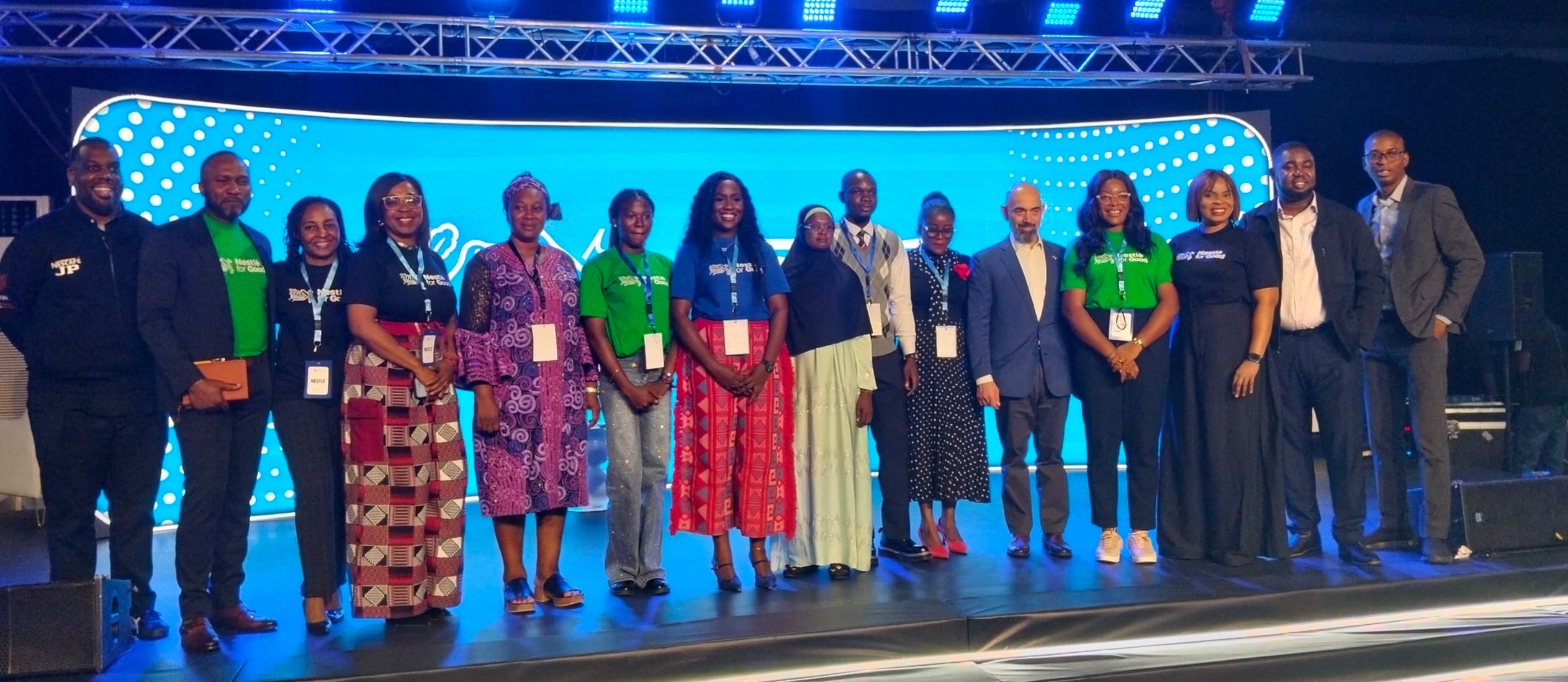
The 2026 Nestlé for Good Summit in Lagos opened a new chapter in Nigeria’s conversation around nutrition, sustainability and inclusive economic growth as stakeholders demanded stronger integration between food systems, healthcare, agriculture and environmental policy.
Held Thursday at the Landmark Event Centre, Oniru, the summit convened leaders from government, healthcare, development organisations, academia, civil society and the private sector.
The gathering moved beyond conventional nutrition advocacy and evolved into a broader national conversation on sustainable development, resilient communities and economic inclusion.
Participants examined practical pathways for strengthening nutrition outcomes, agricultural productivity, climate resilience and community livelihoods across Nigeria.
The summit featured keynote addresses, panel discussions, impact showcases and policy conversations centred on nutrition, communities and environmental sustainability.
Discussions also highlighted how Nestlé’s Creating Shared Value framework is being deployed to support healthier lives and stronger communities across Nigeria and other African countries.
During a fireside session, the Head of Corporate Communications, Public Affairs and Sustainability for Central and West Africa at Nestlé, Patricia Ekaba, described the Nestlé for Good initiative as a strategic movement designed to deepen social impact and transparency.
She explained that the “Nestlé for Good” initiative represents a shift towards transparency, accountability and impact driven storytelling.
Speaking during the session, Patricia Ekaba said the initiative goes beyond products and focuses on people, communities and sustainable development.
According to her, the campaign is designed to uncover the often unseen impact of Nestlé’s interventions across communities in Africa.
She said the initiative aligns closely with Nestlé’s Creating Shared Value model, which integrates business growth with measurable social and environmental outcomes.

Ekaba noted that the company remains committed to amplifying the voices and experiences of programme beneficiaries across the region.
She cited examples from Ghana and Côte d’Ivoire where beneficiaries recorded significant improvements in livelihoods through Nestlé supported interventions.
According to her, such interventions help restore confidence, dignity and long term economic stability among vulnerable populations.
She stressed that the company’s interventions are designed as sustainable development initiatives rather than short term charity projects.
“This is not philanthropy. If it were, these programmes would not have survived for decades,” she stated.
Managing Director and Chief Executive Officer of Nestlé Nigeria Plc, Mr. Wassim Elhusseini, expanded discussions by urging stakeholders to embrace systems thinking in addressing nutrition challenges.
He argued that nutrition outcomes are directly connected to the efficiency and resilience of entire food ecosystems.
According to him, nutrition does not begin at the factory level and does not end with products displayed on supermarket shelves.
Elhusseini said Nestlé’s investments in regenerative agriculture, youth empowerment, circular economy initiatives and water efficiency are aimed at building resilient communities.
He added that stronger food systems remain critical to long term national development and public health improvement.
Delivering the keynote address, Lagos State Commissioner for Commerce, Cooperative, Trade and Investment, Mrs. Folashade Ambrose Medebem, called for urgent reforms in food accessibility and affordability.
She stressed that nutritious food must remain consistently available and affordable for households across all income levels.
The commissioner maintained that food security cannot be achieved without stronger collaboration between government institutions and private sector operators.
She also urged policymakers and investors to align market systems with nutrition and sustainability objectives.
On agricultural development, Agric Services Manager at Nestlé Nigeria, Edwin Aguda, disclosed that the company’s grains programme in Northern Nigeria currently supports over 18,000 farmers.
He revealed that the target is to expand participation to about 25,000 farmers by 2027.
Aguda explained that integrating smallholder farmers into formal supply chains remains essential for improving rural livelihoods and boosting food security.
Environmental sustainability also dominated conversations during the summit.
Nestlé Nigeria Sustainability Manager, Chinwe Obi, said sustainability has become a core business priority rather than a peripheral corporate responsibility initiative.
She disclosed that Nestlé has integrated 50 per cent recycled plastics into its water bottle production process.
Obi further revealed that the Food and Beverage Recycling Alliance has expanded from four member organisations to about 43 organisations.
According to her, more than 400,000 tonnes of plastic waste have been recovered through the alliance since 2019.
She added that thousands of additional tonnes have also been recovered through direct sustainability partnerships and recycling collaborations.
A technical panel session themed “Nutrition Across the Life Stages: Closing Nutrition Gaps Through Coordinated Approach” shifted attention to public health and governance challenges.
Programme Team Lead at the Nutrition Society of Nigeria, Amaka Nwaora, expressed concern over worsening nutrition indicators across the country.
She identified rising cases of anaemia among women, childhood stunting and increasing non communicable diseases as major concerns.
Panelists warned that Nigeria is now facing a dual burden of undernutrition alongside rising obesity, diabetes and hypertension.
Experts attributed the growing health crisis to poor dietary patterns, weak food systems and inadequate nutrition awareness.
The session also highlighted structural barriers including fragmented policy implementation, weak inter ministerial coordination and insufficient financing for nutrition programmes.
Beyond nutrition and health, the summit spotlighted human capital development and economic empowerment.
Beneficiaries of Nestlé supported programmes shared testimonies on how training and empowerment initiatives transformed their livelihoods.
A trader, Titilayo Abene, said financial literacy support improved her business confidence and economic independence.
Another beneficiary in the dairy value chain explained how structured support programmes strengthened household income and rural productivity.
A graduate of the Nestlé Technical Training Centre also recounted how the institution’s 18 month programme enhanced technical competence and leadership capacity.
The trainee revealed that the programme included international exposure in Switzerland focused on industrial sustainability and emissions reduction.
He described Nestlé as an organisation that promotes teamwork, inclusion and professional growth.
The summit ended with a strong consensus that Nigeria’s food and nutrition challenges require integrated solutions connecting agriculture, health, education, environment and economic planning.
Stakeholders collectively called for stronger collaboration, sustainable financing mechanisms and effective policy implementation to improve long term national development outcomes.
They identified investments in maternal nutrition, child health, climate smart agriculture, youth empowerment and public private partnerships as critical pillars for building a healthier and more resilient Nigeria.
#Nestleforgood
@Nestlecwar