
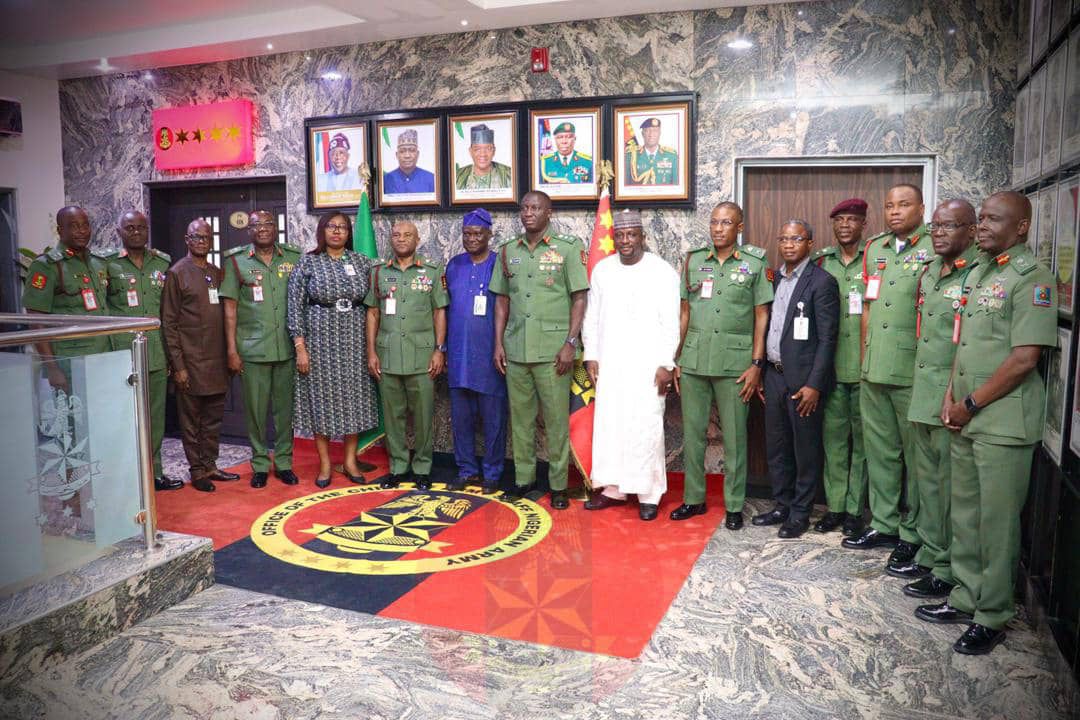
The Chief of Army Staff, Lieutenant General Waidi Shaibu, has declared that the effectiveness of medical services in the Nigerian Army hinges on the strict integration of administrative protocols and stronger inter agency collaboration.
Speaking at the Army Headquarters in Abuja on Tuesday, the army chief made the assertion while receiving the Managing Director and Chief Executive Officer of Defence Health Maintenance Limited, Surgeon Rear Admiral Azeeze Bayo Afolayan (Rtd), during a strategic engagement on healthcare reforms.
In a statement issued by Acting Director Army Public Relations, Colonel Appolonia Anele, the COAS underscored the urgency of building a responsive and modern healthcare system capable of supporting troops engaged in complex operations nationwide.
He noted that the evolving security landscape across the six geopolitical zones has placed increased pressure on military medical services, making the physical and psychological wellbeing of personnel a non negotiable priority.
Shaibu stressed that troop welfare must not end with active service, insisting that retired personnel deserve sustained support, particularly in accessing quality healthcare and financial stability after years of service.
He warned that many veterans face socio economic hardship upon retirement, a reality he described as unacceptable, adding pointedly that those who served the nation must not be left to struggle for survival.
Reaffirming the army’s long term commitment, the COAS advocated the creation of a structured welfare system that guarantees continuous care and dignity for ex service members.
He further described Afolayan as a valuable insider whose post service contributions highlight the importance of preserving institutional knowledge within the military system.
In his response, Afolayan called for the full institutionalisation of standard operating procedures across human resources and administrative units within military medical formations.
He explained that a transition from fragmented processes to a structured, policy driven system would enhance efficiency, ensure accurate personnel data management and remove bottlenecks that delay medical service delivery.
The Defence Health Maintenance boss also proposed an expanded use of secondary care providers, noting that a coordinated deployment of medical resources would improve access to specialist care for troops, especially those in high risk operational theatres, while reducing overall costs.