
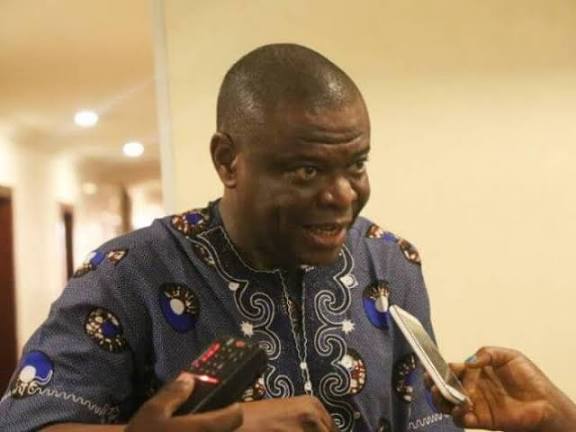
According to Mr. Jaye Gaskia, the ongoing conversation around Preventing and Countering Violent Extremism (PCVE) in Nigeria could not be timelier. Speaking at the Institute for Peace and Conflict Resolution’s (IPCR) Roundtable on PCVE, he noted that as Nigeria continues its transition between administrations, there is a pressing need to review and update the Policy Framework and National Action Plan (PFNAP) first developed in 2016 and approved in 2017.
Gaskia emphasized that the PFNAP, now over six years old, must evolve to reflect emerging dynamics of violent extremism globally, regionally, and nationally. “A review is urgent,” he said, “not only to capture lessons from our years of implementation but also to improve how we build safer and more resilient communities.”
He clarified that his presentation is drawn from his reflections as a PCVE practitioner, grounded in experience rather than formal research, yet rooted in the lived realities of Nigeria’s peacebuilding practice.
Gaskia outlined the four key objectives of the PFNAP, which serve as the backbone of Nigeria’s national PCVE strategy:
1. Institutionalise, mainstream, and coordinate PCVE programmes at national, state, and local levels.
2. Strengthen the justice system, ensuring respect for human rights and the rule of law.
3. Enhance community capacity to prevent and recover from violent extremism.
4. Integrate strategic communication across all PCVE programmes.
His paper focused primarily on the first objective, noting that it is the foundation upon which the others depend. “Without effective institutionalisation and coordination,” he explained, “none of the other objectives can be sustainably achieved.”
He also highlighted the PFNAP’s conceptual pillars, the Whole-of-Government and Whole-of-Society approaches, stressing that PCVE must involve every arm and level of governance as well as all sectors of society, including civil society, the media, academia, and the private sector.
According to Gaskia, the PFNAP provides three key strategies for institutionalising PCVE:
1. Building institutional capacity of stakeholders.
2. Strengthening coordination mechanisms and aligning PCVE efforts with related national strategies.
3. Encouraging research and knowledge sharing on the evolving nature of violent extremism.
“These strategies,” he explained, “are designed to ensure that stakeholders not only act together but also learn together.” The expected outcomes include better information flow, improved collaboration, and more evidence-based policy and programming.
Drawing from practical experience, Gaskia classified PCVE interventions into six broad categories:
1. Intervention Programmes – Targeting individuals at risk of radicalisation through counselling, education, mentorship, and psychosocial support.
2. Prevention Programmes – Focusing on awareness, civic education, interfaith dialogue, and trust-building with law enforcement.
3. Rehabilitation Programmes – Targeting radicalised individuals in custody or post-release through reorientation, vocational training, and reintegration support.
4. Reintegration Programmes – Ensuring successful re-entry of reformed individuals into communities.
5. Rehabilitation, Reconstruction, and Resettlement – Providing long-term support for victims and displaced persons through rebuilding and livelihood restoration.
6. Strategic Communications – Developing positive narratives and countering extremist propaganda through coordinated, evidence-based messaging.
Gaskia explained the concepts underpinning PCVE implementation:
Institutionalisation, he said, means making PCVE an integral part of national and institutional systems “not as a project, but as a permanent practice.”
Mainstreaming involves embedding PCVE values and approaches within everyday institutional functions so that preventing extremism becomes “everyone’s business.”
Coordination refers to the integration and synchronization of actions among government agencies and partners through joint planning, training, programming, and monitoring.
“True coordination,” he noted, “must operate at three levels, the strategic, managerial, and operational with all working in harmony.”
Gaskia acknowledged notable progress since the PFNAP’s approval in 2017. The Office of the National Security Adviser (ONSA), through the National Counter Terrorism Centre (NCTC) and its PCVE Directorate, has been leading coordination efforts.
Key institutional milestones include:
The establishment of the National PCVE Implementation Steering Committee (2020/2021).
The formation of the Inter-Agency Strategic Communication Committee.
The active role of civil society through the Partnership Against Violent Extremism (PAVE) Network, which represents CSOs in national PCVE structures.
The National Monitoring and Evaluation Framework for PCVE, developed and launched in 2021.
Despite these gains, Gaskia highlighted persistent challenges, including weak institutional capacity at state and local levels, limited funding, and insufficient coordination among stakeholders.
Gaskia’s reflections point to several critical gaps in implementation:
Uneven institutionalisation: Many MDAs struggle to integrate PCVE into their core mandates and budgets.
Weak state and local engagement: Most states have yet to adapt the national PFNAP into local or state-specific action plans.
Coordination gaps: Operational staff often lack institutional backing and ownership from senior management.
Funding constraints: There is no dedicated national funding framework for PCVE, leaving many initiatives donor-dependent.
Civil society limitations: Networks like PAVE need stronger institutional and coordination support to fulfill their mandates effectively.
Gaskia outlined actionable recommendations to strengthen the institutional and policy environment for PCVE in Nigeria:
1. Inclusive Review Process: The upcoming PFNAP review should include the three arms and levels of government, executive, legislature, and judiciary alongside state and local representatives.
2. Development of State and Local Action Plans: Every state and local government should develop tailored PCVE frameworks aligned with national goals.
3. Dedicated Funding Mechanism: Establish a national PCVE, Peacebuilding, and Conflict Transformation Fund, supported by federal, state, and private-sector contributions.
4. Enhanced Institutional Support: Provide financial and technical support to key coordination bodies the PAVE Network, Steering Committee, and Strategic Communication Committee.
5. Expanded Representation: Include youth, women, persons with disabilities, academia, faith-based and private-sector representatives in the National Steering Committee.
6. Political Oversight: Create a Ministerial Oversight Committee within the Federal Executive Council to provide political backing and accountability for PCVE implementation.
7. Community Ownership: Empower community institutions to design and drive local PCVE interventions, ensuring sustainability and local legitimacy.
In his concluding remarks, Mr. Jaye Gaskia reiterated that preventing and countering violent extremism in Nigeria requires more than policies, it demands institutional culture, political will, and community agency.
“Without genuine institutionalisation and coordination,” he warned, “our PCVE responses will remain fragmented. The goal is to make peacebuilding part of our governance DNA embedded in how we plan, act, and live as a society.”