
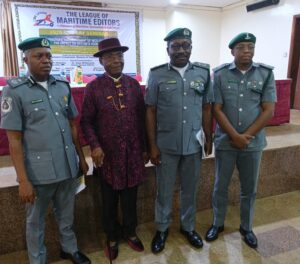
The League of Maritime Editors (LOME) has called on government and industry stakeholders to leverage Nigeria’s historic chairmanship of the World Customs Organization (WCO) Council to drive economic growth, port efficiency, and maritime sector reform.

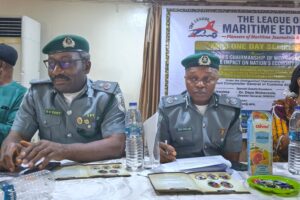
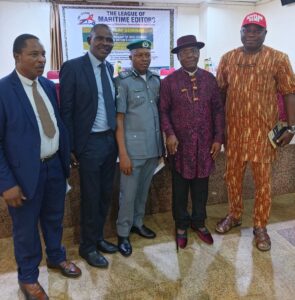
Speaking at the League’s one-day seminar themed *“Nigeria’s Chairmanship of WCO Council: The Impact on Nation’s Economy”* held on Tuesday at Rock View Hotel, Apapa, the President of LOME, Mrs. Remi Itie, said the appointment of the Comptroller-General of Customs, Adewale Adeniyi, as WCO Council Chairman marks a new chapter for Nigeria in global trade leadership. She noted that Adeniyi is the first Nigerian to hold the position since the WCO’s establishment in 1953, making it a historic achievement for the country.
“As the Chairman of the WCO, he provides strategic leadership on trade facilitation, revenue optimization, cross-border security, and digital transformation. His election reflects Nigeria’s growing influence in global customs affairs and positions the country to shape conversations on AfCFTA implementation, illicit trade suppression, and technology adoption,” she said.
Mrs. Itie urged policymakers to interrogate how Nigeria’s leadership at the WCO can translate into tangible domestic benefits such as increased trade flows, improved image abroad, and youth empowerment through maritime opportunities like seafaring, fishing, and agro-tourism. She also called on coastal state governors to harness maritime resources to grow local economies rather than rely solely on federal allocations.

Commending the Minister of Marine and Blue Economy, Adegboyega Oyetola, and heads of agencies including NIMASA, the Nigerian Ports Authority (NPA), and the Nigerian Shippers’ Council (NSC), Mrs. Itie said their collaboration with industry stakeholders remains critical in repositioning the sector as a major revenue source comparable to crude oil.
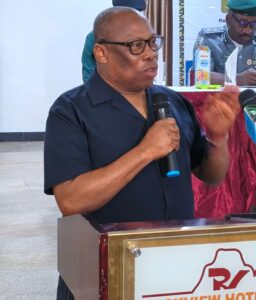
Delivering the keynote lecture, freight forwarder Dr. Eugene Nweke described Nigeria’s WCO chairmanship as both prestigious and powerful, stressing that it offers an opportunity to influence global customs standards and strengthen Africa’s trade future. He, however, cautioned that without tackling domestic inefficiencies, the benefits may not materialize.
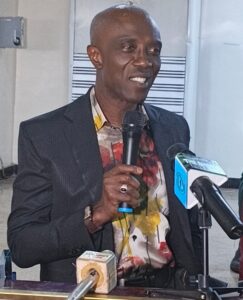
“Customs generated ₦1.3 trillion in the first quarter of 2025, yet port congestion and inefficiencies still cost Nigeria an estimated $4 billion annually. This chairmanship is not a medal to display; it is a lever for transformation,” Nweke stated. He outlined six reform milestones under CGC Adeniyi, including the Time Release Study, data-driven inspections, Authorized Economic Operator programme, and the rollout of the B’Odogwu digital platform.
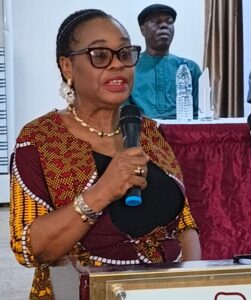
He also highlighted potential benefits for AfCFTA, such as harmonized customs procedures and regional trade hub positioning for Nigerian ports. But he warned that infrastructure deficits, policy inconsistencies, and corruption remain barriers to progress.

Also speaking, Dr. Akutah Pius Ukeyima emphasized the role of strong laws in achieving effective port economic regulation. He argued that Nigeria’s regulatory frameworks must be strengthened to provide predictability, reduce cargo dwell time, and attract investment. “Ports are both marketplaces and bottlenecks. Without clear rules, monopolies flourish, costs rise, and efficiency suffers,” he said, noting that Nigeria’s port dwell time of 20–25 days lags behind regional peers.

Participants at the seminar agreed that Nigeria’s WCO leadership presents a rare opportunity to align domestic reforms with global trade standards, and urged sustained collaboration among customs, port regulators, private operators, and the media to ensure the maritime sector becomes a key driver of economic growth.
Maritime Editors Urge Stakeholders To Leverage Nigeria’s WCO Leadership For Economic Growth
