
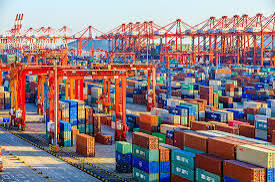
The Sea Empowerment and Research Center (SEREC) has raised alarm over the presence of an estimated 100,000 abandoned empty containers at Nigeria’s seaports, warning that the development poses significant environmental and health risks.
Founder of SEREC and former National President of the Nigerian Association of Government Approved Freight Forwarders (NAGAFF), Dr. Eugene Nweke, revealed in a statement that the large volume of empty containers has become a source of concern due to pollution and the increasing difficulty of managing port space efficiently.
Dr. Nweke disclosed that about 45 percent of containers in the Nigerian shipping space are reportedly “lickety” or unseaworthy, further compounding the challenge. He noted that freighting these empty containers back to their countries of origin — including Europe, Asia, the US, and the Middle East — incurs substantial costs that vary depending on destination, carrier, and market conditions.
According to SEREC’s comparative study, the average cost of shipping empty containers from Nigeria to China currently ranges from \$2,000 to \$4,000 for 20ft containers and \$3,500 to \$6,000 for 40ft containers. The cost for Less than Container Load (LCL) is estimated between \$150 and \$500 per cubic meter.
The study also found that a vessel with a capacity of 4,500 Twenty-foot Equivalent Units (TEUs) would require an estimated \$9 million to repatriate the empty containers — a significant burden for shipping companies.
To tackle the issue, SEREC recommended a multifaceted approach, including encouraging Nigerian businesses to increase exports in order to balance container flows, investing in improved port infrastructure and management systems, and establishing efficient container return policies.
Dr. Nweke urged collaboration among shipping lines, port authorities, and government agencies to implement robust container management strategies. He stressed the importance of leveraging technology and modernizing port operations to ease congestion and enhance efficiency.
He also cited the Customs Act 2023, which classifies containers as temporary imports. According to the law, containers must be re-exported within three months, after which they become liable for import duties. SEREC has therefore advised shipping lines to comply with trade regulations to avoid penalties.
“It is in the best interest of all stakeholders to respect trade terms and take proactive steps to manage container movement effectively,” Dr. Nweke said.