
“Maritime Journalists Seek Port Modernisation, Stronger Shipping Capacity, Improved Revenue Collection”

The Network of Nigeria Maritime Journalists (NNMJ) has called on the Federal Government to accelerate reforms in the maritime sector, improve port infrastructure, eliminate cargo clearance bottlenecks and strengthen revenue generation to position Nigeria as a leading maritime hub in Africa.
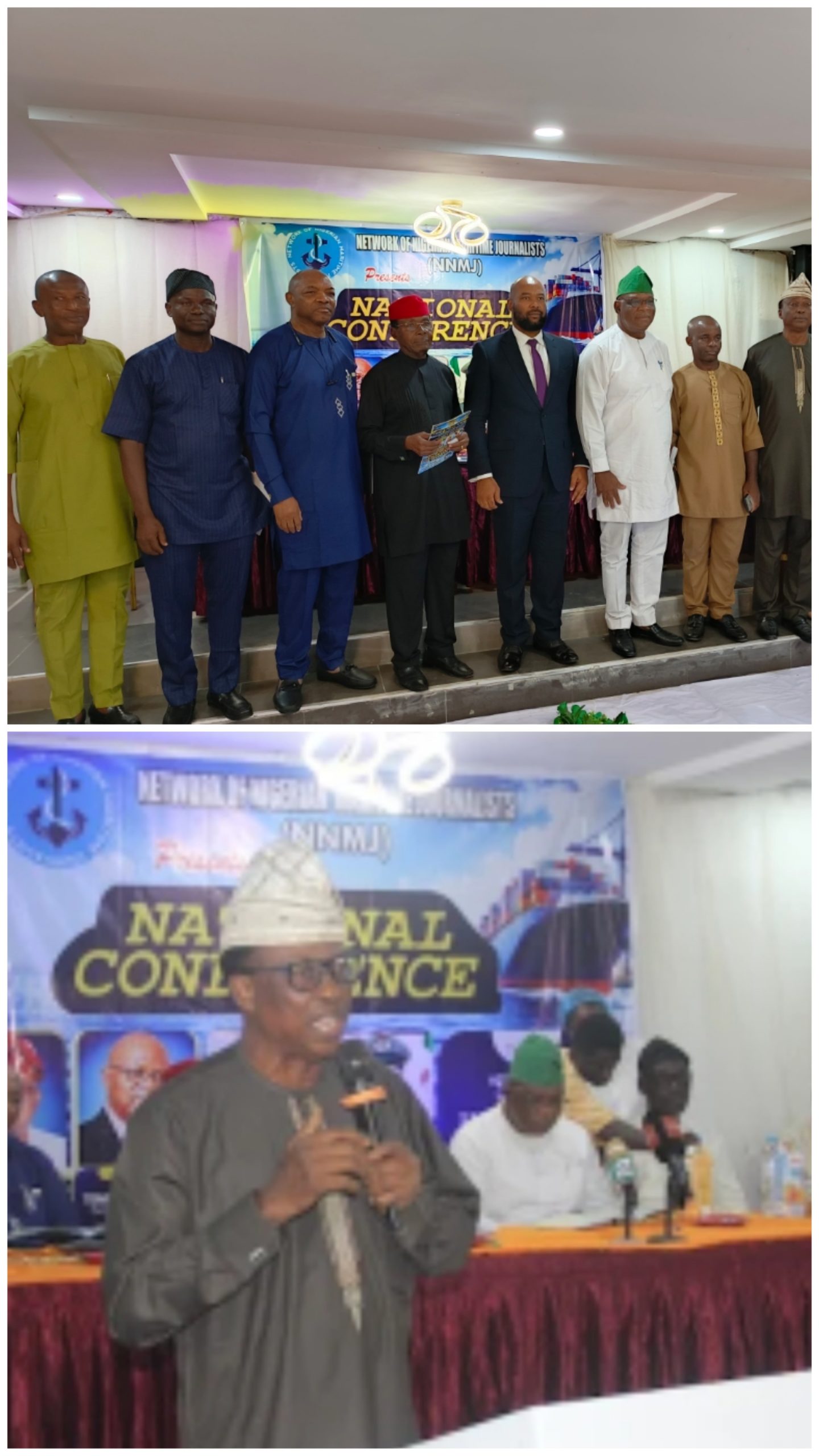
The call was contained in a communiqué issued at the end of the organisation’s National Unity Conference, held in Lagos in November 2026, with the theme, “Seaport Modernisation, Trade Facilitation and Revenue.”
The conference brought together policymakers, regulators, port operators, shipping professionals, maritime lawyers, journalists and other industry stakeholders to examine challenges affecting the sector and identify practical measures to improve its contribution to national economic growth.
The conference was chaired by Barrister Temisan Omatseye, while the Minister of Marine and Blue Economy, Adegboyega Oyetola, attended as Special Guest. The keynote address was delivered by maritime lawyer, Barrister Emeka Akabogu, SAN.
Other prominent participants included the Chairman of the Port Consultative Council, Dr Bolaji Sunmola, alongside representatives of maritime regulatory agencies, industry associations and private sector organisations.
Following deliberations and technical presentations, participants identified inadequate infrastructure, port congestion, obsolete equipment, regulatory bottlenecks and poor coordination among government agencies as major challenges undermining the competitiveness of Nigerian seaports.
On port modernisation, the conference maintained that sustained investment in infrastructure, automation, modern cargo handling equipment and technology driven operations was necessary to improve efficiency and attract more cargo to Nigerian ports.
It urged the Federal Government and relevant authorities to accelerate ongoing modernisation programmes and ensure that port facilities meet international standards. It also called for the rehabilitation of access roads and improved connections between seaports and major commercial centres.
Addressing trade facilitation, the conference expressed concern over multiple regulatory procedures, overlapping responsibilities and delays in cargo clearance, noting that such challenges increase the cost of doing business and discourage investment.
It therefore called for stronger collaboration among the Nigerian Ports Authority (NPA), Nigerian Maritime Administration and Safety Agency (NIMASA), Nigeria Customs Service (NCS), shipping companies and terminal operators to establish a more efficient cargo clearance system.
The conference also emphasised the urgent need for effective implementation of the National Single Window initiative, describing it as a critical instrument for eliminating duplicated documentation, improving transparency and facilitating information exchange among government agencies.
On logistics and cargo movement, participants stressed that port efficiency should not be measured solely by the ability to receive vessels and discharge cargo but also by how quickly goods are transported to their final destinations.
They observed that inadequate road and rail infrastructure, coupled with poor connectivity to inland markets, contributes to congestion, demurrage and additional costs for importers and exporters.
The conference consequently advocated an integrated transportation system involving roads, railways, inland waterways and other logistics infrastructure. It also proposed stronger feeder services linking Lekki Port with ports in the Delta and Eastern regions to improve cargo distribution and maximise existing port capacity.
On technology and data management, participants underscored the importance of accurate and accessible maritime information in port planning, vessel monitoring, cargo management, revenue assurance and policy formulation.
A proposal was made for a structured ship entry notification system through which advance information on incoming vessels and their cargoes would be made available to NIMASA, NPA and the Nigeria Customs Service before arrival.
The arrangement, according to the conference, would improve operational preparedness, documentation, regulatory oversight and risk assessment. It also proposed stronger international cooperation by the Customs Service, including possible operational representation at major overseas ports of origin to facilitate early access to shipping and cargo information.
The conference further examined Nigeria’s shipping capacity, including discussions around the country’s approximately 340 vessel fleet, stressing the need for clarity in classifying vessels according to their functions and operational capacities.
It called for policies and incentives that would encourage indigenous ship ownership, strengthen domestic shipping companies and increase Nigerian participation across the maritime value chain.
On economic diversification, participants identified solid minerals exports as an important opportunity for expanding Nigeria’s non oil revenue base.
They urged the Federal Government to prioritise local processing and value addition before export, noting that exporting unprocessed minerals limits the country’s economic benefits and weakens its competitiveness in international markets.
The conference also called for stronger revenue assurance measures, warning that poor documentation, inadequate data management, operational inefficiencies and weak inter agency coordination could create opportunities for revenue leakages.
It maintained that technology driven monitoring, accurate cargo records, effective vessel tracking and integrated government databases would strengthen revenue collection without imposing unnecessary restrictions on legitimate trade.
On the role of the media, the conference described maritime journalism as an important instrument for promoting transparency, accountability and informed public debate on developments within the industry.
It challenged maritime journalists to move beyond reporting official statements and ceremonial activities to undertake deeper investigations, policy analysis and evidence based reporting on issues affecting port operations, shipping, logistics and the wider economy.
Participants called for continuous professional training in data journalism, investigative reporting, digital media and emerging technologies, while urging maritime agencies and private operators to provide journalists with timely access to accurate industry information.
The conference also reaffirmed the importance of professional ethics, urging journalists to uphold accuracy, fairness, independence and accountability while avoiding sensationalism and unverified reports capable of misleading the public.
It further called for stronger unity among maritime journalists, improved professional networking, mentorship for younger practitioners and regular capacity building programmes to strengthen the profession.
Resolutions and recommendations
Among its resolutions, the conference urged the Federal Government to sustain investment in port infrastructure, automation, modern cargo handling facilities and technology driven operations.
It called for the rehabilitation of port access roads, improved rail connections and the development of an integrated logistics framework linking seaports with inland markets, industrial centres and commercial destinations.
The conference also recommended harmonised cargo clearance procedures, effective implementation of the National Single Window and stronger cooperation among maritime regulatory agencies to reduce bureaucratic delays and improve vessel turnaround time.
It urged NIMASA, NPA and the Nigeria Customs Service to strengthen advance information sharing on incoming vessels and cargoes, while encouraging the Customs Service to explore international collaboration that would improve access to shipping information at overseas ports of origin.
Other recommendations included improved maritime data transparency, incentives for indigenous shipping operators, investment in local solid minerals processing and stronger technology driven mechanisms to prevent revenue leakages.
The conference further urged port operators and regulatory agencies to reduce vessel delays, demurrage and other avoidable charges, while maintaining a balance between revenue generation and trade facilitation.
It called on NNMJ and other professional bodies to intensify training for maritime journalists, strengthen access to industry information and promote ethical and investigative reporting.
In its concluding position, the conference maintained that Nigeria’s ambition of becoming a major maritime hub and achieving a $1 trillion economy would remain difficult without efficient ports, modern infrastructure, reliable logistics, effective regulation and a competitive indigenous shipping industry.
It stressed that port modernisation must go beyond acquiring new equipment and constructing terminals to include efficient cargo evacuation, integrated transportation networks, transparent data management and reduced operational costs.
The Network reaffirmed its commitment to promoting responsible maritime journalism, strengthening accountability and providing a credible platform for engagement among policymakers, regulators, operators and other industry stakeholders.
It expressed appreciation to the Federal Ministry of Marine and Blue Economy, maritime agencies, speakers, sponsors, partners and participants for their contributions to the success of the conference.
NNMJ also pledged to sustain the momentum generated by the gathering through continued professional engagement, industry focused reporting and advocacy for reforms capable of advancing Nigeria’s maritime and economic development.
The communiqué was issued by the Network of Nigeria Maritime Journalists (NNMJ) in Lagos, November 2026.