
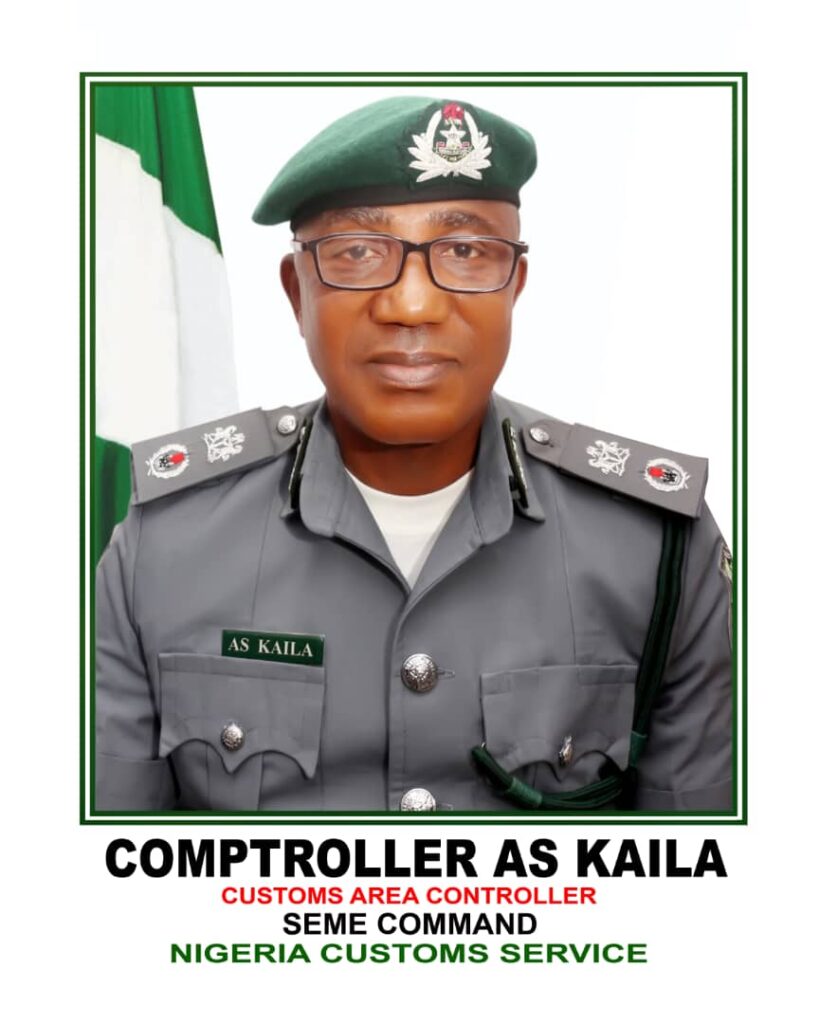
The Seme Border is more than a customs post; it is a diplomatic artery linking Nigeria to the West African subregion. Under Comptroller Abdullahi Kaila, the Area Command has become a symbol of Nigeria’s commitment to regional integration, ECOWAS protocols, and cross-border cooperation.
As one of the busiest land borders in West Africa, Seme facilitates the free movement of people and goods, a cornerstone of ECOWAS. Kaila’s administration has streamlined processes to ensure compliance with regional agreements, balancing Nigeria’s economic interests with its diplomatic obligations.
The border’s role in regional integration is critical. It serves as a conduit for trade flows between Nigeria and francophone West Africa, fostering economic interdependence. By ensuring smooth passage for legitimate trade, Kaila is reinforcing Nigeria’s position as the economic powerhouse of the region.
Diplomatically, the border is a stage for Nigeria’s leadership in ECOWAS. Kaila’s reforms have attracted international observers, showcasing Nigeria’s commitment to modern customs practices and regional cooperation. This visibility enhances Nigeria’s soft power, positioning it as a model for border management.
The human dimension is equally important. Thousands of people cross the border daily for work, trade, and family ties. By facilitating safe and efficient movement, the command is strengthening social bonds and cultural exchange across the frontier.
Since assuming leadership of the Seme Area Command, Kaila has steered this complex frontier with a blend of reformist zeal and pragmatic oversight. His administration has become a case study in how customs leadership can transform a border station into a fulcrum of national sustainability.
Under his watch, Seme has not only met its statutory obligations of revenue generation and anti-smuggling enforcement but has also embraced its broader role as a diplomatic and socio-economic bridge between Nigeria and the West African subregion.
The Nigeria Customs Service, by mandate, is tasked with revenue collection, trade facilitation, and border security. Yet at Seme, these functions take on amplified significance. Every truckload of goods, every consignment of cargo, and every human crossing represents both an opportunity and a risk. The stakes are high: Nigeria’s fiscal health, food security, and regional leadership are all intertwined with the operations of this single border post. Kaila’s administration has recognized this criticality, instituting reforms that have reshaped Seme into a model of efficiency and integrity.
Challenges remain, particularly in balancing security with free movement. However, Kaila’s administration has demonstrated that with the right mix of enforcement and diplomacy, borders can be both secure and open.
In the broader context, Seme is not just Nigeria’s border; it is West Africa’s gateway. Its sustainable contributions to regional integration underscore Nigeria’s role as a bridge-builder in the subregion.
Under Kaila’s watch, the statistics of seizures has remained impressive with a number of them qualifying as high profile. Interception of contraband includes narcotics, arms, fake pharmaceuticals, and smuggled vehicles. In the area of the protection of public health, the Command has also done excellently well in strengthening national security, and deterring organized crimes.
The border station revenue generation has also been consistent, surpassing monthly revenue targets through improved compliance and automation. It bears noting that these upward swing in performance s boosts Nigeria’s fiscal stability and supports government budgets.
In the area of trade facilitation, Kaila also ensured the deployment of simplified clearance procedures, digital platforms, and ECOWAS-compliant documentation. This has in turn led to the reduction in delays, enhances competitiveness, while fostering regional integration. Relatedly, strengthened patrols, intelligence-led operations, and joint task forces with sister security agencies has upped the ante in the curtailment of smuggling, rule of law reinforcement, and the building of trust in border governance.
Needless to stress the overall positive impact through regular stakeholder engagements and consultations with traders, transport unions, community leaders, and ECOWAS officials. It is instructive that all of these helps to promotes transparency, reduces conflict, and build cooperative relationships. Of equal note is the sustained level of diplomatic visibility through the hosting of delegations from ECOWAS, AU, and UN agencies; all of which are in alignment with the aforementioned stated reforms.
There has also been improved human relations dimension to the growth trajectory, via improved pedestrian crossings, safety measures, and community outreach programs, strengthening cultural ties and supporting livelihoods across the frontier. It is therefore an understatement to note that the totality of these increases is helping to enhance Nigeria’s soft power and positioning it as a regional leader.
For emphasis, under Kaila’s leadership, seizures have become a hallmark of Seme’s operational success, even as smuggling networks targeting Nigeria’s porous borders have been disrupted through intelligence-driven operations. To date, the command has intercepted narcotics, thus, preventing illicit drugs from entering Nigerian communities; arms and ammunition, blocking weapons trafficking that fuels insecurity; stoppage of fake pharmaceuticals, which has helped in no small way in safeguarding public health by removing counterfeit medicines. The seizures include smuggled vehicles which has assisted significantly in enforcing import regulations and protecting the nation’s automotive industry. These seizures are not just statistics; they represent lives saved, communities protected, and the preservation of Nigeria’s sovereignty.
It is particularly instructive to repeat that Kaila’s administration has prioritized dialogue with stakeholders. Traders, transport unions, and community leaders are regularly engaged to ensure policies are understood and compliance is encouraged; in addition to accomplished instances of strategic engagements, already mentioned above.
As earlier indicated, Seme’s transformation under Kaila has elevated Nigeria’s diplomatic profile. International observers from ECOWAS, AU, and UN agencies have visited to study reforms. With every sense of modesty, it is safe to say that Nigeria’s leadership in border modernization has become a template for other West African states.
By aligning operations with ECOWAS protocols, Kaila has reinforced Nigeria’s role as a bridge-builder. The border is now a showcase of how enforcement and facilitation can coexist, strengthening Nigeria’s claim to regional leadership.
Revenue generation has surged under Kaila’s administration. Through automation, compliance monitoring, and streamlined clearance, Seme consistently surpasses monthly targets. This fiscal contribution supports Nigeria’s budgetary needs, from infrastructure to social programmes.
Moreover, trade facilitation reforms have reduced delays, making Nigerian exports more competitive and imports more efficient. The ripple effect strengthens Nigeria’s economy and enhances its influence in West Africa.
Comptroller Abdullahi Kaila’s stewardship of the Seme Border is a testament to how visionary leadership can transform a frontier into a fulcrum of national sustainability and regional diplomacy. Through seizures, enforcement, stakeholder engagement, and diplomatic visibility, Seme has become more than a customs post. It has become Nigeria’s gateway to West Africa and a symbol of integration, security, and cooperation.