
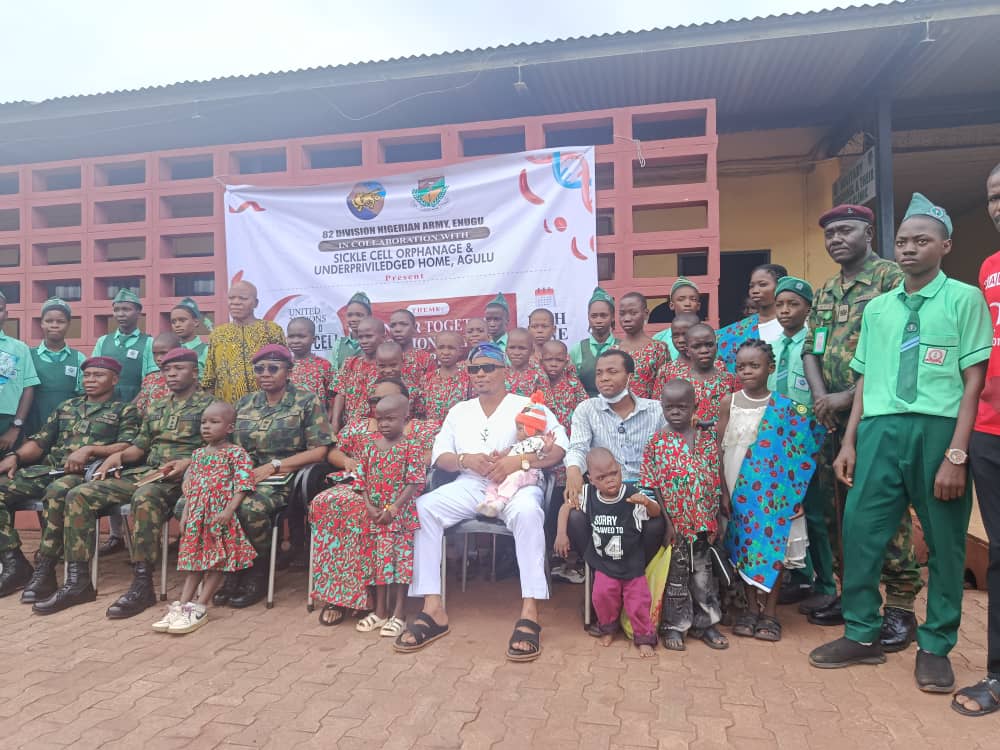
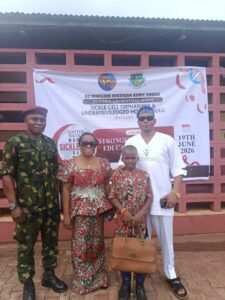
The Association of People Living with Sickle Cell Disorder (APLSCD) has called for urgent and coordinated national action to tackle sickle cell disorder, describing the condition as one of Nigeria’s most pressing public health challenges.
Speaking during the 2026 World Sickle Cell Day commemoration held at the 82 Division of the Nigerian Army in Enugu, the National Coordinator of APLSCD, Mrs. Aisha Edwards Maduagwu, urged government institutions, healthcare stakeholders and communities to intensify efforts aimed at prevention, awareness and improved care.
Addressing military officers, government representatives, civil society groups and members of the sickle cell community, Maduagwu said this year’s theme, “Stronger Together: Education, Care and Hope,” underscores the need for collective responsibility in addressing the disease.
She stressed that sickle cell disorder should no longer be viewed merely as a medical condition but as a major national health concern requiring sustained policy attention, public enlightenment and increased investment.
According to her, Nigeria carries the highest burden of sickle cell disorder globally, with millions of citizens either living with the condition or carrying the sickle cell trait, a situation she described as alarming and unacceptable.
The APLSCD coordinator identified genotype awareness and public education as the most effective tools for reducing the prevalence of the disease, noting that ignorance of genetic compatibility continues to fuel new cases across the country.
She called for intensified awareness campaigns in schools, churches, mosques, workplaces and communities to ensure that young Nigerians understand the implications of genotype incompatibility before marriage.
Maduagwu also condemned the persistent stigma surrounding sickle cell disorder, lamenting that misconceptions have led to discrimination and, in extreme cases, the abandonment of children born with the condition.
She recounted the rescue of a toddler abandoned because of his health challenges, revealing that the child underwent a life saving surgery after suffering severe breathing complications linked to chronic adenotonsillitis.
While acknowledging efforts by federal and state governments, she called for stronger political commitment through mandatory genotype screening programmes, expanded newborn testing and increased funding for research and treatment centres.
The group further advocated the integration of sickle cell management into national and state health insurance schemes to make treatment more affordable and accessible to affected families.
Highlighting the socioeconomic challenges faced by patients, Maduagwu urged public and private sector institutions to adopt policies that protect people living with sickle cell disorder from discrimination in education, employment and social life.
She noted that despite limited resources, APLSCD has established a specialist sickle cell clinic at Nnamdi Azikiwe University Teaching Hospital, championed the enactment of the Anambra State Sickle Cell Disease Eradication and Control Law and created vocational programmes to support affected persons.
The organisation also operates what it described as Nigeria’s first Sickle Cell Orphanage and Underprivileged Home, providing shelter, healthcare and social support to vulnerable children living with the disorder.
Maduagwu, who disclosed that she is also a sickle cell warrior, commended the Nigerian Army for its longstanding support, saying the medical care she received during her years of service contributed significantly to her survival and ability to continue advocacy work.
She expressed appreciation to the Chief of Army Staff, Lieutenant General Olufemi Oluyede, the General Officer Commanding 82 Division, Oluremi Fadairo, and other military leaders for hosting the event and supporting sickle cell awareness initiatives.
The APLSCD leader also acknowledged the contributions of the Nigerian Army Officers’ Wives Association, the Agulu People’s Union and philanthropist Paul Chukwuma for their continued support of sickle cell advocacy and welfare programmes.
She concluded by urging Nigerians to embrace genotype testing, reject harmful stereotypes and work collectively towards a future where preventable cases of sickle cell disorder are eliminated and every patient enjoys dignity, quality healthcare and equal opportunities.