

…Udofia rallies stakeholders during the three days maritime summit
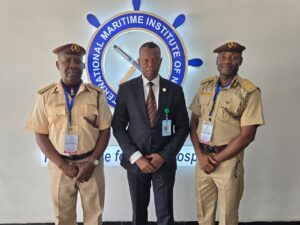
The International Maritime Institute of Nigeria has declared a decisive turning point in Nigeria’s maritime future, drawing the curtain on a three day high level Executive Programme with a resounding call for action on the nation’s blue economy agenda.
Speaking at the close of the programme in Apapa, Lagos, the Director General of IMION, Dr. Thaddeus Udofia, said the institute deliberately convened the engagement from Wednesday, April 15, to reshape thinking and accelerate policy execution across the maritime space.
Udofia described the three day engagement as intellectually stimulating and deeply rewarding, noting that the quality of discourse and participation underscored the urgency and promise of Nigeria’s blue economy.
According to him, the programme successfully brought together a critical mass of stakeholders whose insights and contributions reflected a shared commitment to repositioning the maritime sector as a cornerstone of national development.

DG IMION
Udofia emphasized that the integration of virtual participation expanded the reach of the programme, reinforcing its ambition to emerge as Nigeria’s Centre of Excellence for maritime affairs spanning security, governance, sustainability and energy.
He noted that deliberations examined policy frameworks, interrogated emerging challenges and highlighted innovative pathways to unlock opportunities embedded in Nigeria’s vast marine resources.
IMION DG stressed that collaboration across government institutions, academia, civil society, industry and the security community remains central to achieving sustainable outcomes, describing this convergence as a practical expression of the triple helix model.
He maintained that no single institution can drive the blue economy alone, insisting that collective action, strategic alignment and shared vision must guide implementation efforts going forward.
Thaddeus Udofia urged participants to move beyond dialogue, calling for concrete actions that translate policy into measurable impact capable of transforming livelihoods and strengthening the national economy.
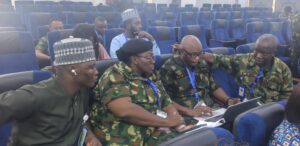
The DG warned that the ocean represents not just a resource but a legacy, stressing that present decisions will shape how future generations benefit from Nigeria’s maritime endowments.
He extended profound appreciation to partners and contributors including the Nigerian Navy, Nigerian Maritime Administration and Safety Agency, Nigeria Immigration Service and other public and private sector stakeholders whose inputs enriched the programme.
He also acknowledged industry players such as Dangote Ports Operations, Lagos State Waterways Authority, and key maritime service providers for sustaining collaboration with the institute.

Udofia reaffirmed its mandate to promote excellence in maritime knowledge, deepen interagency cooperation and strengthen capacity building frameworks that support ocean governance in Nigeria and the wider Gulf of Guinea.
The institute credited the Chief of the Naval Staff, Vice Admiral Idi Abbas, for unwavering support, noting that IMION operates as an independent body under the Nigerian Navy with a strategic role in shaping maritime policy discourse.
Dr Udofia declared the programme formally closed, expressing confidence that participants would return to their respective institutions better equipped to influence policy and drive implementation.
In reflections attributed to IMION, a participant from NIMASA, Mrs. Lilian Ode, described the blue economy as Nigeria’s “new gold,” noting that the training has deepened institutional understanding and will support ongoing sensitization efforts, especially in rural communities.
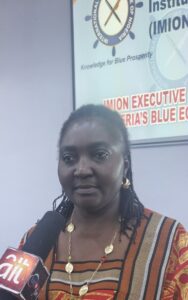
IMION highlighted her position that awareness remains a major gap, stressing that inclusive education of coastal populations will be critical to unlocking the full benefits of the sector.
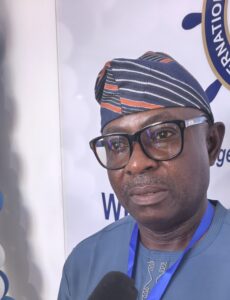
The institute also relayed insights from Dangote Ports Operations, where a senior security official, Mr. Uwem George, emphasized that community inclusion and security are vital to sustaining investments and preventing hostility in coastal areas.
IMION noted that his contribution underscored the importance of public private collaboration, adding that economic growth, infrastructure development and environmental protection must evolve together.
Further reflections attributed to IMION from maritime legal expert and consultant, Mrs. Mfon Ekong Usoro of Paul Usoro and Co, described the programme’s growth trajectory as impressive, citing strong participation from both public and private sectors within a short period.
IMION emphasized her position that the blue economy represents a shift from mere exploitation of marine resources to a sustainability driven model anchored on environmental, social and economic balance.

IMION Consultant
The institute also underscored her call for coordinated institutional frameworks and marine spatial planning to prevent conflicts across sectors and ensure efficient resource utilization.
IMION concluded that the consensus among participants points to steady progress, noting that each edition of the Executive Programme continues to attract higher quality engagement from decision makers positioned to shape policy outcomes.

It maintained that the unveiling of its official newsletter during the programme marks a strategic step in deepening knowledge exchange and sustaining professional discourse within the maritime ecosystem.
IMION reaffirmed that Nigeria’s blue economy future will depend on political will, stakeholder alignment and consistent implementation of policy recommendations emerging from platforms such as this.
On his part, Comptroller of Immigration, Marine Border Management, Kalu Ibe Olugu, has declared that Nigeria’s blue economy is poised for significant growth within the next three years, provided there is strong political will to implement policies emerging from ongoing sectoral engagements.
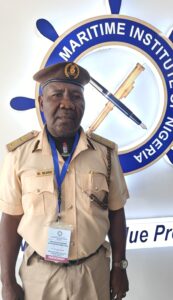
Olugu described the initiative as timely and impactful, noting that it aligns with broader national aspirations for maritime development.
Olugu, who attributed the participation of officers to the approval of the Comptroller-General of the Nigeria Immigration Service, Kemi Nanna Nandap, said the leadership of the Service recognises the strategic importance of the programme. He commended the depth of lectures and practical insights shared, adding that the exposure gained would enhance operational effectiveness in marine border management. “The programme is worth attending. I appreciate both the lectures and the experience that we have gathered here,” he said.

He stressed that awareness remains a critical gap hindering optimal exploitation of the blue economy, insisting that sustained sensitisation would unlock vast opportunities for stakeholders. According to him, once the right level of awareness is achieved, broader participation will follow, yielding immense national benefits.
The event drew a wide array of maritime stakeholders, paramilitary agencies, and members of the public, underscoring growing interest in Nigeria’s maritime future.
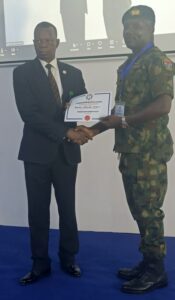
The institute closed on a note of optimism, expressing confidence that the momentum generated in Lagos will translate into tangible reforms capable of driving national growth and maritime prosperity.