
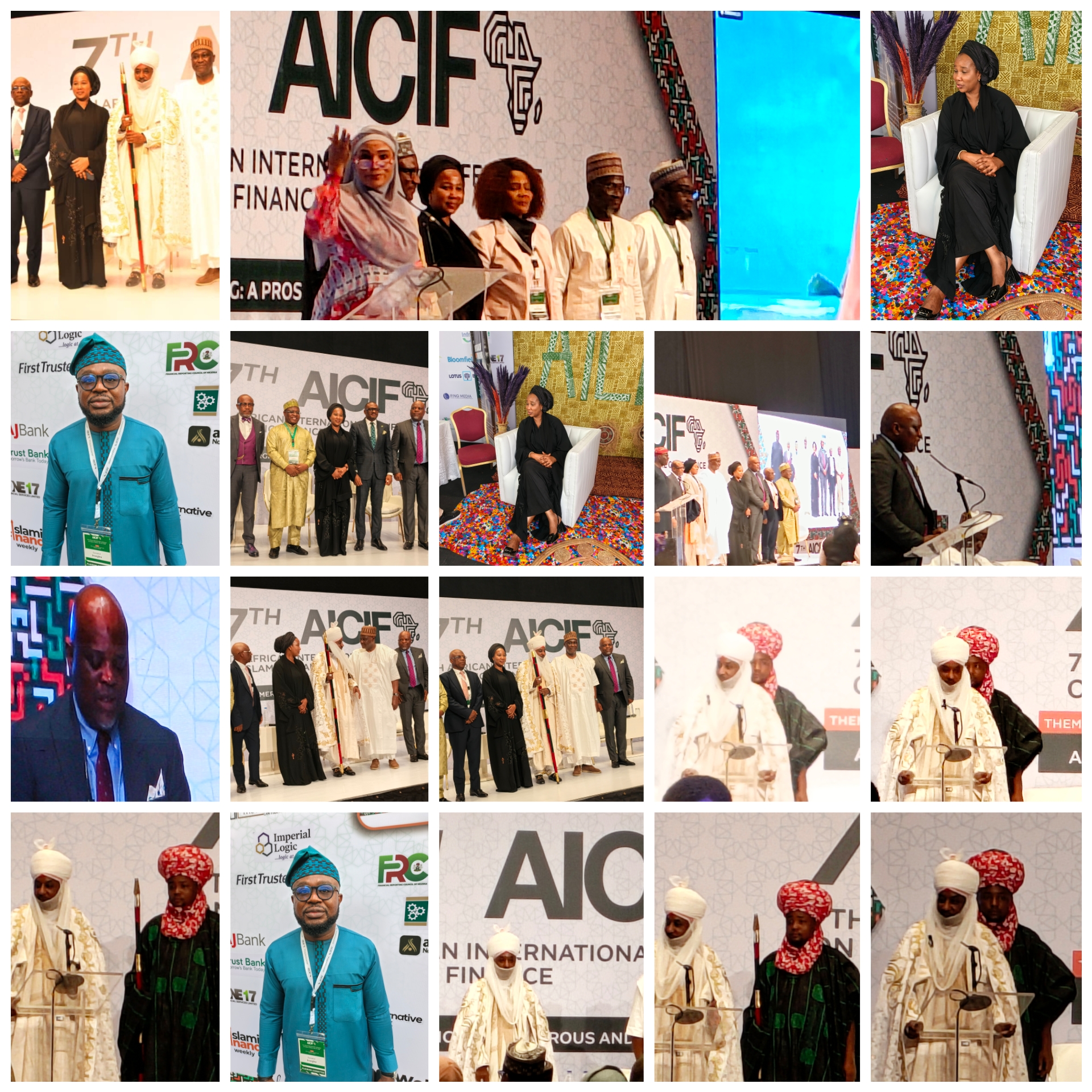
The 7th African International Conference on Islamic Finance (AICIF) opened in Lagos with a resounding call for Africa to harness the transformative power of Islamic finance in addressing the continent’s development challenges.
With the theme “Africa Emerging: A Prosperous and Inclusive Outlook,” this year’s conference convened regulators, policymakers, financiers, academics, and innovators across the continent all united by a shared goal: building a fair, inclusive, and sustainable financial ecosystem for Africa’s future.
In her welcome address, Ms. Ummahani Ahmad Amin, Convener of AICIF and Managing Partner of The Metropolitan Law Firm, set the tone for the conference by highlighting how collaboration has fueled the growth of Islamic finance in Nigeria and beyond.
She credited AICIF’s steady evolution to the partnership between The Metropolitan Skills Limited, The Metropolitan Law Firm, and regulators such as the Securities and Exchange Commission (SEC), whose efforts have helped strengthen capacity, awareness, and regulatory frameworks for non-interest finance instruments like Sukuk.
“This conference is not just an event, it’s a movement built on shared values and purpose,” she said, thanking participants and partners for their sustained commitment.
Ms. Amin noted that while global Islamic finance assets had reached $3.88 trillion in 2024, Africa was yet to fully tap into its potential to bridge funding gaps in infrastructure, food security, and climate resilience. She pointed out persistent structural challenges from low market liquidity to concentrated investor bases that continue to limit the continent’s financial inclusion goals.
Beyond finance, she spotlighted The Metropolitan Awqaf, a social impact fund supporting education in conflict-affected Northern Nigeria, and the AICIF Pitch Competition, which rewarded innovative solutions such as:
Zannytecture Recycling for converting waste materials into eco-friendly products (Social Impact Category)
BetaLife Health for developing an AI-driven blood supply optimization platform (Technology Category)
She urged participants to see the conference as “a platform for collaboration, learning, and tangible progress” toward inclusive prosperity.
In his own welcome address, Mr. Mairiga Aliyu Katuka, Chairman of the Securities and Exchange Commission (SEC), praised the AICIF initiative and reaffirmed the Commission’s commitment to fostering an enabling environment for non-interest capital markets.
Katuka highlighted the achievements of the Capital Market Masterplan (2015–2025) from the Federal Government’s Sukuk programme to the establishment of a strengthened regulatory framework and the rise of diverse non-interest financial products.
However, he cautioned that challenges persist, including limited market depth, low liquidity, and minimal public awareness. To overcome these, he called for bold innovation in digital assets, tokenisation, smart Sukuk, and blockchain-based transparency.
“Our goal is a regulatory environment that upholds Shariah compliance while embracing innovation ensuring that Nigeria remains competitive in the global Islamic finance arena,” Katuka said as he officially declared the conference open.
Delivering the keynote address, His Royal Highness Muhammadu Sanusi II, the Emir of Kano and former Governor of the Central Bank of Nigeria, delivered a stirring reflection on the moral and social foundations of Islamic finance.
He lauded AICIF and its awardees for advancing the cause of ethical finance and urged a renewed focus on real economic impact rather than mere financial indicators.
“Islamic finance is built on fairness, shared risk, and value creation not on replication of conventional systems,” the Emir said, emphasizing that true prosperity lies in inclusive growth that benefits communities at the margins.
He urged Islamic financial institutions to direct resources toward SMEs in rural and underserved areas, arguing that sustainable growth must begin from the grassroots.
On gender inclusion, the Emir spoke candidly about dismantling socio-cultural barriers that limit women’s participation in economic life. “We cannot talk about inclusion when half our population is excluded,” he said, calling for policies that empower women through access to finance and entrepreneurship support.
In his goodwill message, Dr. Rabiu Olowo, Executive Secretary of the Financial Reporting Council of Nigeria (FRCN), underscored the Council’s commitment to transparency and corporate governance.
He announced that Islamic finance has now been officially embedded into Nigeria’s financial reporting framework, a step he said will enhance credibility and align Nigeria with international standards.
“This milestone ensures that the operations of Islamic banks and financial institutions are not only compliant with Shariah but also transparent and globally recognised,” he explained.
Moderated by Jude Onyeka Chiemeka, the first panel explored strategies to expand the reach of Islamic finance. Panellists agreed that SMEs, which employ about 70% of Nigeria’s workforce, should be key beneficiaries of non-interest financing.
They called on stakeholders to separate Islamic finance principles from religious misconceptions and focus on legal, ethical, and economic dimensions. With an estimated $200 billion financing gap, they urged stronger private-sector participation and sustained public awareness.
Mrs. Hajara Adeola, Managing Director of Lotus Capital Limited, led the second session, describing Africa’s infrastructure gap as “a mirror of the continent’s untapped investment potential.”
She highlighted critical sectors such as transportation, power, healthcare, and education, advocating blended financing and PPP models to drive sustainable investment.
Panellists also noted that High-Net-Worth Individuals (HNIs) often view infrastructure investments as high-risk and low-return, calling for clearer propositions and tailored investment vehicles to attract local capital.
Olumide Lala, Executive Director of Climate Transition Ltd, delivered an impassioned presentation on sustainable energy finance, revealing that despite Africa’s abundant solar and wind resources, over 600 million Africans still lack electricity.
He proposed Shariah-compliant instruments like Sukuk, Mudarabah, and Musharakah as ethical pathways to fund renewable energy, emphasizing that “Africa’s energy transition must be anchored on ethics, inclusivity, and sustainability.”
Ms. Oluwafunto Olaseno, COO of AFEX Commodities Exchange, lamented Nigeria’s stagnant agricultural productivity despite rising population growth. She urged stakeholders to approach agricultural financing holistically by addressing every link in the value chain from inputs to market access using ethical finance tools.
The session called for de-risking Islamic banking models to make agricultural credit more attractive and accessible.
Experts in this session emphasised the importance of prevention over litigation, urging institutions to embed Shariah audits and boards into their operational systems to ensure continuous compliance and mitigate potential conflicts.
The conference climaxed with a glamorous Award Night and Dinner, recognising outstanding achievements across the Islamic finance ecosystem.
Islamic Finance Impact Award (Individual): Prof. Ahmad Bello Dogowara, Dr. Bashir Aliyu Umar, Prof. Adam Abubakar, Leadership Award (Institution): TAJBank, Personality of the Year: Hamid Joda, Innovative Islamic Bank of the Year: Alternative Bank Ltd, Takaful Company of the Year: Noor Takaful Insurance Ltd, Fund Manager of the Year: Lotus Capital Ltd, Financial/Shariah Adviser of the Year: First Trustees Ltd, Law Firm of the Year: Aluko & Oyebode, Microfinance Bank of the Year: Hayar Trust Non-Interest MFB, Regulator of the Year: SEC Nigeria, International Institution of the Year: IFRIG (Ghana), Islamic Finance Fund Deal of the Year: Marble Halal Commodity Fund, Sukuk Deal of the Year: FGN Sukuk, Media Company of the Year: IFING Media Ltd, AICIF Legacy Award: His Highness Muhammadu Sanusi II.
As Day One of AICIF 2025 drew to a close, one message echoed across all sessions that Africa’s rise must be anchored on ethical finance, inclusive growth, and moral leadership.
From policy dialogues to social innovation pitches, the conversations reflected a shared conviction: that Islamic finance is more than a financial model it is a philosophy for shared prosperity.