
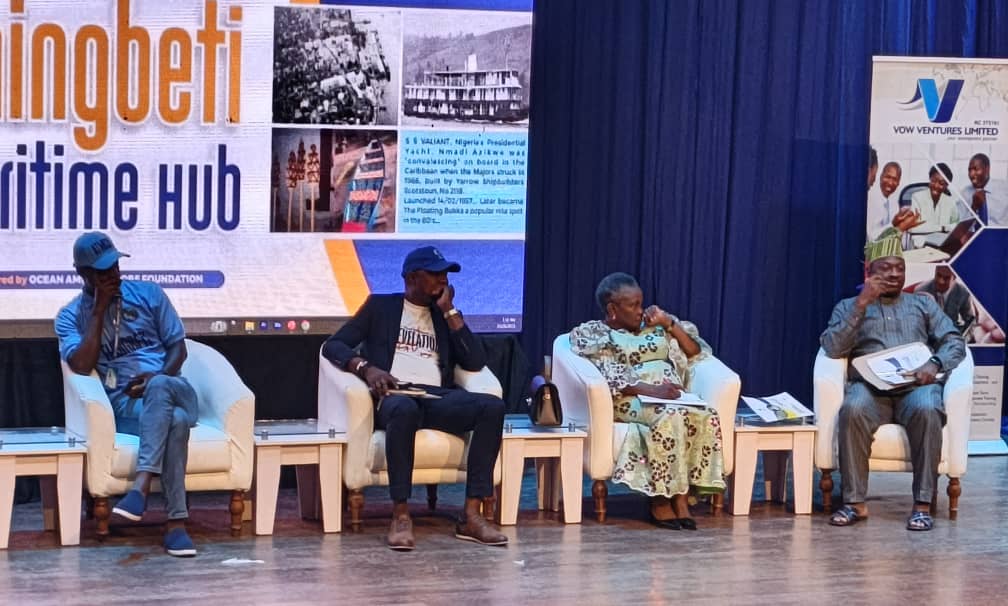
Maritime stakeholders, government representatives, traditional rulers, and industry experts converged at the Agip Recital Hall, MUSON Centre, Onikan, Lagos, for the 3rd Ehingbeti Blue Economy Hub themed “The Renaissance of Ehingbeti in Community Engagement and Inclusivity.”
The event, chaired by Major General Tajudeen Olanrewaju (Rtd), former Minister of Communications of the Federal Republic of Nigeria and Chairman of the 3rd Ehingbeti Blue Economy Hub, explored the intersection of maritime heritage, sustainable development, and community inclusion in shaping Lagos’ growing Blue Economy.
In his opening address, Major General Olanrewaju commended the promoters of the Ehingbeti initiative for creatively aligning the modern challenges of ocean and maritime management with Lagos’ historical identity as a coastal trade powerhouse.
He described the Blue Economy as “the sustainable use of ocean resources for economic growth, improved livelihoods, and job creation while preserving the health of the marine ecosystem.”
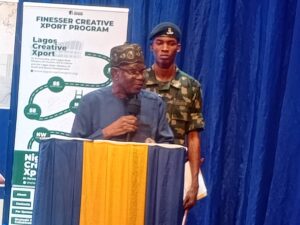
Reflecting on the golden era of Ehingbeti, Olanrewaju recalled how Lagos once thrived as a hub of trade, culture, and innovation, a period that gave rise to the Yoruba saying “Ti oju o ba ti Ehingbeti, oju ole ti Eko” (if Ehingbeti’s glory fades, so does that of Lagos).
“Ehingbeti was once the economic heartbeat of Lagos, a vibrant maritime corridor connecting Apongbon, Marina, Iru Creek, and Onikan to regional ports across West Africa,” he said. “That era of commercial vitality and population growth laid the foundation for Lagos’ emergence as a megacity.”
Olanrewaju urged policymakers and industry leaders to draw from this historical experience to shape a people-centered Blue Economy policy, emphasizing that indigenous communities must be at the heart of maritime reform.
“Local communities offer immense value to maritime security, intelligence, and manpower development. Their inclusion is not just ethical, it is strategic,” he said. “Without integrating their skills and ownership, the wealth generated from maritime trade will never fully translate into prosperity for those who live along our coasts.”
He further lamented that despite Nigeria’s maritime wealth, many coastal populations remain trapped in poverty due to poor integration and policy indifference.
“Our maritime commerce can achieve true sovereignty if we harness our resources through sound policy and inclusivity. We must study how nations like Singapore and India have built thriving Blue Economies anchored on innovation, skills, and SMEs,” he added.
In her welcome address, Mrs. Violet Claitan Williams, Founder of the Ocean Ambassadors Foundation and Convener Ehingbeti Maritime Hub, reaffirmed the organization’s commitment to promoting sustainable ocean management and coastal empowerment.
“Today marks a defining moment in our collective pursuit of an inclusive maritime economy,” she said. “Over the years, we have documented the rich history of Ehingbeti through documentaries and publications that remind us of our responsibility to revive its legacy.”
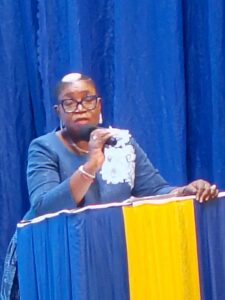
Williams emphasized that achieving the goals of the Blue Economy requires collaboration among government, private sector, and local stakeholders.
“The development of our coastal communities is a shared responsibility. We cannot leave it to the government alone. All hands must be on deck to ensure that the benefits of the Blue Economy are equitably distributed,” she urged.

Also speaking is the Lagos Area Manager of the National Inland Waterways Authority (NIWA), Engineer Mrs. Sarat Braimah, who highlighted the enormous but underutilized potential of Nigeria’s inland waterways.
She noted that the creation of the Federal Ministry of Marine and Blue Economy by President Bola Ahmed Tinubu underscores government’s renewed focus on maritime development.
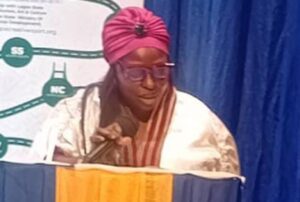
She urged all stakeholders to actively contribute to the growth and sustainable development of Nigeria’s emerging blue economy, emphasizing its vast potential to transform coastal livelihoods and national prosperity.
She further applauded President Bola Ahmed Tinubu for the visionary establishment of the Federal Ministry of Marine and Blue Economy, describing it as a strategic move and a potential game changer for Nigeria’s economic diversification and maritime advancement.
Braimah applauded the Lagos State Government for its growing investment in water transport, citing the success of ferry services and dredging projects that have improved connectivity across the state.
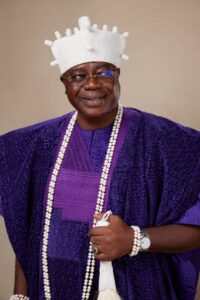
Delivering his goodwill message, His Royal Majesty, Oba (Dr.) Olufolarin Olukayode Ogunsanwo, Telade IV, the Alara of Ilara Kingdom, lauded the Ocean Ambassadors Foundation for its enduring contributions to maritime advocacy, youth empowerment, and gender inclusion.
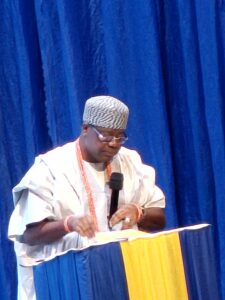
“The Foundation has built a visionary platform that promotes policy discourse and stakeholder collaboration in Nigeria’s emerging Blue Economy,” the monarch said.
He emphasized that community engagement and gender inclusivity must remain central to Nigeria’s maritime renaissance.
“The Blue Economy holds vast potential to diversify our national wealth and create sustainable livelihoods, especially for coastal communities,” the monarch stated. “I particularly commend the Foundation’s advocacy for introducing maritime studies in schools and empowering the girl child, these are the true pillars of progress.”
Oba Ogunsanwo assured that Ilara Kingdom, blessed with rich maritime heritage, stands ready to contribute to Lagos State’s drive toward becoming Africa’s leading model of maritime excellence.
As deliberations concluded, speakers and participants reaffirmed the need for policy innovation, stakeholder collaboration, and inclusivity to unlock Nigeria’s maritime potential.
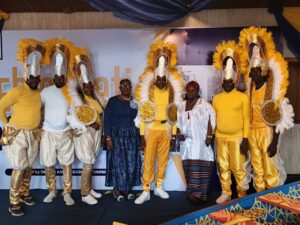
The consensus was clear, the Renaissance of Ehingbeti represents more than a nostalgic revival; it is a call for economic transformation, local empowerment, and sustainable growth rooted in community participation.
Similarly, a Senior Advocate of Nigeria (SAN), Mrs. Jean Chiazor Anishere, emphasized the need to establish an Ehingbeti Water Transportation Service. She explained that such an initiative would not only enhance connectivity and commerce within coastal areas but also serve as a lasting legacy and empowerment model for the indigenous communities residing along Nigeria’s waterways.
Anishere therefore appealed to relevant authorities, investors, and community leaders to embrace and support the project, noting that it represents a vital step toward inclusive growth and sustainable development in the nation’s maritime sector.