
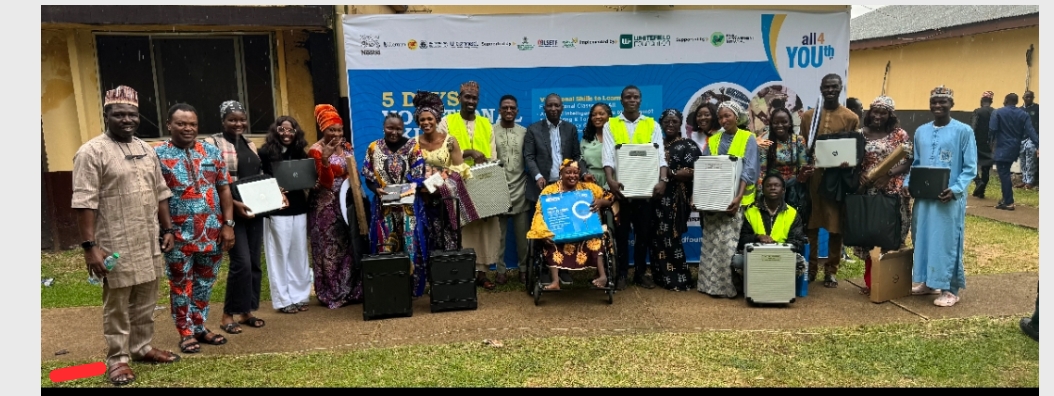
Nigeria is home to one of the world’s youngest populations. While this presents enormous promise fresh ideas, energy, and innovation, it also brings serious challenges. Unemployment, under‑employment, skills mismatches, and lack of access to quality training and mentorship remain large barriers. In many communities, especially rural and peri‑urban areas, young people struggle to find opportunities that convert education into sustainable livelihood.
In this context, investments in youth empowerment and development are not just philanthropic or CSR gestures, they are essential for economic growth, social stability, and for harnessing the potential of a burgeoning generation.
Nestlé’s Role: From Global Commitments to Local Impact
Nestlé is among the private sector leaders making systematic interventions to bridge the gap between young people and opportunity. Two global priorities are especially relevant: “Nestlé Needs YOUth” and Agripreneurship / Youth in Agriculture. Locally in Nigeria, Nestlé has adapted these to the particular workforce, economic, and social environment.
Here are key Nestlé‑led initiatives:
Technical & Vocational Training: Nestlé Technical Training Centres (TTCs)
Since 2011, Nestlé Nigeria has established several technical training centres (Agbara, Abaji, Flowergate) offering rigorous 18 month training programs combining theory and hands‑on application in engineering, food technology, and manufacturing operations. Over ₦6 billion has been invested in these centres.
Around 200+ young Nigerians have graduated; the vast majority (often over 90‑95%) of them are employed, many within Nestlé Nigeria itself.
Nestlé Needs YOUth Initiative
This is Nestlé’s global commitment (launched around 2013) to enable millions of young people access economic opportunities by 2030. It encompasses employability, entrepreneurship, and agripreneurship.
In Nigeria, the initiative has reached over 250,000 youths over the past decade via its pillars of skills development, support, and creating opportunities.
Mentoring, Values, and Leadership Development
Under its Nestlé Cares / employee volunteering programme, Nestlé Nigeria partnered with REVAMP Africa to mentor secondary school students, teaching values, time management, goal setting, interpersonal skills, self‑reliance, peer pressure handling, etc.
The Youth Leadership Mentoring Programme has reached thousands across Nigeria, from different zones, instilling leadership skills, positive behaviour, academic improvement and broader life skills.
Scholarships & Community Support
Nestlé Nigeria’s Community Scholarship Scheme supports indigent youths in senior secondary and tertiary levels from host communities (Agbara, Sagamu, Owode, Abaji). Support includes tuition, books, uniforms, and related expenses.
Other infrastructure and community initiatives (water, sanitation, school facilities) support the broader environment in which youth live and learn.
Agripreneurship & Global Youth Initiatives
Globally, Nestlé’s Agripreneurship Programme (including in Nigeria) helps train young farmers (agripreneurs), smallholder farmers, especially in underrepresented or rural communities, giving them knowledge, coaching, business skills, and connections to markets.
For example, Nigeria figures among youth participating in the Nestlé Cereals Plan & Feed the Future maize‑quality improvement project.
Impact: Stories & Outcomes
To move beyond statistics, here are stories and outcomes that illustrate how impactful Nestlé’s interventions have been, and how powerful journalism/reporting is in amplifying that impact:
Technical Training to Employment: The story of the trainees in Flowergate, Agbara and Abaji who go through 18 months of training, graduate, and then are absorbed into real jobs, many in Nestlé itself. For many, this moves them from unemployment or uncertainty to stable careers, income, and often leadership or supervisory roles.
Youth Inspired by Mentoring: Students in public secondary schools (Ilupeju, Owode, Abaji, etc.) who through Nestlé‑REVAMP mentoring programs report changes in how they approach school, how they set goals, manage time, resist negative peer pressure, and how they begin to see themselves as change‑makers. Stories from beneficiaries (e.g. “I learned humility… goal setting… time management”) show transformation beyond just technical skills.
Scaling Capacity & Inclusion: The Flowergate TTC being a newer facility shows expansion of capacity; inclusion of youth from host communities ensures that benefits are more evenly distributed. Also, the fact that scholarship schemes and community investments accompany skills training shows that Nestlé recognizes that opportunity is multidimensional.
The Power of Reporting & Solution‑Driven Journalism
Stories matter. Journalism that does more than recount what is that pushes to show how change happens, who is involved, why it works, *what challenges remain and *what could be done differently or better can spur replication, policy change, and accountability.
Here are ways in which reporting on youth empowerment (and Nestlé’s initiatives) can drive broader social good:
1. Amplification of Models
Detailed reports on successful programs (e.g. TTCs) help other companies, governments, NGOs see what works: blended training, certifications, employer absorption.
Reporting can show best practices and pitfalls what makes mentees most likely to succeed, what hinders scaling, what support structures are necessary.
2. Inspiring Youth & Community Aspirations
Sharing real stories of individuals (from disadvantaged backgrounds) who through mentoring, apprenticeship, skill‑centres, etc., have built livelihoods or businesses challenges the sense of hopelessness and helps others believe in possible change.
3. Policy Influence & Partnerships
Reports grounded in data and lived experience can inform government policy on skills development, vocational education, youth employment schemes.
They can also push for more investment, public‑private partnership, or funding of the kinds of infrastructure that complement what corporations like Nestlé do.
4. Accountability & Transparency
By investigating outcomes (how many graduates are employed, wage levels, geographical spread, gender balance, etc.), journalism ensures that programs are delivering promised impact.
5. Solution Stories & Learning
Instead of only covering failures or needs, focusing on solutions how youth or communities have used skills, what innovations have emerged, what systemic levers (institutions, laws, funding) helped can shift public discourse from “problem‑heavy” to “what’s working & how to scale.”
Challenges & Gaps
No initiative is without limitations. A balanced feature should also acknowledge:
Skills‑certificate programs are valuable but may not always align with every sector’s demands; mismatch remains in many industries.
Access remains uneven: rural youths, girls, and marginalized groups may face higher barriers to reach training or mentorship programs.
Ensuring sustainability: Once training is done, consistent follow‑through (job placement, continuous learning, infrastructure, market access) is needed.
Resource constraints: Both for the implementing organization and the trainees (transport, tools, ancillary costs) which can reduce participation.
Opportunities & Call to Action: How Journalism Can Further Contribute
To harness the multiplier effect of youth empowerment, here is what journalists, media outlets, and storytelling platforms can do:
Feature in‑depth case studies: Pick individuals who have come out of training, mentorship, or scholarship‑schemes; tell their journey before, during, after. What difference did this make to their families, community, mindset, future?
Track and report outcomes over time: Do follow‑ups with graduates: are they still employed? Are they progressing? Has income changed? This helps assess the long‑term impact rather than the short term.
Compare across models and providers: How does Nestlé’s TTC compare with government vocational centres, NGOs, startups? What hybrid models or partnerships are most effective?
Highlight the enabling environment: What policy, infrastructure, funding, social norms help or hamper youth empowerment (e.g. regulation for apprenticeships, access to electricity for rural training, gender bias)?
Elevate youth voices: Give space to young people themselves as authors, storytellers, photographers telling their stories. Reporting with youth, not just about them, strengthens ownership and authenticity.
Push for replication & scale: Once a model is well documented, media can be a partner in advocating for scaling in government policy, or encouraging other companies/NGOs to adapt similar programs.
Youth empowerment and development are among the most critical issues of our time not just in Nigeria but globally. Nestlé’s Nestlé Needs YOUth, its technical training centres, scholarship and mentoring programmes, and agripreneurship work show how a large, well‑resourced actor can make sustained contributions when there is clarity of purpose, reliable investment, and partnerships both local and international.
Yet the full promise will only be realised when stories of impact become widely known, when successes are replicated, when failures and gaps are surfaced, and when young people are not just beneficiaries but active shapers of the solutions.