
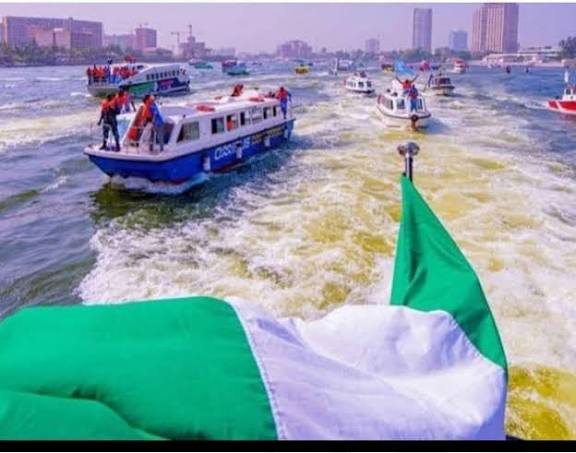
Frequent boat accidents in Nigeria have been linked to cultural traditions and low awareness of safety procedures, especially in the northern parts of the country, according to maritime industry stakeholders.
Speaking during a panel discussion on *Villa Square*, a segment of *Creative Nigerian* on Mainland 98.3 FM, Lagos, maritime journalists highlighted how deep-rooted cultural norms, coupled with disregard for regulations, have worsened the rate of fatal accidents on the waterways.
Tola Adenubi, one of the panelists, underscored the strong cultural influence in riverine communities. “In Niger, I saw how culture shapes people’s disregard for safety. Many locals don’t trust government institutions and rely solely on traditional rulers. This makes them dismiss the laws of the Nigerian Inland Waterways Authority (NIWA). Traditional leaders and town criers must therefore take the lead in sensitizing communities,” he said.
Another panelist, Joshua Yousouph, recounted his experience in Niger State, noting the misuse of life jackets. “In urban areas, people see life jackets as protective gear. But in rural communities, some use them as pillows or farm tools. Others dismiss them as unnecessary, believing they can swim since they grew up near water. When deaths occur, they attribute it to marine spirits,” he explained.
He recommended practical demonstrations to drive the message home. “Regulators should take communities to the Lagoon and show them the difference—someone without a life jacket jumps in, another with a life jacket does the same. Maybe with that, they’ll gain a new perspective,” Yousouph added.
Steve Agbota also shared a disturbing incident where a community refused to deploy a rescue boat during an accident, citing spiritual beliefs that victims were already “taken.” However, he noted that subsequent awareness campaigns by local leaders have improved attitudes toward safety. “The community leader took it upon himself to campaign for life jackets. In the last mishap, most of those rescued had life jackets on, while those without weren’t as fortunate. Yet, it’s shocking that people still transport animals like cows and goats alongside human passengers in the same boat,” he said.
Panelists further condemned unsafe practices such as overcrowding and mixing livestock with passengers. Innocent Orok emphasized that government interventions must align with local realities. “Culture is people’s way of life, but circumstances have changed. Climate change affects water levels, and education must adapt. Authorities must partner with locals to enforce safety rules,” he noted.
The panel also identified market days and nighttime travel as high-risk periods for boat mishaps. Yousouph urged the deployment of local marshals to enforce regulations and ensure operators’ accountability.
Concluding the discussion, Frank Meke acknowledged that while resistance to change persists in many riverine communities, awareness campaigns and practical demonstrations are gradually shifting perceptions.
Stakeholders, however, warned that unless grassroots education is sustained and enforcement tightened, cultural practices will continue to endanger lives on Nigeria’s waterways.