
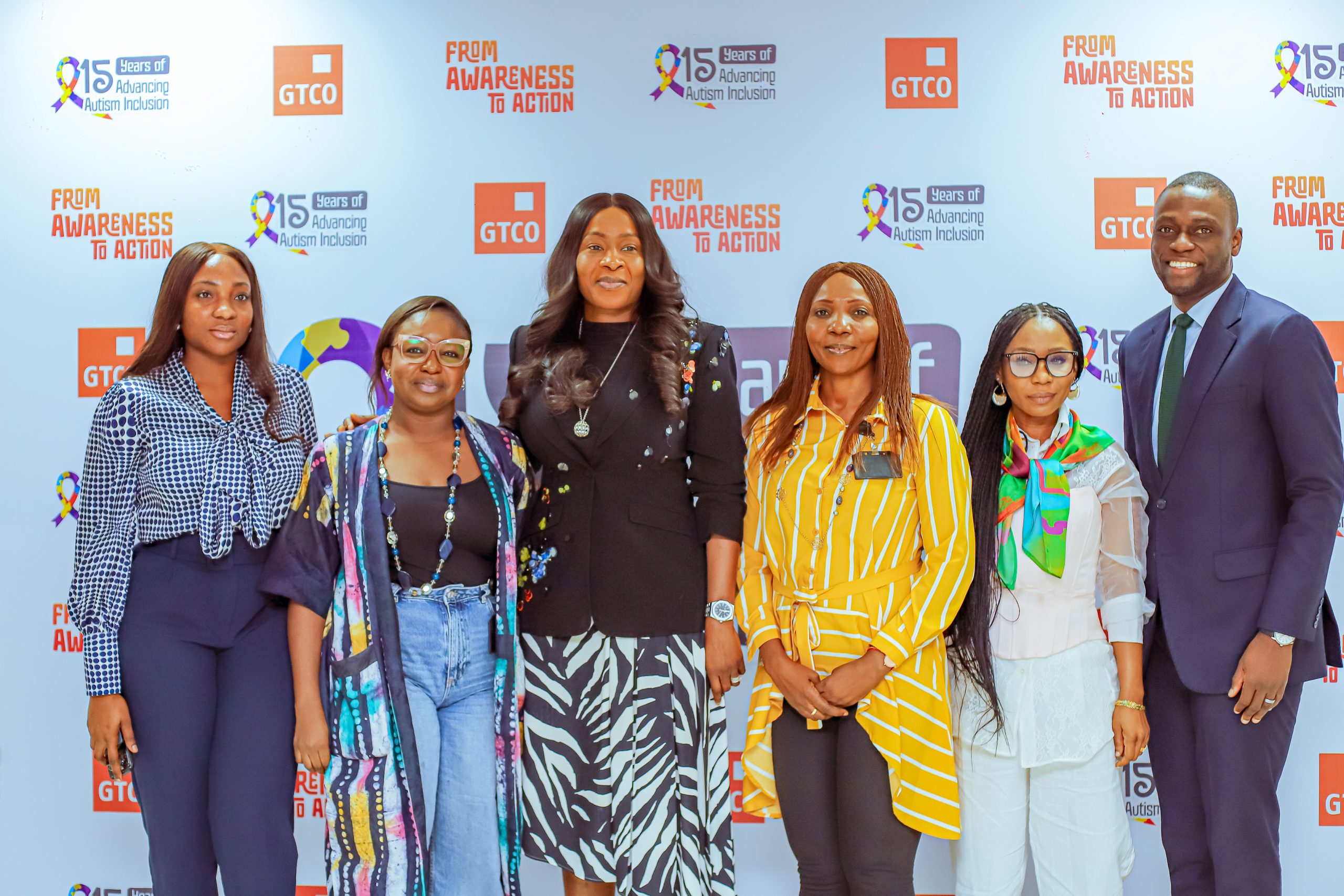
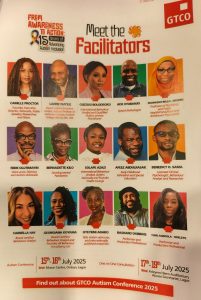
The 15th edition of the Guaranty Trust Holding Company (GTCO) Autism Conference has commenced in Lagos with a renewed call for sustainable action, deeper inclusion, and grassroots engagement in the advocacy for individuals living with Autism Spectrum Disorder (ASD). Held under the theme “From Awareness to Action: 15 Years of Advancing Autism Inclusion,” the landmark event reflected on a decade and a half of service, while setting a forward-looking agenda for autism advocacy across Nigeria and beyond.

In his welcome address, Mr. Segun Agbaje, Group Chief Executive Officer of GTCO, celebrated the growth of the Orange Ribbon Initiative—GTCO’s flagship Corporate Social Responsibility programme, which began in 2009 as a simple but focused effort to support children with neurodevelopmental disorders and their families.
“What started as an act of advocacy has grown into a movement that listens, responds, and builds. We are not only committed to awareness, but also to early intervention, inclusion, and empowerment,” Agbaje said. “This 15th-year milestone is a reaffirmation of our commitment and a reminder that progress must be measured by the everyday opportunities we create for every child and every individual.”
The conference drew a wide range of speakers with lived experiences, healthcare professionals, policymakers, and caregivers. One such voice was Mrs. Oyinade Adegite, Chief Communication Officer at GTCO, who underscored the importance of practical, experience-based knowledge in complementing medical insights.
“Many of those who support our initiatives are not medical doctors. They speak from a place of lived reality—applying what they’ve observed, adapted, and learned. That’s a higher form of learning. It’s inclusive, it’s empathetic, and it’s culturally relevant,” she emphasized.

Renowned Behaviour Analyst and Autism Advocate, Solape Azazi, shared insights from grassroots initiatives that challenge systemic limitations in Nigeria’s intervention services.
“Awareness is not enough if we do not give families access to affordable and decentralized treatment,” Azazi stated. “How can a mother with four children, working as a pepper seller, access specialized care that is only available once every three months in a central location?”

She spoke about the success of a pilot community intervention in Ikoyi-Obalende, where direct engagement with local leaders and families led to the identification of over 20 children living with autism and opened a dialogue on how local governments can support parents and caregivers through town hall meetings and free intervention clinics.
The project was later submitted to the Lagos State House of Assembly, resulting in the interest of two additional constituencies—a signal that action-oriented advocacy is gaining traction in policymaking circles.

Dr. Grace Bamgboye, a Consultant Speech-Language Pathologist, stressed the need for accurate knowledge of autism and the risks associated with misinformation.
“There is no single known cause of autism,” she clarified. “It’s a condition where the brain processes information differently. However, factors like poor antenatal care, use of unprescribed drugs, environmental toxins, and mismanaged birth processes can contribute to developmental delays.”
She further called for the integration of developmental milestone tracking in primary healthcare to improve early detection and intervention, particularly for children from low-income communities.
GTCO reaffirmed its long-standing dedication to transforming the autism narrative in Africa. The conference also featured representatives from partner institutions, including Autism Compassion Africa (Ghana), The Color of Autism Foundation (USA), Behaviorprise Consulting Inc. (Canada), and several Nigerian health institutions such as the Federal Medical Centres and Neuro-Psychiatric Hospitals in Lagos and Abeokuta.
Over the past 15 years, the GTCO Autism Programme has provided free one-on-one consultations with renowned specialists, hosted extensive panel discussions, supported inclusive education initiatives, and funded applied autism research.
“We are proud to have created a space for dialogue, transformation, and community,” Mr. Agbaje said in his closing remarks. “Whether this is your first time or your fifteenth, thank you for being part of this journey.”

Speaking also at the conference, Osezusi Bolodeoku, Behaviour Analyst and Founder of FOS ABA Centre Clinic, emphasized the urgent need for consistency and structured support systems for individuals living with Autism Spectrum Disorder, especially beyond childhood.
“One of the biggest gaps we see in autism care is the absence of long-term, structured intervention. Many families start interventions but struggle to sustain them due to financial constraints or a lack of professional support. We need to move away from short bursts of therapy and build a system that supports individuals through every stage of development,” Bolodeoku said.
She also advocated for more government involvement in providing vocational training for adults with autism, stressing that inclusion must extend beyond childhood into adulthood, where individuals can live fulfilling, independent lives with the right support.
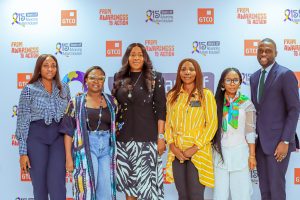
“It’s not just about helping children learn how to speak or behave in class. It’s about giving every individual on the spectrum a dignified future,” she added.
With this year’s conference, GTCO moves beyond symbolic awareness and into a bold new era of action, calling on all stakeholders—parents, professionals, communities, and policymakers—to join in building a more inclusive society where no child is left behind.