
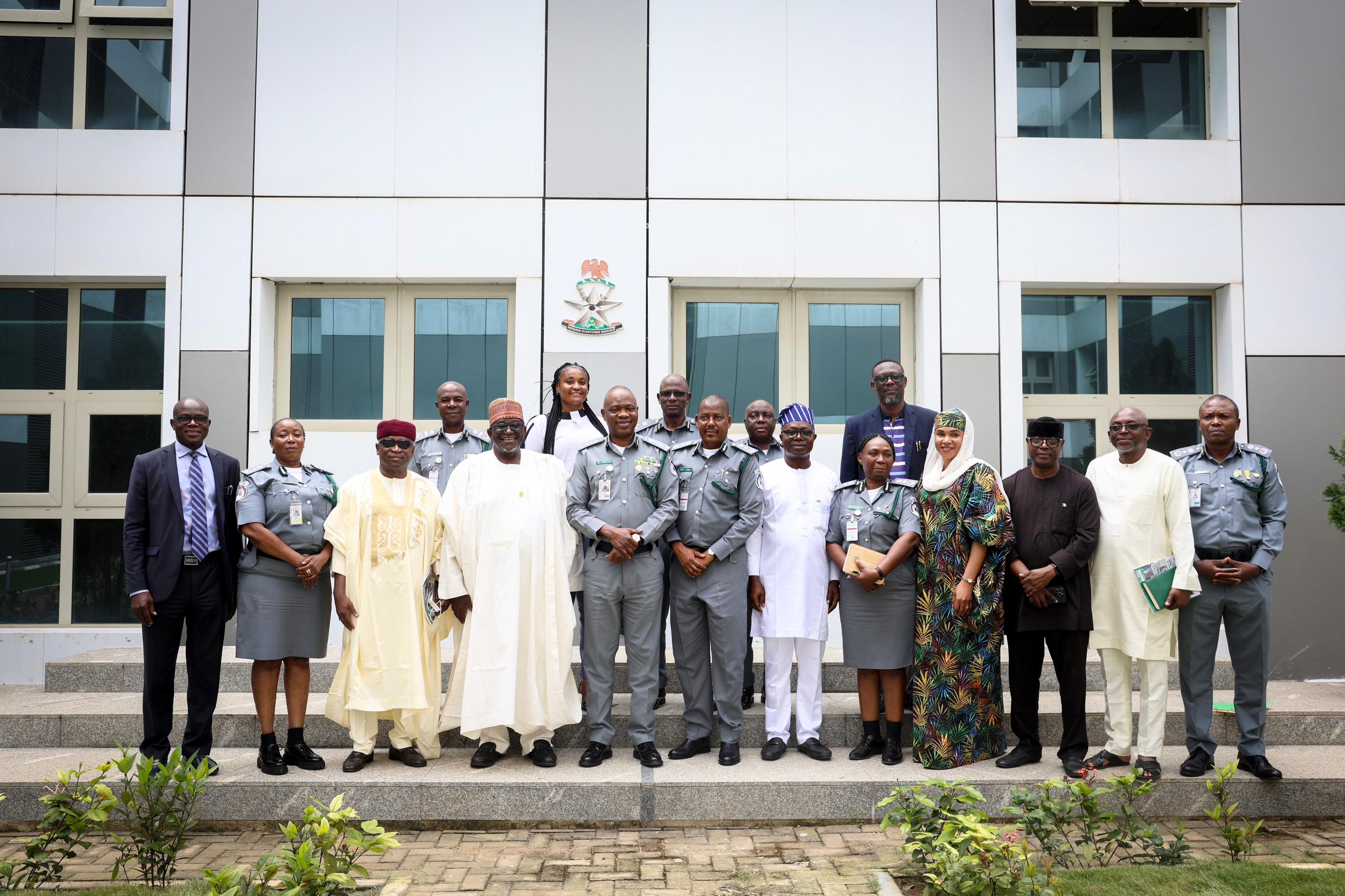
The Comptroller-General of Customs, Adewale Adeniyi, has reiterated the Service’s dedication to strengthening its partnership with the Nigerian Association of Chambers of Commerce, Industry, Mines and Agriculture (NACCIMA) in a bid to promote trade facilitation, boost revenue generation, and enhance border management.
He made this commitment on Thursday, 21 August 2025, while hosting the newly elected National President of NACCIMA, Jani Ibrahim, and his executive team at the Customs Headquarters in Maitama, Abuja.
In his remarks, the CGC warmly welcomed the private sector delegation and expressed gratitude for NACCIMA’s commendation and support of the ongoing reform initiatives within the Nigeria Customs Service.
He noted that his administration had, from the onset, prioritised collaboration as a means of balancing revenue generation, national security, and trade facilitation.
“When I assumed office, one of the first things I was deliberate about was the issue of collaboration. Revenue and security are important, but to succeed in both, we must also strengthen trade facilitation,” CGC Adeniyi said.
He added, “Today, I am pleased to inform you that we are fully on course with this collaboration. In that spirit, we will dedicate special desks for your members to resolve issues regarding the implementation of our processes.”
In his remarks, NACCIMA President Jani Ibrahim congratulated Adeniyi on his election as Chairperson of the World Customs Organisation Council, describing it as “a well-deserved recognition of Nigeria’s growing leadership in customs administration.”
He also commended President Bola Tinubu’s decision to extend Adeniyi’s tenure, calling it a vote of confidence in his transformational reforms.
Ibrahim praised Customs for reforms such as the introduction of the Authorised Economic Operator programme, deployment of indigenous digital platforms known as B’odogwu, Time-Release Studies and improvements to the Pre-Arrival Assessment Report.
He noted that these innovations were already reducing bureaucratic bottlenecks, lowering cargo dwell time, and strengthening Nigeria’s position in global trade.
“The private sector, through NACCIMA and the organised private sector, is fully committed to supporting Customs in achieving its mandate,” Ibrahim said.
He added: “We strongly advocate the establishment of a Joint Technical Facilitation Committee with representatives of both NACCIMA and Customs. This will provide a framework for regular consultation and measurable progress on all areas of collaboration.”
He stressed that such cooperation would not only reduce the cost of doing business but also position Nigeria more strategically under the African Continental Free Trade Area (AfCFTA).