
…Oyetola Unveils Federal Plan To Boost Cargo Calls at Eastern Ports
The Federal Government has said the modernisation of Nigeria’s Eastern ports remains central to its strategy to create a balanced, competitive and interconnected maritime transport system capable of reducing logistics costs and strengthening the national economy.
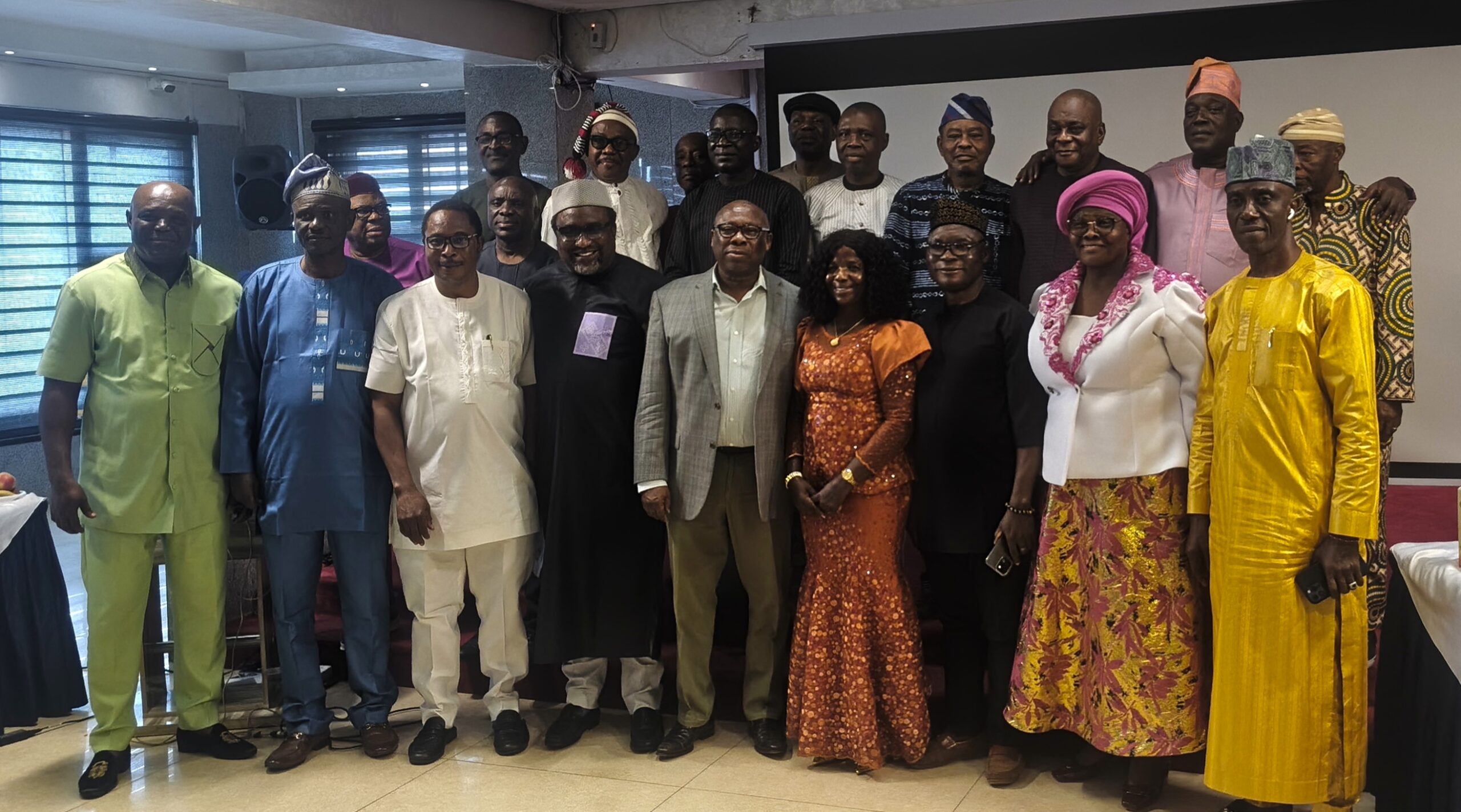
The Minister of Marine and Blue Economy, Adegboyega Oyetola, stated this yesterday at the Annual General Meeting and Conference of the League of Maritime Editors held at BWC Hotel, Victoria Island, Lagos.
Oyetola, who was represented by his Director of Press, Mrs Anastasia Ogbonna, said the theme of the conference, “Lagos/Eastern Ports: How to Reverse Existing Imbalance in Disproportionate Cargo Vessel Calls,” was timely, given the concentration of cargo traffic around Lagos and the underutilisation of several Eastern ports.
He said the imbalance had implications for national logistics costs, regional economic development, infrastructure utilisation, investment and the overall competitiveness of Nigeria’s maritime industry.
According to him, Lagos ports, particularly Apapa and Tin Can Island, have historically handled the largest proportion of Nigeria’s seaborne cargo, but the resulting congestion, longer cargo dwell and vessel turnaround times, demurrage, pressure on roads and other supply chain challenges could no longer be ignored.
Oyetola said ports including Onne, Port Harcourt, Warri and Calabar possessed considerable potential to serve industrial, agricultural, energy and commercial activities across the South-east, South-south and other parts of the country.
He identified inadequate infrastructure, draft limitations, navigational constraints, security concerns, poor hinterland connectivity, equipment gaps, operational costs and service predictability as some of the factors limiting the ability of Eastern ports to attract regular and competitive vessel calls.
The minister stressed that reversing the imbalance was not a regional demand but a national economic imperative, noting that the federal government was pursuing a deliberate strategy to strengthen the entire port network under President Bola Tinubu’s Renewed Hope Agenda.
He said the government’s port development programme included channel deepening, rehabilitation of critical infrastructure, navigational safety improvements, cargo handling facilities, security enhancement and the creation of a more predictable operating environment for shipping lines, terminal operators and cargo owners.
Oyetola explained that the concentration of current modernisation activities at Lagos ports should not be interpreted as preferential treatment, saying project sequencing was being determined by operational urgency, economic necessity, financing, readiness and the need to protect the continuity of national trade.
“We are not developing Lagos at the expense of the East. We are strengthening Lagos while building the capacity of the Eastern corridor to assume a greater and more strategic share of national maritime traffic,” he said.
He added that cargo redistribution would require more than physical infrastructure, stressing that shipping lines considered draft, berth availability, cargo volumes, turnaround time, security, tariffs, hinterland connectivity and operational reliability before choosing a port.
The minister therefore called for stronger maritime security, competitive commercial incentives, digitalisation, efficient road, rail and inland waterway connections and greater private sector participation, noting that the National Single Window and Port Community System would improve transparency, information sharing and cargo clearance.
Earlier, the President of the League of Maritime Editors, Mrs Remi Itie, said the conference was organised as part of the media’s responsibility to set the agenda for policymakers, inform citizens and promote solutions to challenges affecting the maritime and blue economy sectors.
Itie urged the government to develop Nigeria’s coastal areas and address pollution and waste across the coastal corridor, warning that environmental degradation could undermine fisheries, public health and the export potential of marine products.
The Chairman of the conference, Capt. Iheanacho Ebubeogu, said the debate over cargo concentration had generated strong sentiments within the maritime industry but stressed that the League’s choice of the topic reflected its concern about the economic development of the Eastern ports.
Ebubeogu said the competitiveness of Nigerian ports should be measured by safety, security, efficiency, navigational access, tariffs, hinterland connectivity, customs clearance and the ability to attract both captive and contestable cargo, urging stakeholders to embrace smart and green port development.
Also speaking through the Acting Director, Regulatory Services, Ms Adaora Nworu, the Managing Director of the Nigerian Ports Authority, Abubakar Dantsoho, said port modernisation was essential to Nigeria’s economic growth, noting that the authority’s programme combined physical reconstruction, digital transformation, institutional reforms and improved hinterland connectivity.
Dantsoho said the NPA’s modernisation programme included the rehabilitation of Apapa and Tin Can Island ports, interventions at Eastern ports, expansion of digital systems, electronic truck call-up, the Vessel Traffic Management System and measures aimed at improving cargo clearance, port efficiency and investor confidence.
He said the success recorded at Lekki Deep Sea Port demonstrated the potential of modern infrastructure and automation, adding that Nigeria could replicate the model across other viable ports to increase cargo throughput, attract shipping lines, generate revenue, create jobs and position the country as a leading maritime hub in West Africa.