
…“A leader is one who knows the way, goes the way, and shows the way.” – John C. Maxwell
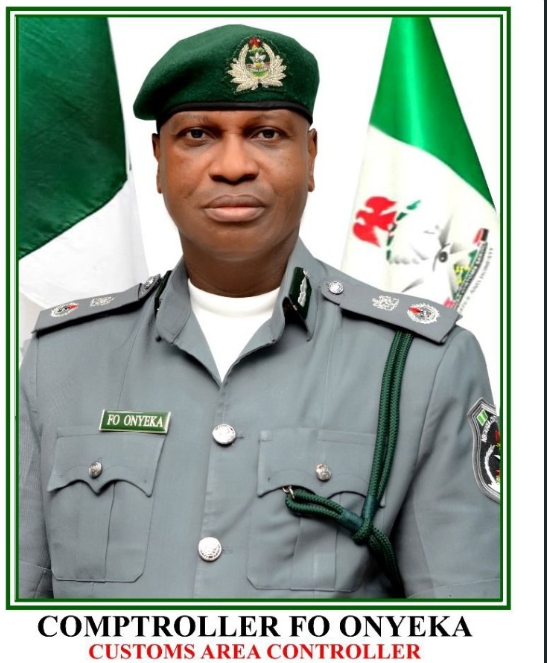
At a time when efficiency and accountability remain critical to Nigeria’s fiscal stability, the Tin Can Island Port Command of the Nigeria Customs Service (NCS) has emerged as a standout revenue engine driven by disciplined leadership and operational clarity under Comptroller Frank Okechukwu Onyeka.
Indeed, drawing from John Maxwell’s wise quote, Comptroller Onyeka is someone who knows the way, goes the way and shows the way. “Na man wey Sabi Customs road!”
In February 2026 alone, the Command generated N120.46 billion, a sharp increase from N103.61 billion recorded in the same period in 2025. The N16.8 billion year-on-year growth is more than a statistical improvement – it signals a systemic shift in governance, enforcement, and stakeholder engagement.
Since assuming office as Customs Area Controller (CAC), Onyeka has distinguished himself through a results-oriented leadership style anchored on accountability and precision. Notably, his appointment as CAC while holding the rank of Deputy Comptroller marked a rare institutional recognition of competence over convention.
His approach blends strict enforcement with strategic engagement. Internally, he has fostered a culture of discipline and motivation among officers. Externally, he has recalibrated relationships with freight forwarders, importers, and other port users prioritizing transparency and trust to encourage voluntary compliance.
Stakeholders widely credit this dual-focus leadership model for reducing friction in cargo processing while tightening revenue assurance mechanisms.
Systems, Technology, and Revenue Integrity
A key pillar of Onyeka’s success lies in operational modernization. Under his watch, the Command has intensified the deployment of technology-driven solutions to improve cargo clearance timelines and minimize human discretion in valuation and documentation processes.
Central to this is his role in advancing the Vehicle Identification Number (VIN) Valuation Service – one of the flagship reforms of the Customs Service. The initiative has significantly enhanced valuation accuracy for imported vehicles, reducing under-declaration and boosting revenue capture.
Additionally, Onyeka’s leadership of the Dispute Resolution Committee at Tin Can Island Port has led to the recovery of substantial revenues—reportedly running into trillions of naira by resolving classification and valuation disputes without prolonged litigation.
These interventions collectively point to a governance model that prioritizes efficiency without compromising enforcement.
Anti-Smuggling and Institutional Discipline
Beyond revenue, Onyeka’s tenure has been marked by a zero-tolerance stance on infractions. His anti-smuggling drive has reinforced compliance and deterred illicit trade practices within the port corridor.
Observers describe his methods as both firm and methodical—combining intelligence-led operations with strict monitoring frameworks. This has not only curtailed revenue leakages but also strengthened the integrity of port operations.
His impact in this area has not gone unnoticed. At the prestigious Maritime Industry Merit Awards, Onyeka was recognized as Best Customs Area Controller in both Anti-Smuggling and Revenue Generation – an uncommon dual distinction that underscores the breadth of his effectiveness.
Building Capacity, Strengthening Influence
While performance metrics define his tenure, Onyeka has also invested in long-term institutional value. In December 2025, he spearheaded a capacity-building workshop for maritime journalists—an initiative aimed at improving industry knowledge and fostering constructive media engagement.
The move was widely applauded as a forward-thinking effort to bridge the information gap between regulators and the public, reinforcing transparency within the maritime ecosystem.
A Model for Institutional Excellence
The Tin Can Island Port Command’s February 2026 performance is not an isolated success; it is the outcome of deliberate leadership, structured reforms, and consistent execution.
As Nigeria continues to seek sustainable revenue sources beyond oil, the example set by Frank Onyeka offers a compelling blueprint: combine technology with accountability, enforce compliance without stifling trade, and lead with clarity of purpose.
In an environment often challenged by inefficiencies, his results demonstrate that strong leadership is not merely administrative; it is catalytic.