
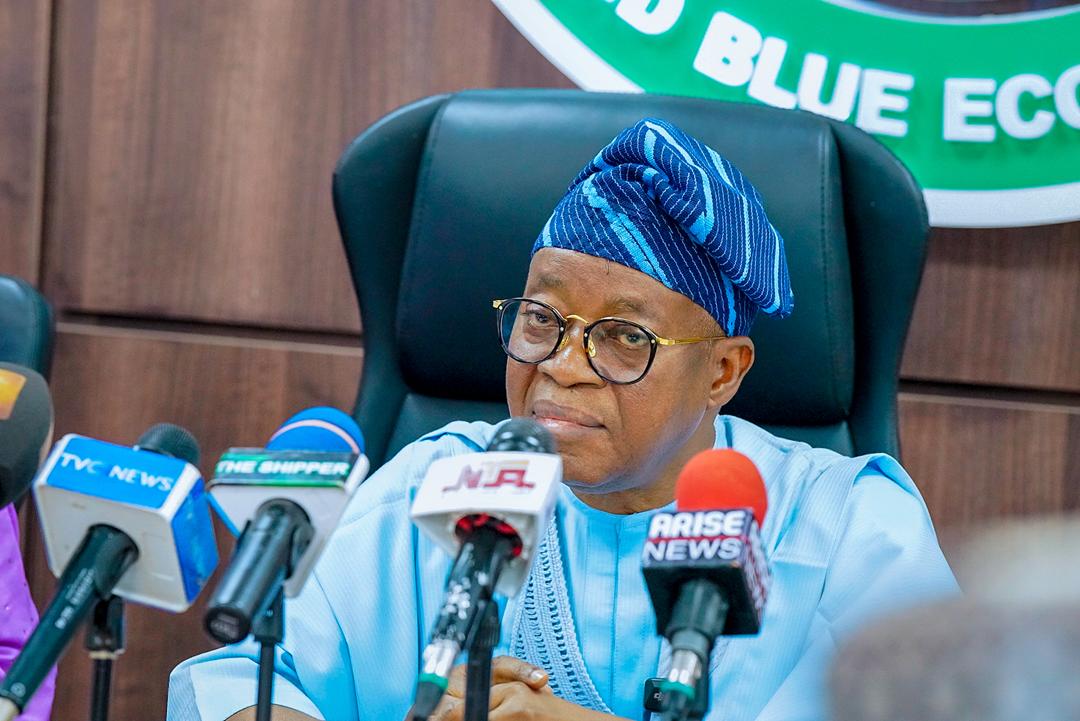
The Minister of Marine and Blue Economy, Adegboyega Oyetola, has unveiled a historic £746 million financing deal with the United Kingdom, setting the stage for the most far-reaching transformation of Nigeria’s seaports in nearly five decades.
The landmark agreement, backed by UK Export Finance, will drive a sweeping modernisation of the nation’s busiest maritime gateways, repositioning Nigeria as a competitive force within global shipping corridors.
According to a statement issued by the minister’s Special Adviser, Bolaji Akinola, the financing will target the comprehensive upgrade of the Lagos Port Complex, Apapa, and the Tin Can Island Port Complex, facilities that collectively handle over 70 per cent of Nigeria’s trade volumes.
The agreement is expected to be formally executed during the state visit of Bola Ahmed Tinubu to London on March 18 and 19, 2026, underscoring a renewed phase of economic diplomacy between Nigeria and United Kingdom.
Describing the deal as a watershed moment, Oyetola noted that the scale of the intervention marks the first holistic overhaul of the country’s premier ports since their inception, signalling a decisive break from decades of infrastructural stagnation.
Established in 1913, the Apapa Port remains Nigeria’s oldest and busiest maritime hub, while the Tin Can Island Port, commissioned in 1977, was designed to complement its operations. Yet, both facilities have long grappled with ageing infrastructure and operational inefficiencies.
Oyetola stressed that the project aligns squarely with the federal government’s vision to unlock the vast economic potential of the marine and blue economy, while restoring operational efficiency and global competitiveness to the nation’s port system.
“This is not just an upgrade; it is a complete transformation,” the minister declared, noting that modern cargo-handling systems, expanded capacity, and cutting-edge digital platforms would redefine port operations.
He added that the introduction of automation and integrated digital processes would drastically reduce vessel turnaround time and cargo dwell periods, eliminating entrenched bottlenecks that have historically impeded trade flows.
With enhanced efficiency, the reforms are expected to lower logistics costs, minimise demurrage, and create a more transparent cargo clearance regime, factors critical to stimulating economic growth and boosting investor confidence.
Ultimately, the minister projected that the revitalised ports would elevate Nigeria’s status as a strategic maritime hub for West and Central Africa, attracting increased shipping traffic and anchoring long-term economic expansion.