
Fatalities on Nigeria’s inland waterways have dropped sharply by 72 percent in 2025, following reforms and enforcement measures introduced by the National Inland Waterways Authority (NIWA) under its Managing Director/CEO, Bola Oyebamiji.
Official records show that deaths from boat accidents, which averaged 330 annually in 2021 and 2022, reduced to 231 in 2024. By the first eight months of 2025, the figure had further dropped to 92, according to a *Punch* report of September 2, 2025.
The development comes after the introduction of the Inland Waterways Transportation Regulations 2023—also known as the Water Transport Code—launched in April 2024 by the Minister of Marine and Blue Economy, Adegboyega Oyetola. The code sets out new safety standards for boat operations across the country.
At its launch, Kogi State Governor, Usman Ododo, commended President Bola Tinubu for appointing Oyebamiji, noting that NIWA had grown in visibility and relevance under his leadership.
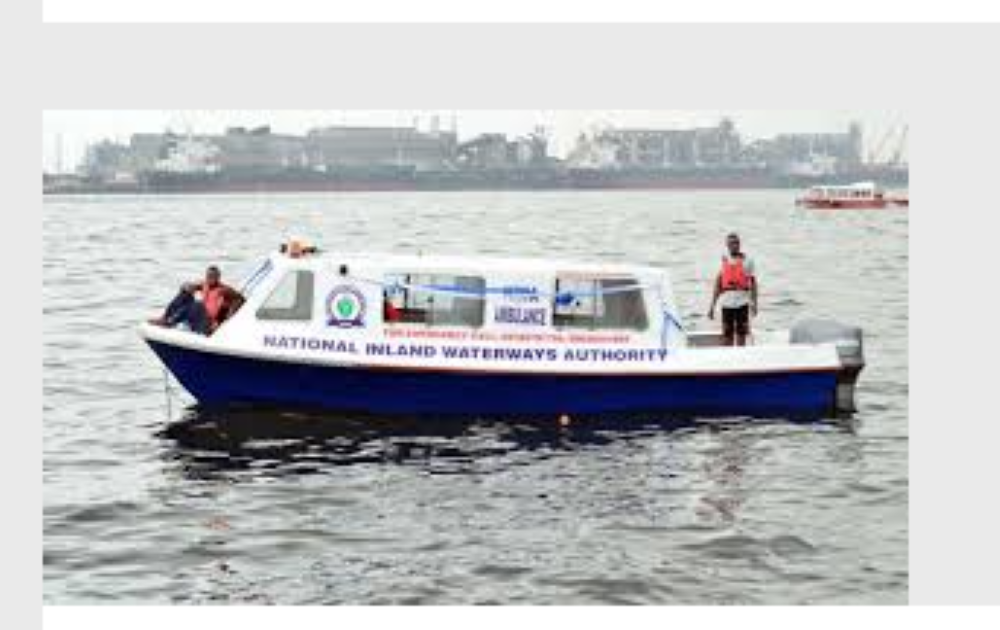
Since assuming office in October 2023, Oyebamiji has overseen the commissioning of 15 new boats for surveillance, enforcement, and emergency response, including three water ambulances, a 62-seater passenger boat, and a gun patrol boat. The agency has also distributed thousands of life jackets, while expanding hydrographic survey capacity with new equipment.
These measures have not only reduced accidents but also improved rescue outcomes. In May 2025, NIWA and the Nigerian Navy rescued 99 passengers from a collision on Bukuma River in Rivers State. In August, 104 passengers were rescued when a boat capsized on Kainji Lake, while similar rescues were recorded in Sokoto and Niger states.
Minister of State for Works, Mohammed Bello Goronyo, praised NIWA’s collaboration with the National Emergency Management Agency (NEMA), describing their swift joint response to accidents as a model of inter-agency synergy.
Despite the progress, maritime stakeholders have urged NIWA to sustain momentum by fully implementing recommendations of the Special Committee to End Boat Accidents in Nigeria. Key proposals include stricter enforcement of safety regulations, phasing out wooden boats, scaling up the free life jacket distribution programme, and expanding the Water Marshals unit—currently 350 officers—across the country’s 3,000km of navigable waterways.
Observers also recommend that NIWA increase community sensitisation, extend its corporate social responsibility to boat spare parts distribution through its partnership with Yamaha/Toyota, and continue advocacy in riverine communities.
While challenges remain, industry watchers agree that the reforms have begun to reshape water transport safety in Nigeria, positioning NIWA as a driver of President Tinubu’s Blue Economy agenda.