
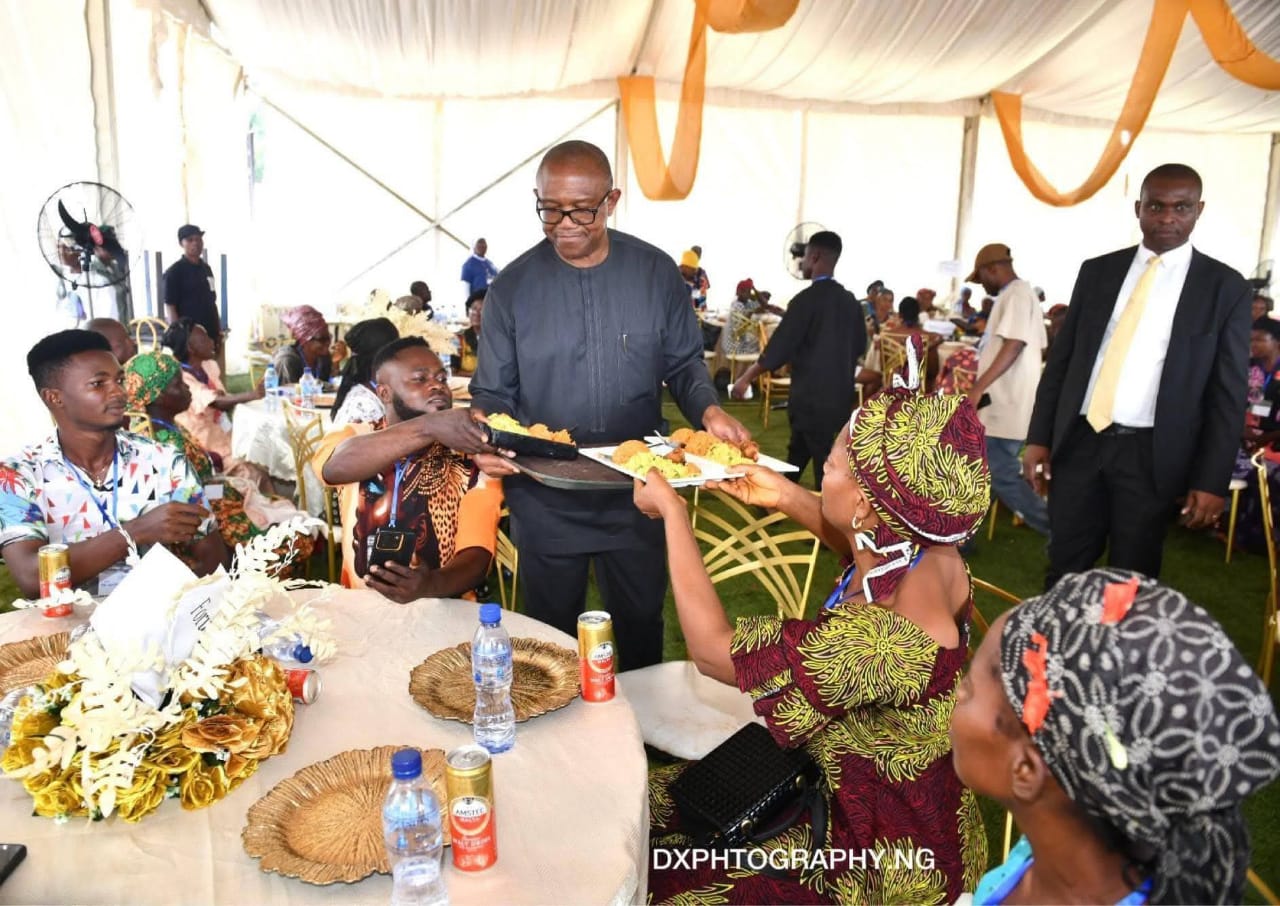
Former Anambra State Governor and Labour Party presidential candidate, Mr. Peter Obi, has addressed the public reactions trailing his recent participation in the *Jubilee of Hope* event in Imo State, where he was seen serving food to attendees.
In a personal clarification issued over the weekend, Obi stated that the event, which has generated widespread attention, was a private service programme aimed at promoting humility, empathy, and social equity. He explained that his role in serving food was not meant for publicity but reflected his core belief that leadership must be rooted in service.
“The Jubilee of Hope is designed for the rich to come down from their high places and serve the poor—not for show, but as a symbol of the society we must build,” Obi said. “It is about reminding us that those who have must not forget those who do not.”
He clarified that the photos and videos circulating online were shared by third parties, not his media team, emphasizing that he neither invited media coverage nor posted about the event himself. According to him, the service activity only went viral because society has normalized leadership devoid of service, making such acts appear unusual.
Obi also noted that he was not the only notable personality involved in the outreach. Other distinguished Nigerians, including Cardinal John Onaiyekan, Senator Osita Izunaso, Dr. A.B.C. Orjiako, and several others, also served the poor without seeking media attention.
Responding to critics who accused him of political theatrics, Obi stressed that humility and service have always been part of his lifestyle, both during and after his time in office. “Even now in private life, I do not have a house help. I serve my guests myself. I sweep, I clean. For me, humility is not a campaign strategy; it is a way of life.”
Obi concluded his statement by calling for a cultural shift where empathy, responsibility, and service are ingrained in the fabric of Nigerian leadership. “We cannot build a New Nigeria while ignoring the hungry, the forgotten, and the poor,” he said. “Service is not special, it is expected.”