
“Institute highlights return to IMO Council, lifting of US port restrictions as gains for maritime sector”
The International Maritime Institute of Nigeria (IMION) has called on the Federal Government to translate maritime policies and international commitments into practical actions that will strengthen port security, improve operational efficiency and drive growth in the blue economy.
According to the press statement by Bashir Ambi, Ph.D. Head, Communications and Marketing International Maritime Institute of Nigeria (IMION), the institute made the call in a statement to mark the 2026 World Maritime Day, themed “From Policy to Practice: Powering Maritime Excellence.” It stressed that effective implementation, supported by specialised training and technical expertise, remained critical to achieving sustainable growth in Nigeria’s maritime sector.
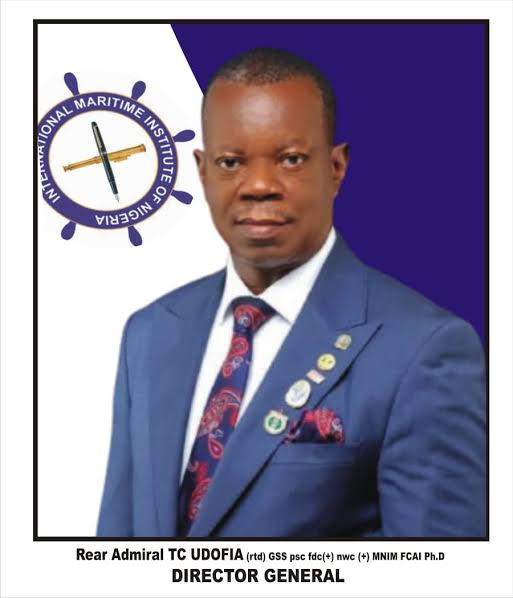
Director General of IMION, Rear Admiral Thaddeus Christopher Udofia (retd.), said the success of maritime policies should be measured by their impact on port operations, maritime security, regulatory compliance and the efficiency of trade corridors.
“Knowledge without execution is a stranded asset,” Udofia said, noting that signed treaties and regulatory frameworks would deliver meaningful economic benefits only when translated into practical solutions across the maritime industry.
The institute congratulated the Federal Government on Nigeria’s return to Category C membership of the International Maritime Organization Council after 14 years, as well as the United States Coast Guard’s decision to lift its 12 year port security restriction on vessels arriving from Nigeria. It described the developments as important milestones in restoring international confidence in the country’s maritime operations.
IMION attributed the progress in maritime security to sustained government efforts and the multi agency Deep Blue Project, which, according to the statement, has recorded more than three consecutive years without piracy incidents. It said improved security had helped strengthen Nigeria’s standing in international shipping and could reduce operational challenges for shippers and other maritime stakeholders.
Established by the Nigerian Navy as a research and strategic think tank, IMION said it had trained more than 500 maritime stakeholders and senior executives in different areas of the blue economy. The institute said its programmes were designed to bridge the gap between policy formulation and the technical expertise required to implement maritime reforms effectively.
To deepen professional development, IMION has established knowledge sharing partnerships with international maritime institutes and academic institutions. Its collaboration with the Admiralty University of Nigeria is expected to support joint executive programmes aimed at strengthening maritime intelligence, leadership and operational capacity.
The institute also highlighted its work in strategic blue economy governance, port logistics, fisheries development and maritime security. Its initiatives include executive leadership training, a proposed five year port transformation plan, and a five pillar strategy to revive the fisheries sector through scientific fish stock assessments, coastal lagoon cage culture and satellite based spatial planning.
Other initiatives include specialised training on maritime security and global trade, subsidised blue economy courses for media practitioners, and professional programmes aligned with revised Standards of Training, Certification and Watchkeeping for Seafarers requirements. IMION said the programmes would help prepare maritime professionals for emerging technologies, green shipping and the industry’s transition towards lower carbon operations.
Udofia said the institute would continue to promote evidence based research, technical training and stronger collaboration among government agencies, industry operators and academic institutions to advance Nigeria’s maritime interests. IMION urged stakeholders to sustain the momentum of recent achievements and ensure that policies produce measurable improvements in maritime safety, trade facilitation and economic development.