
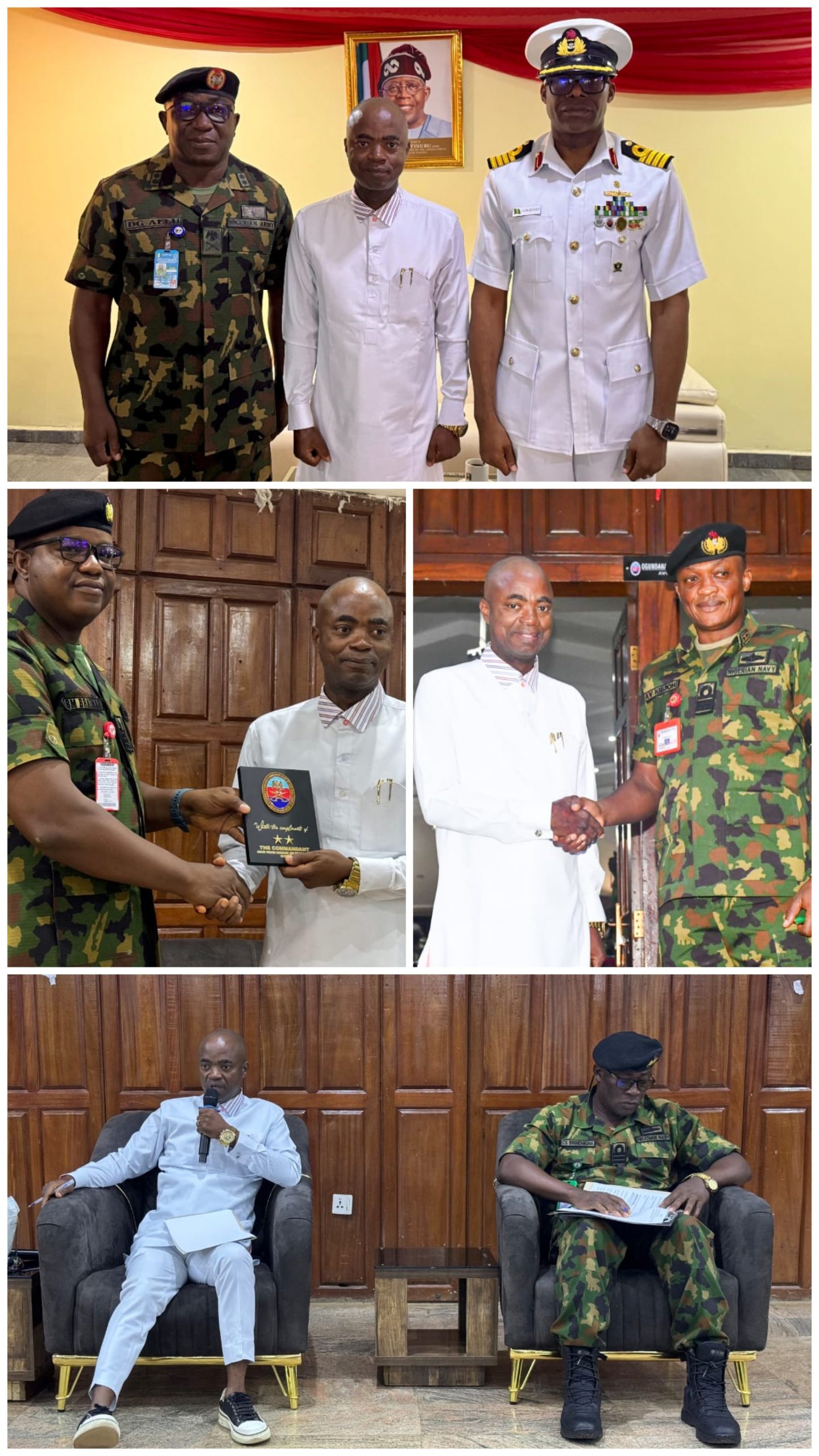
Security expert and President of Security Resources & Risk Management Academy, Lagos, Matthew Ibadin, has urged officers and men of the Nigerian Armed Forces and personnel of other security agencies to develop emotional discipline, warning that unmanaged anger can become more dangerous than an enemy.
Ibadin, who is also a doctoral researcher at the Nigerian Defence Academy (NDA) and the University of Abuja, gave the warning while delivering a lecture to 436 military personnel and officers from eight friendly nations at the Armed Forces Command and Staff College, Jaji, Kaduna.
He spoke on Monday during the Senior Course 48 lecture titled, “Emotional Discipline Under Pressure and Anger Management for Staff Officers,” where he stressed the need for officers to understand the consequences of uncontrolled emotions at work and within their families.
Ibadin described anger as “temporary madness that leaves a permanent record,” urging the officers not to assume that they were immune to its consequences. He said the line between controlled and destructive anger was thinner than most people imagined, noting that undisciplined anger could become a greater threat than the enemy.
According to him, one practical tool officers can deploy at home, in the office or while exercising command under pressure is to pause before reacting. “Anger may enter the room, but must never take command,” he said, stressing that emotional control was essential during conflicts and difficult decision making.

Using the behaviour of lions as an illustration, Ibadin said both male and female lions roar, but the female lion does so only when necessary. “She lives longer not because she is weaker but because she is more disciplined,” he said, urging officers to understand which battles deserved their energy.
He observed that many people had become “male lions”, fighting juniors, spouses, motorists, making issues out of phone calls and reacting aggressively to minor disagreements even when no genuine threat existed. Such constant agitation, he warned, could gradually destroy careers, relationships and achievements.
Ibadin urged officers to “be a female lion in strategy and a male lion only when tactically necessary”, stressing that restraint should not be mistaken for weakness. He said authority did not require constant aggression and that the strongest person in a room was often the calmest.
Drawing from Aristotle’s five tests of anger, he asked officers to consider the right person, right reason, right time, right degree and right manner before responding to provocation. He said a mature officer should not seek to eliminate anger but must learn to discipline and properly channel it.

Ibadin explained that anger in a military environment was not necessarily indiscipline, but could serve as information that standards had been violated, a mission threatened, injustice perceived, expectations unmet, disrespect felt or an operational setback suffered. He, however, advised officers to pause, verify facts, ask questions and analyse situations before taking action.
He warned that an officer could be deeply angry without shouting, insulting, threatening, humiliating, striking anyone or abusing authority. Since officers lead personnel who carry arms and make decisions capable of affecting lives, he said, a single emotional outburst could damage a mission, career, institution and family, while also generating unwanted national attention.
Ibadin also described anger as a threat to health and family life, warning that chronic anger could contribute to hypertension, stroke, diabetes and cardiovascular problems.
He reminded officers that rank and authority should not be carried into the home, saying, “At Jaji your rank commands respect, but at home your rank is irrelevant.” He further cautioned that decisions made in anger, including operational orders, personnel assessments, promotions, procurement and critical reports, could lead to inquiries, career damage and mission failure. “The higher the rank, the heavier the cost,” he said.