
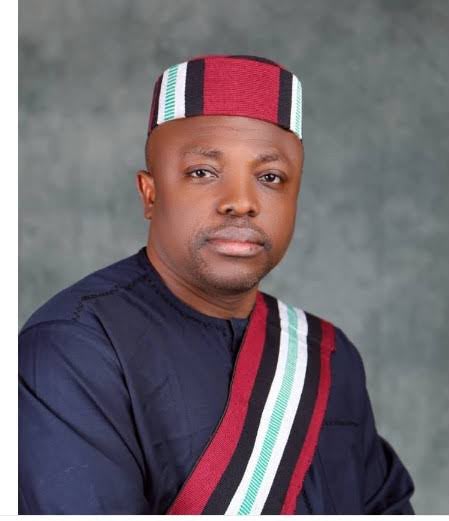
Chief Abba Adaudu, a financial and tax consultant, has urged the Federal Government to strengthen social protection programmes and provide genuine tax relief for low income Nigerians, saying economic reforms must ultimately improve the living conditions of citizens.
Adaudu, who spoke during a personality interview, acknowledged that recent tax reforms contain provisions designed to shield small businesses and low income earners from excessive taxation.
However, he expressed concern that some of the exemptions may offer limited practical relief because of the rising cost of living and declining purchasing power of the naira.
According to him, income thresholds that appear substantial in legislation may not provide meaningful protection for households when measured against current prices and the realities of the foreign exchange market.
“The reforms are very good things, and every reform will come with its own consequences and reward to the system,” he said, stressing that the benefits of the reforms could easily be weakened by the declining value of the naira.
Adaudu therefore urged policymakers to assess tax policies beyond the figures contained in legislation and examine their actual impact on ordinary Nigerians, particularly low income households and small business operators.
He also raised concerns over the removal of subsidies on essential services, arguing that government policies should be evaluated primarily by their effect on citizens, especially vulnerable people living in rural communities.
“Government is for the welfare of the people,” he said, warning that economic reforms could create greater hardship if they are not accompanied by adequate social protection and accessible public services.
The tax consultant said the situation was more troubling in rural communities, where many residents have limited access to government institutions, healthcare, infrastructure and other essential services. He questioned whether the mere existence of public facilities could be regarded as meaningful government presence when such facilities are not adequately functional.
Adaudu also criticised the burden of electricity costs on households and businesses, noting that Nigerians often spend additional money on generators and solar power to compensate for unreliable public electricity while still paying electricity bills.
He, however, called on citizens to take greater responsibility for demanding accountability, urging Nigerians to rise above ethnic, religious and political divisions. “The pains of not having electricity has no tribe, has no religion,” he said, calling for collective action, organised advocacy and stronger demands for good governance.
He maintained that while economic reforms remain necessary, their success should not be measured solely by increased government revenue or other economic indicators. According to him, the ultimate test is whether low income earners, small businesses and rural communities experience tangible improvements in their standard of living.