
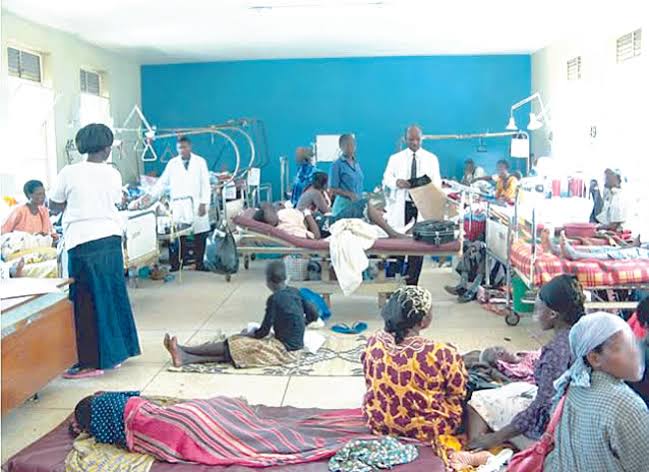
Nigeria’s public hospitals were created to provide affordable and accessible healthcare to citizens, particularly those who cannot afford the increasingly expensive services offered by private facilities. Yet, for millions of Nigerians, walking into a government hospital today can feel like entering a system where hope is often tested by long queues, inadequate equipment, shortages of medicines, insufficient personnel and the rising cost of treatment.
This situation demands urgent national attention. Healthcare is not a luxury, and access to quality medical treatment should not depend on the size of a person’s bank account. When citizens can no longer trust public hospitals to provide timely and effective care, the country is confronted with a crisis that goes beyond the health sector.
The problems are not entirely hidden. Nigeria has continued to struggle with inadequate health financing, shortages of medical personnel, obsolete equipment and high out of pocket expenditure. The country has also remained below the 15 per cent health spending benchmark agreed by African leaders under the Abuja Declaration.
More disturbing is the gap between budgetary promises and actual releases. The Minister of Health and Social Welfare, Prof. Muhammad Ali Pate, disclosed during the 2026 budget defence that only N36 million was released from the N218 billion appropriated for health capital projects in 2025. Such a funding gap inevitably affects hospital infrastructure, equipment procurement and the expansion of healthcare services.
The consequences are felt most severely by ordinary Nigerians. A patient who arrives at a public hospital with a serious condition may first encounter a shortage of essential equipment, then be asked to purchase medicines or supplies outside the facility. In some cases, families are forced to raise money before treatment can proceed.
For poor and vulnerable Nigerians, this can become a matter of life and death. Illness can quickly consume family savings, force relatives to borrow money and push households deeper into poverty. The fear of hospital bills can even discourage people from seeking treatment until their conditions become critical.
The Federal Government says it is pursuing reforms aimed at improving healthcare financing, expanding insurance coverage, strengthening infrastructure and developing the health workforce. The Ministry of Health has also acknowledged that sustainable financing remains one of the biggest challenges confronting the sector.
But Nigerians need more than policy statements. They need functioning hospitals. They need doctors, nurses, pharmacists, laboratory scientists and other health professionals to have the equipment and working conditions required to save lives. They need emergency departments that respond quickly and pharmacies that can provide essential medicines.
President Bola Tinubu therefore has a responsibility to make public healthcare one of the strongest practical priorities of his administration. Economic reforms may be necessary, but economic transformation cannot be meaningful if Nigerians cannot obtain affordable medical care when they fall sick.
The President and the Federal Government should urgently strengthen funding for public hospitals while demanding measurable accountability for every naira allocated to the health sector. Hospital rehabilitation, modern diagnostic equipment, reliable electricity and water supply, medicine availability and emergency care should receive sustained attention.
State governors and local government authorities also have critical responsibilities. Healthcare cannot be treated as the exclusive responsibility of Abuja. States must strengthen their hospitals and primary healthcare centres, properly fund them and ensure that resources reach the facilities where patients actually receive treatment.
There is also a need to improve the welfare and working conditions of health workers. Nigeria cannot continue to train doctors, nurses and other professionals only to watch them leave because of poor remuneration, inadequate facilities and difficult working conditions. Retaining skilled personnel must become a national priority.
The private sector, philanthropists and well meaning Nigerians can also contribute, but charity should complement government responsibility rather than replace it. Public healthcare is a fundamental responsibility of government, and citizens should not have to depend entirely on donations to receive basic medical treatment.
Nigerians themselves must also demand accountability. Citizens should ask questions about health budgets, hospital projects, procurement and the quality of services provided. Civil society organisations, journalists and professional bodies must continue to monitor government spending and expose failures that place patients at risk.
Nigeria cannot claim to be building a prosperous nation while its citizens are afraid of becoming sick because they cannot afford treatment. A strong country must have hospitals that give people confidence, not facilities that deepen their anxiety.
The President, governors, lawmakers, health professionals, private investors and citizens must therefore act together. Public hospitals must not become Nigeria’s lost hope. They must become places where Nigerians can walk in with fear and walk out with renewed confidence that their lives matter.