
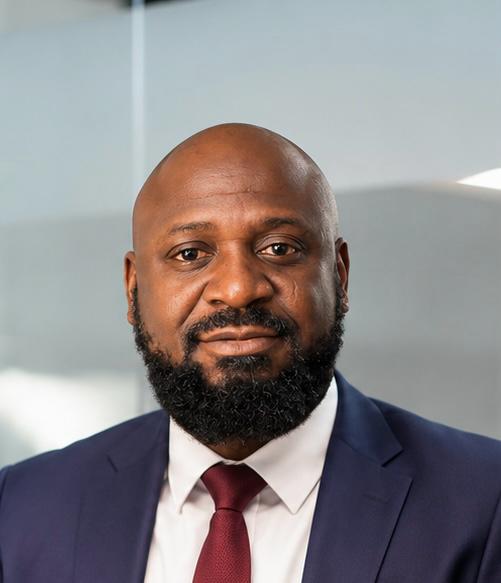
The Managing Director, Parts Central Limited, Henry Olaoluwa Onifade, has said Nigeria can transform the huge volume of plastic waste, water hyacinth and other marine litter choking its waterways into economic opportunities.
Onifade said the conversion of waterway waste into wealth could be achieved through recycling, biofuels and other value added processes capable of supporting businesses, creating jobs and strengthening the circular economy.
He spoke in Lagos while interacting with maritime journalists as part of activities marking his birthday, during which he also provided an update on Parts Central’s nationwide waterways clean up initiative being implemented in partnership with the National Inland Waterways Authority (NIWA).
According to him, the initiative goes beyond the removal of refuse from waterways, as the company is developing systems that would ensure that recovered materials are processed and converted into useful products.
Onifade said the philosophy driving the project was that materials traditionally regarded as waste should be viewed as potential economic resources.
“We don’t have waste anymore; waste is now wealth,” he said, stressing the need for Nigeria to develop sustainable ways of extracting economic value from environmental challenges.
He explained that biodegradable materials recovered during the clean up operations would not simply be discarded, noting that some could be processed for biofuels and other commercially useful applications.
The Parts Central boss also disclosed that the company was exploring technologies for sorting, processing and recycling plastic waste recovered from waterways.
He said the ultimate objective was to build an economically viable circular economy around Nigeria’s inland waterways, with environmental protection linked directly to enterprise and wealth creation.
Onifade said the increasing involvement of government agencies, ministries, associations, states and other stakeholders in the campaign for cleaner waterways demonstrated growing recognition of the scale of the problem.
He noted that the National Environmental Standards and Regulations Enforcement Agency (NESREA) had also been engaging stakeholders on measures to tackle plastic pollution in Nigeria’s waterways.
“We are happy that we can even think of possible pollution free waterways and roll it out. Since we rolled it out, we have heard of different people, associations, organisations and states that are now talking about it,” he said.
Onifade said the company was prepared to work with credible stakeholders willing to contribute to the campaign, regardless of their institutional or geographical affiliations.
“Our goal is for us to have pollution free waterways. By God’s grace, we will integrate everybody who has a very good and genuine mindset that pollution free waterways is possible in Nigeria,” he added.
He disclosed that Parts Central was developing a technology driven database covering ports, jetties, landing sites, riverbanks, dockyards and other facilities connected to the nation’s inland waterways.
According to him, the database would provide reliable information on the volume and distribution of waste generated at different locations, thereby enabling the company and relevant government agencies to deploy resources more efficiently.
He explained that every jetty and landing port would be assessed to determine the availability of appropriate waste management facilities, while boats and other watercraft would also form part of the data collection process.
“It’s not for us to have the data, because if you don’t have data of the people you want to cater for, you don’t know how to cater for them,” Onifade said.
He added that Parts Central had invested significant time in testing various technologies, equipment and processes capable of addressing waterway pollution, with plans to bring manufacturers and other operators into the plastics and waste management value chain.
Onifade further disclosed that the clean up campaign would soon expand beyond Lagos, with Parts Central preparing to commence operations in Port Harcourt and Imo State as part of its planned nationwide rollout.
He said the company was currently establishing the necessary structures and data systems to ensure that the expansion was properly coordinated and sustainable.
Beyond environmental sanitation, Onifade said the long term ambition was to develop a nationwide waterway management system capable of turning cleaner waterways into platforms for employment, entrepreneurship and wealth creation.
He also reflected on his transition from partisan politics to business, saying his political experience deepened his understanding of public challenges and encouraged him to pursue practical solutions through enterprise.
“I took my own to the other side. I took it from politics to business,” he said, urging Nigerians to see environmental challenges as opportunities for innovation, investment and economic development.
Onifade said the success of the initiative would depend on sustained collaboration among government agencies, private businesses, communities, waterway operators and other stakeholders.
He concluded that Nigeria could achieve cleaner waterways while simultaneously creating a productive economic ecosystem around recovered waste, declaring, “No more waste on the waterways; we will now have wealth on the waterways.”