
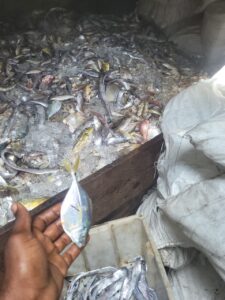
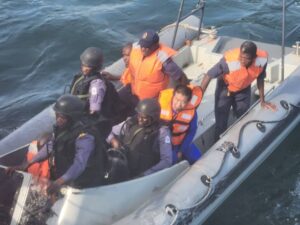
The Nigerian Navy has intercepted three fishing vessels and arrested 30 crew members over suspected involvement in illegal, unreported and unregulated fishing activities in Nigeria’s maritime domain.
The arrests followed a three day fisheries protection operation, Exercise Coastal Grip II and Operation ABO EJA, launched to strengthen surveillance, enforcement and interagency efforts to protect the country’s marine resources.
The operation, which commenced at NNS KADA under the Western Naval Command, brought together the Nigerian Navy, Federal Department of Fisheries and Aquaculture (FDFA), under the Federal Ministry of Marine and Blue Economy, the Fisheries Committee for the West Central Gulf of Guinea (FCWC) and other maritime stakeholders.
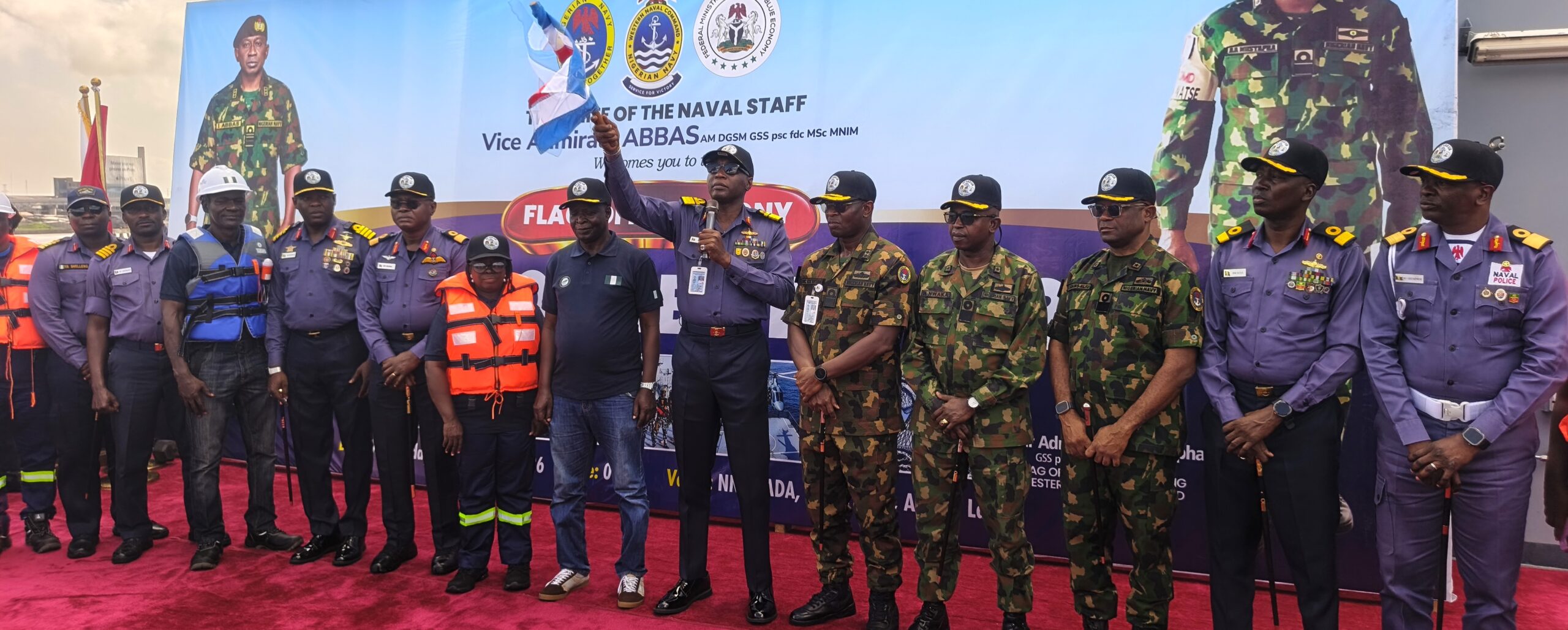
At the closing ceremony on Friday, August 28, the Flag Officer Commanding, Western Naval Command, Rear Admiral Abdullahi Abubakar Mustapha, said the operation achieved its major objectives and demonstrated the effectiveness of joint action against fisheries-related maritime offences.
Representing the Chief of the Naval Staff, Vice Admiral Idi Abbas, Rear Admiral Mustapha said the interception of the vessels and arrest of the crew sent a clear message that Nigeria’s fisheries resources could no longer be exploited with impunity.
He said Operation ABO EJA, which means fisheries protection in Yoruba, marked an important step in Nigeria’s efforts to secure its marine resources, protect coastal livelihoods and support the development of the blue economy.
The FOC said the operation involved the deployment of Nigerian Navy ships, helicopters, Special Boat Service personnel and the Western Naval Command Mission Control Centre to enhance maritime surveillance and enforcement.
He added that the FDFA provided technical expertise and regulatory support, enabling the participating agencies to identify suspected violations and respond effectively to illegal fishing activities.
According to him, the arrested crew members comprised Nigerians and foreign nationals, reflecting the transnational character of illegal fishing activities in the Gulf of Guinea.
Rear Admiral Mustapha said illegal, unreported and unregulated fishing remained a serious threat to Nigeria’s fisheries sector, particularly because of its impact on fish stocks, food security, government revenue and the livelihoods of coastal communities.
He noted that Nigeria imports more than 70 per cent of its fish requirements, stressing that the depletion of local fish stocks through illegal exploitation could further worsen the country’s dependence on fish imports.
The FOC said protecting fisheries resources was therefore not only a maritime security responsibility but also an economic and food security imperative requiring sustained collaboration between security agencies, regulators and legitimate industry operators.
He said the Navy’s renewed partnership with fisheries authorities would strengthen monitoring, control and surveillance while improving compliance with Nigeria’s fisheries laws and regulations.
Rear Admiral Mustapha further stressed the importance of regional cooperation, noting that fish stocks and illegal fishing activities were not restricted by national boundaries.
He said Nigeria’s participation in regional initiatives, including collaborative activities with Gulf of Guinea countries, would promote information sharing, coordinated surveillance and more effective enforcement against fisheries-related crimes.
Earlier, the representative of the Minister of Marine and Blue Economy, Adegboyega Oyetola, Director Usman Garba, described the joint patrol as evidence of the Federal Government’s commitment to sustainable fisheries governance and responsible utilisation of marine resources.
Garba said Nigeria’s fisheries resources remained critical to food security, employment, livelihoods and the wider development of the blue economy, but warned that illegal fishing, regulatory violations, marine pollution and destruction of aquatic habitats continued to threaten the sector.
He said IUU fishing deprived the country of valuable economic resources, undermined legitimate operators and weakened efforts to develop a sustainable fisheries industry.
The Director said Operation ABO EJA would help improve monitoring, control and surveillance, strengthen compliance with fisheries regulations and provide reliable operational information for better management of the sector.
He urged legitimate fishing operators to cooperate with enforcement teams, stressing that the objective of the operation extended beyond arrests to promoting compliance, sustainability and responsible exploitation of Nigeria’s fisheries resources.
Garba also dismissed claims that suspected illegal fishing operators were routinely released without appropriate action, urging those making such allegations to provide verifiable evidence rather than rely on unsubstantiated social media reports.
On marine pollution, particularly plastic waste, he said relevant government agencies were working with stakeholders to address the problem, warning that plastics and other pollutants could kill aquatic organisms and damage marine ecosystems.
Rear Admiral Mustapha commended Oyetola and the Ministry of Marine and Blue Economy for supporting the operation, as well as the leadership and personnel of the FDFA for their professionalism and cooperation.
He also praised the officers, ratings, Special Boat Service personnel and civilian participants for their vigilance, courage and teamwork, saying the lessons from the operation would strengthen future fisheries protection missions.
The FOC assured Nigerians that the Navy would sustain collaboration with relevant agencies to deter illegal activities at sea, protect the marine environment and secure the livelihoods of coastal communities.
He said the Navy remained committed to keeping Nigeria’s maritime domain safe for legitimate economic activities, adding that effective protection of fisheries resources was essential to unlocking the full potential of the nation’s blue economy.

Rear Admiral Mustapha subsequently declared Operation ABO EJA closed, with the operation providing a renewed framework for combining maritime security, fisheries enforcement and regional cooperation in the protection of Nigeria’s marine resources.