
…moves to grant medical services greater autonomy for stronger force readiness
The Nigerian Navy has commenced high level discussions aimed at granting greater autonomy to its Medical Services in a move stakeholders described as critical to operational excellence, personnel welfare and long term force readiness.
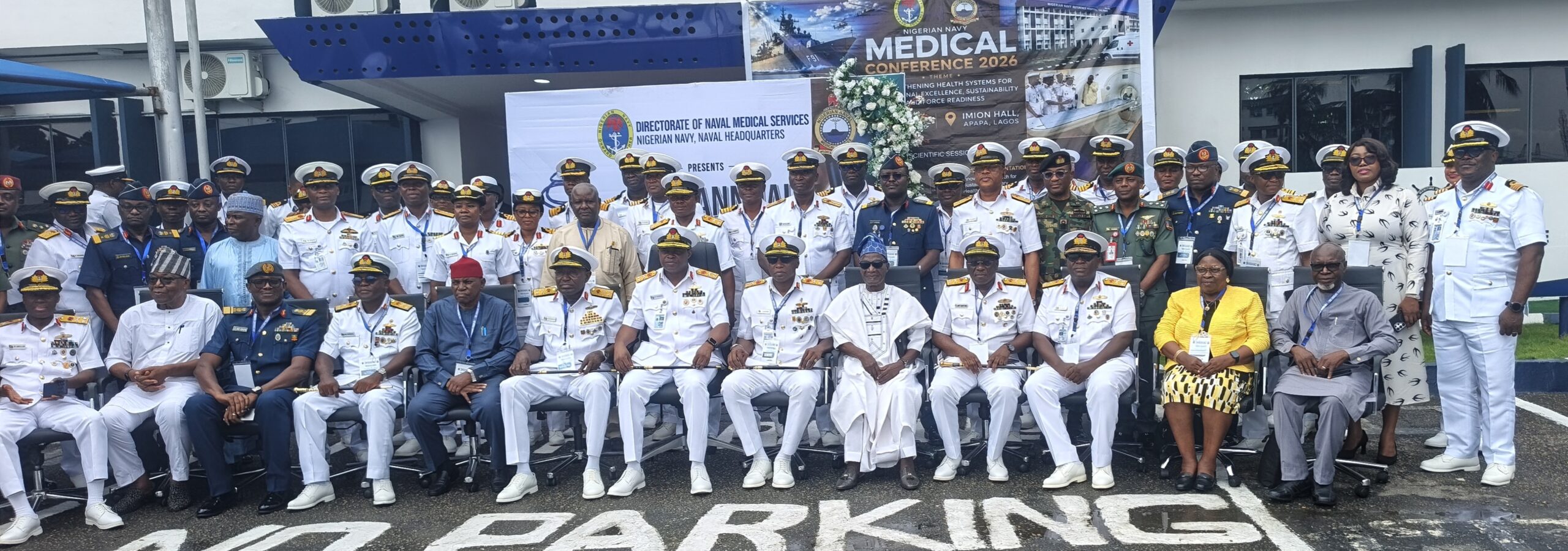
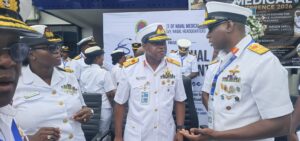
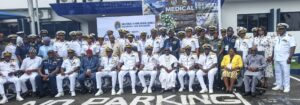
The proposal dominated deliberations at the 2026 Nigerian Navy Annual Medical Conference held at the IMION Conference Hall, NNS Quorra, Lagos, under the theme, “Strengthening the Nigerian Navy Health System for Operational Excellence, Sustainability and Force Readiness.”
Delivering the keynote address on behalf of the Chief of the Naval Staff, Vice Admiral Idi Abbas, the Chief of Policy and Plans, Rear Admiral Olatunde Olodude, described healthcare as a strategic pillar of naval effectiveness.
He said the combat readiness of any warship is directly linked to the medical readiness of its crew, making investment in military healthcare indispensable.
According to him, the welfare, morale and mental resilience of naval personnel and their families remain central to the success of the Navy’s operational mandate and Nigeria’s blue economy aspirations.
The naval chief noted that the Nigerian Navy Medical Services had evolved significantly since its humble beginnings, growing from two small sickbays into a nationwide network of hospitals, medical centres and specialised healthcare facilities.
He stated that the medical arm has developed the manpower, infrastructure and expertise required to deliver services that align with international best practices.
Despite these achievements, he stressed the need for further reforms to strengthen institutional capacity and position the medical system for future challenges.
Abbas said the conference was deliberately designed to examine institutional autonomy and restructuring options capable of transforming the Medical Services into a stronger force multiplier.
He explained that participants would also address sustainable healthcare financing, manpower retention, veterans welfare, mental health support and measures to tackle operational stress within the Service.
The Chief of the Naval Staff highlighted ongoing investments in healthcare infrastructure, including the construction of the Nigerian Navy Reference Hospital Abuja and the expansion of the Nigerian Navy Reference Hospital Ojo.
According to him, the projects will expand access to specialist medical care and improve healthcare outcomes for personnel and their dependants.
Earlier, the Director of Medical Services, Surgeon Commodore M.J. Salihu, said the conference marked a significant moment in the evolution of military healthcare within the Navy.
He noted that the Directorate of Medical Services had grown from two sickbays established in 1963 into a comprehensive healthcare network serving naval personnel, their families and civilians in operational areas.
Salihu disclosed that the Medical Services currently comprise 356 officers, including 64 medical consultants, alongside 2,633 medical ratings.
He added that the Nigerian Navy now operates two reference hospitals, two hospitals, six medical centres, a medical training school, 67 shore based sickbays and 12 afloat sickbays.
According to him, the expansion has positioned the Medical Services as a strategic enabler of combat readiness, mission success and national security.
The conference’s lead paper on institutional autonomy triggered extensive debate among senior military officers and healthcare experts.
A major consensus emerged that the Nigerian Navy Medical Services has attained the manpower strength, infrastructure base and operational relevance required to function as an autonomous branch within the Service.
Speaking during the interactive session, the Flag Officer Commanding Western Naval Command, Rear Admiral Abubakar Mustapha, strongly advocated greater autonomy for military medical institutions.
He argued that autonomy would improve efficiency, enhance accountability and provide medical facilities with the resources needed to sustain world class healthcare delivery.
Mustapha noted that autonomous military hospitals would be better positioned to fund specialist training, acquire modern equipment and retain skilled professionals.
He further proposed a Medical Services Act that would provide direct budgetary allocation to military healthcare institutions while ensuring proper oversight and transparency.
Drawing comparisons with leading military medical institutions abroad, he said autonomy would unlock innovation and strengthen healthcare governance across the Armed Forces.
Also speaking, the Commander of the Maritime Guard Command at the Nigerian Maritime Administration and Safety Agency, Commodore Reginald Adoki, said the Medical Services had long surpassed the benchmarks required for institutional independence.
Adoki recalled that manpower strength and equipment holdings were among the original conditions considered when discussions on medical autonomy first emerged nearly two decades ago.
He observed that the massive expansion of naval medical facilities and specialist capabilities had further strengthened the case for autonomy.
According to him, the debate should now focus on the most appropriate structure and designation, whether as a corps or a fully recognised branch within the Nigerian Navy hierarchy.
The Chief of Administration at Naval Headquarters, Rear Admiral Jonathan Mamman, also endorsed the autonomy initiative but stressed the need for institutional restructuring.
Mamman said the Medical Services must establish additional directorates and strengthen its internal administrative framework before assuming a more independent status.
He identified areas such as aviation medicine, pharmaceutical sciences, nursing services and occupational health as critical components of a future autonomous structure.
The senior officer declared that the time had come for the Medical Services to mature into a more robust organisational entity capable of driving healthcare innovation across the Navy.
Participants at the conference agreed that a stronger and more autonomous Medical Services structure would improve decision making, accelerate service delivery and enhance force readiness.
They also maintained that a more empowered medical branch would better address workforce shortages, healthcare financing challenges, mental health concerns and the growing demands of modern military operations.
The conference is expected to produce policy recommendations that could shape the future structure of the Nigerian Navy Medical Services and accelerate efforts toward granting it greater operational and administrative autonomy.
For many delegates, the discussions in Lagos signalled a decisive step toward establishing a stronger, more independent and better funded medical institution capable of supporting the Nigerian Navy’s expanding operational responsibilities across the maritime domain.