
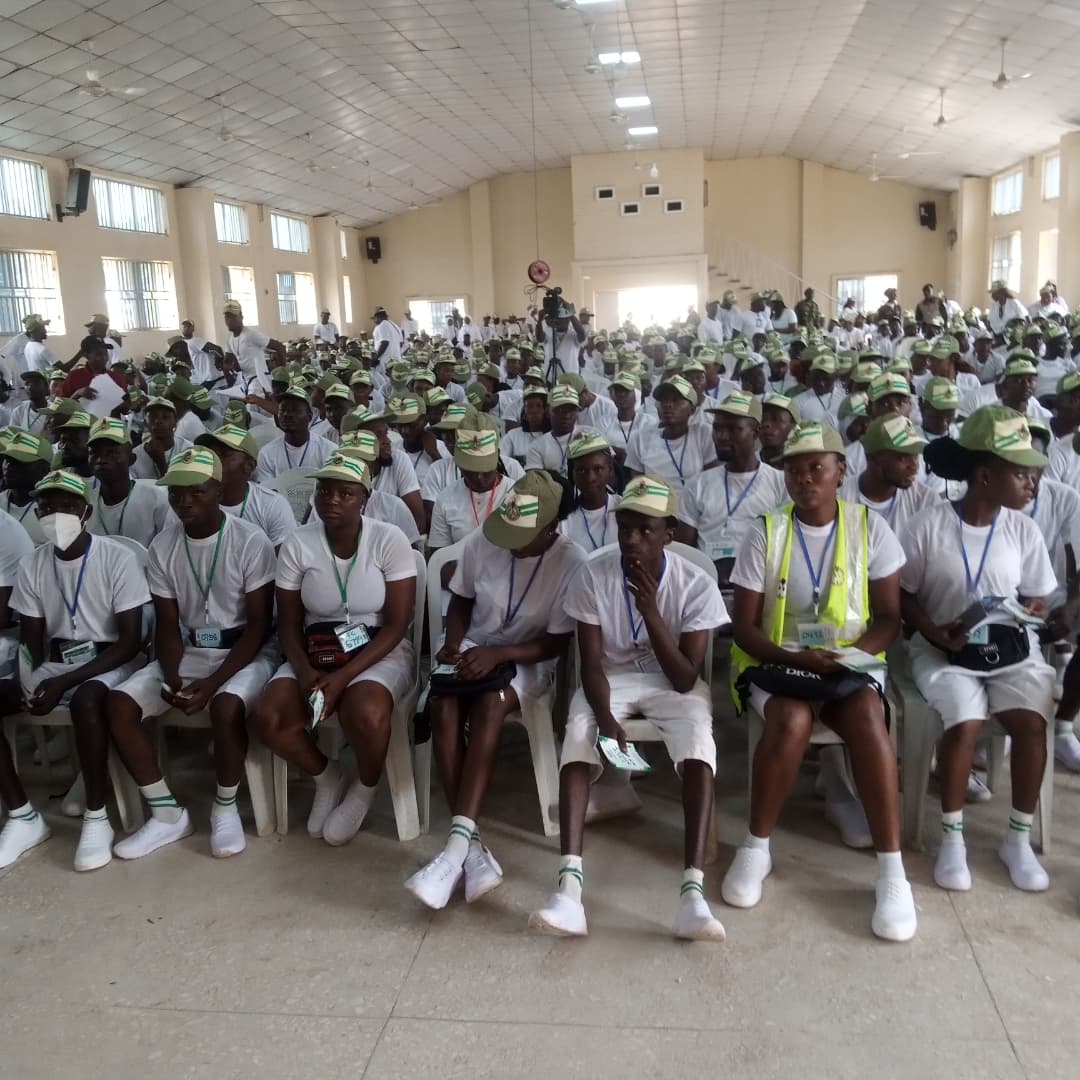
The Fiscal Responsibility Commission (FRC) has expanded its nationwide campaign for prudent financial management, taking its fiscal responsibility advocacy directly to National Youth Service Corps (NYSC) orientation camps across six states and the Federal Capital Territory, where it inspired thousands of corps members to embrace accountability, transparency, and responsible resource management.
According to a statement issued recently by Bede Ogueri Anyanwu, Deputy Director, Strategic Communications Directorate, Fiscal Responsibility Commission (FRC). The sensitization initiative covered NYSC orientation camps in the FCT, Nasarawa, Niger, Benue, Kogi, and Kaduna States. At each location, designated FRC team leaders delivered a keynote address on behalf of the Acting Chairman of the Commission, Barrister Charles Chukwuemeka Abana, under the theme: “Building a Stronger Nigeria Through Fiscal Responsibility.”
Speaking through his representatives, the Acting Chairman commended the Director-General of the National Youth Service Corps, Brigadier General Olakunle Oluseye Nafiu, for providing the Commission with the opportunity to engage corps members despite the demanding orientation programme.
Addressing participants, the Commission underscored that fiscal responsibility goes beyond government budgets and public finance management, stressing that it also encompasses how individuals manage personal and communal resources. Corps members were reminded that fiscal discipline is not merely a policy requirement but a national value capable of driving sustainable development and economic stability.
Established under the Fiscal Responsibility Act, 2007, the FRC highlighted its statutory mandate to promote transparency, accountability, and discipline in the management of public finances. The Commission explained that its role is to ensure government spending delivers value, public funds are protected, and national resources are utilized for the collective benefit of Nigerians.
The Commission further outlined its mission of promoting prudent resource management and its vision of a nation where public funds are efficiently deployed to support sustainable growth and development. Participants were also briefed on the Commission’s achievements, including strengthened monitoring of government revenues and expenditures, improved compliance by Ministries, Departments and Agencies, and enhanced public awareness of fiscal discipline across the country.
While acknowledging these gains, FRC officials emphasized that the journey toward full fiscal accountability requires collective action. Corps members were therefore challenged to become champions of fiscal responsibility within their communities, cultivate sound personal financial habits, and actively promote transparency in both public and private spheres.
Particular attention was drawn to Section 51 of the Fiscal Responsibility Act, which empowers citizens to seek legal enforcement of the Act’s provisions. According to the Commission, this underscores the critical role citizens can play in ensuring accountability and good governance.
Corps members were also encouraged to uphold integrity, participate actively in community development projects, and contribute meaningfully to national development throughout and beyond their service year. The Commission stressed that building a stronger Nigeria requires citizens who are committed to ethical conduct and responsible stewardship of resources.
The engagement featured a lively interactive session during which corps members asked questions on fiscal responsibility and the Commission’s mandate. The FRC teams, provided detailed responses, offering deeper insights into the principles and practical implications of fiscal discipline.
To further enhance participation, questions based on the lecture were posed to the corps members, with correct answers rewarded through airtime gifts, creating an engaging and memorable learning experience.
The campaign concluded with a strong call on corps members to serve as ambassadors of fiscal responsibility and to play an active role in fostering a more transparent, accountable, and prosperous Nigeria.