
The Nigeria Customs Service and the Presidential Enabling Business Environment Council have unveiled a sweeping reform agenda aimed at unlocking efficiency across the nation’s ports and accelerating trade competitiveness.
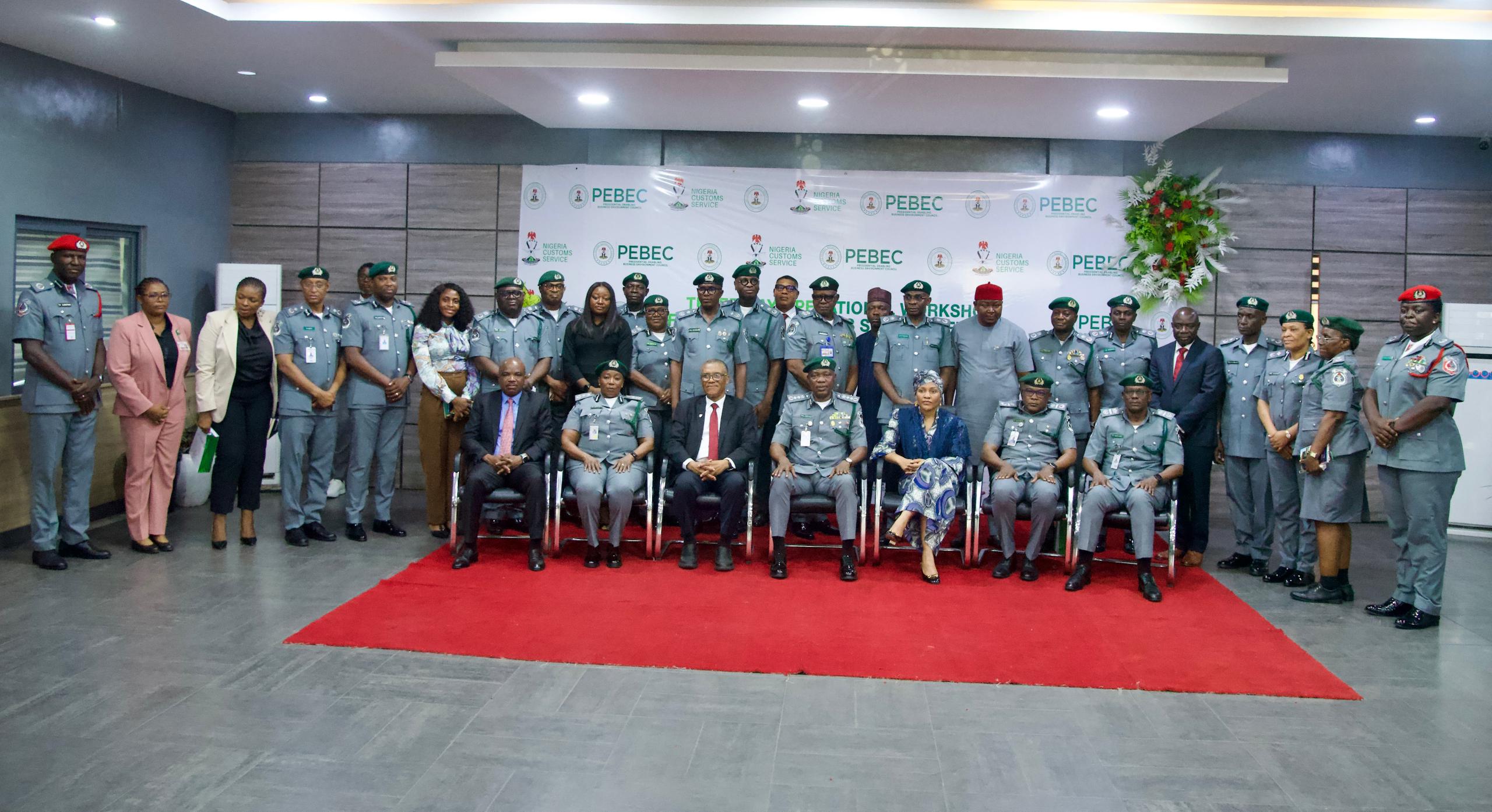
The initiative was launched at a three day operational workshop in Apapa on April 7, 2026, drawing senior customs officers, policymakers and key port stakeholders under the theme of driving leadership in port efficiency, inspection reform and faster clearance timelines.
At the centre of the reform push is the Comptroller General of Customs, Adewale Adeniyi, who set the tone with a firm declaration that the era of policy formulation has given way to disciplined execution.
He outlined a five pillar strategy anchored on joint inspections, risk based cargo clearance, improved scanning infrastructure, strict enforcement of service timelines and deeper inter agency collaboration.
Adeniyi stressed that the Service must close the gap between knowledge and action, insisting that existing global best practices must now translate into measurable operational gains at Nigerian ports.
He further signalled a decisive shift toward intelligence driven cargo processing, noting that ongoing investments in digital platforms and scanning technology must deliver faster, more transparent clearance systems for traders.
To ensure accountability, the Customs boss disclosed that the workshop would produce a detailed reform execution matrix, which will be actively tracked with progress reports subjected to top level scrutiny.
“The reform process will not gather dust on shelves. It will be monitored closely, and officers must demonstrate professionalism and integrity consistently,” he warned.
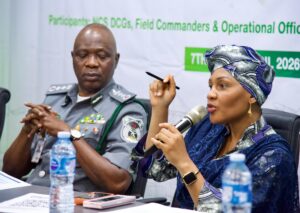
On her part, the Director General of the Presidential Enabling Business Environment Council, Zahrah Mustapha Audu, emphasised the urgency of adopting data driven inspection models to reduce delays and lower the cost of doing business.
She argued that Nigeria must abandon blanket inspections in favour of targeted checks, describing efficient and transparent border processes as critical to strengthening the country’s global trade standing.
Earlier, Deputy Comptroller General in charge of Tariff and Trade, Caroline Niagwan, noted that the Service’s expanding mandate places it at the heart of economic growth, requiring efficiency gains across all commands.
In a related development, the Customs and PEBEC delegation visited the National Single Window facility, where they engaged with the Chairman of the Nigeria Revenue Service, Zacch Adedeji, and other stakeholders to review progress and address operational gaps in the system.