
…Indonesia Signals Stronger Maritime Bond with Nigeria
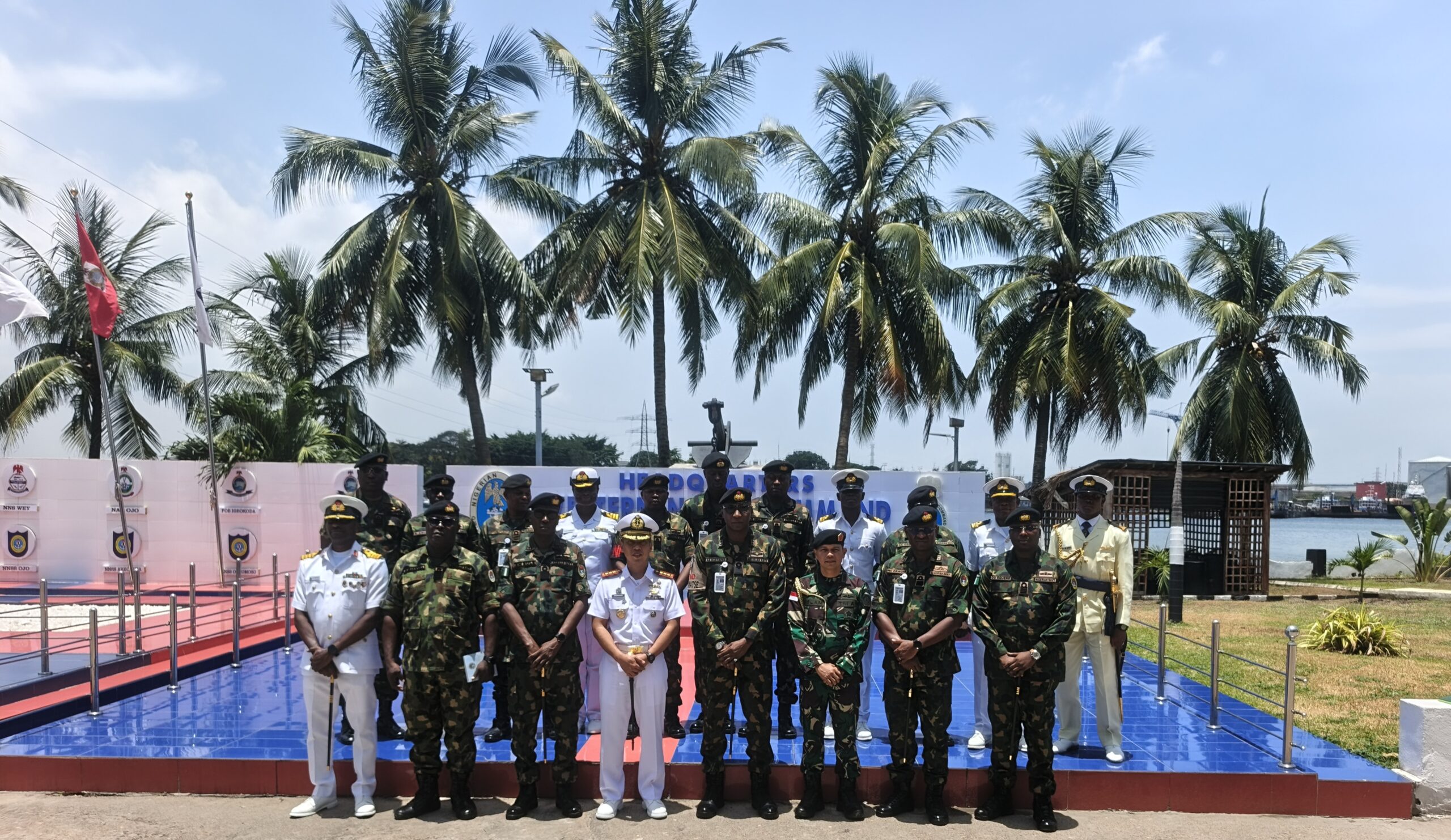
The Western Naval Command in Apapa, Lagos, on Wednesday received Indonesian Navy ship KRI Canopus 936 in a ceremonial port call that underscored growing defence cooperation between both countries.
The visiting vessel, a 105 metre hydrographic and oceanographic ship, berthed amid renewed optimism for deeper collaboration in maritime security, hydrography and intelligence sharing.
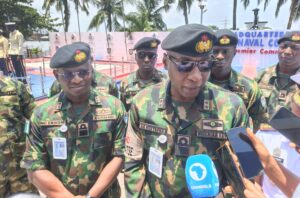
Flag Officer Commanding Western Naval Command, Rear Admiral Abdullahi Abubakar Mustapha, described the visit as a strong signal of Indonesia’s commitment to strengthening ties between the two navies, their countries and peoples.
He recalled that barely six weeks earlier, Nigeria had hosted another Indonesian warship, KRI Prabu Siliwangi, a frigate, noting that the quick succession of visits reflects expanding naval diplomacy.
Mustapha highlighted the strategic value of KRI Canopus, noting its advanced capabilities including remotely operated vehicles and autonomous underwater systems used for deep sea survey and data collection.
According to him, such technology presents an opportunity for Nigeria to deepen its hydrographic capacity, particularly in areas of ocean mapping, fisheries research and environmental monitoring.
He added that Nigeria’s maritime domain, rich in hydrocarbons and marine resources, requires cutting edge oceanographic data to enhance security, navigation safety and economic exploitation.
The naval chief stressed that both countries already share a framework for defence cooperation formalised in 2023, covering training, intelligence exchange and equipment acquisition.
He noted that Nigerian officers have benefited from training in Indonesian defence institutions, while both nations maintain defence attaché channels to sustain engagement.
Mustapha said the visit of a specialised hydrographic vessel introduces a new dimension to the partnership, opening avenues for joint surveys and technical exchanges.
He drew parallels between Indonesia’s maritime security cooperation in the Malacca Strait and Nigeria’s ECOWAS Zone E arrangement with Benin Republic and Togo, noting shared challenges in combating piracy.
The FOC also pointed to Nigeria’s maritime surveillance infrastructure, including Falcon Eye and Regional Maritime Awareness Capability systems, as platforms for deeper intelligence collaboration.
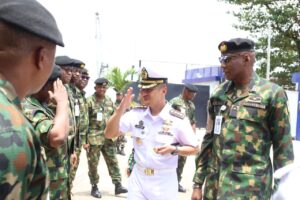
Commanding Officer of KRI Canopus, Captain Indragiri, explained that the ship is designed primarily for hydrographic and oceanographic research, equipped to gather data on seabed depth, temperature and conductivity.
He disclosed that the vessel was built in Indonesia and later fitted with advanced sensors and systems in Germany, including equipment capable of operating at depths of up to 2,000 metres.
Indragiri said the ship departed Germany on March 14 on a 56 day voyage to Indonesia, with Lagos as one of its key stopovers, adding that similar engagements would strengthen operational synergy.
He expressed appreciation for the warm reception by the Nigerian Navy and hinted at technical sessions between both navies aimed at knowledge exchange in hydrography and ocean sciences.
Also speaking, Indonesian Defence Attaché to Nigeria, Colonel Aslam Setiawan, reaffirmed his country’s commitment to expanding defence relations, describing the deployment of KRI Canopus as a practical demonstration of that resolve.
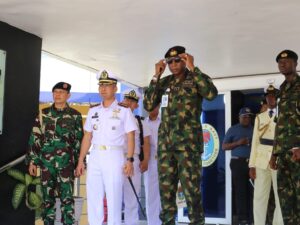
He noted that the vessel’s visit would further consolidate existing agreements and foster collaboration in maritime research, safety of navigation and regional security.
Both sides expressed optimism that sustained naval exchanges, joint training and reciprocal port visits would translate into stronger diplomatic and economic relations between Nigeria and Indonesia.