

The Rule of Law and Empowerment Initiative, widely known as Partners West Africa Nigeria (PWAN), has reiterated the central role of the media in strengthening police reform, accountability, and public trust in Nigeria’s security institutions.
PWAN is a women-led, non-governmental organisation working to deepen citizens’ participation in governance, improve security sector accountability, and reinforce protection systems across Nigeria and West Africa. Its programmes are rooted in the understanding that communities facing insecurity, weak governance, and human rights violations require targeted, people-centred interventions that uphold dignity, justice, and access to rights particularly for women, young people, and other vulnerable groups.
With support from the Foreign, Commonwealth and Development Office (FCDO), PWAN is currently implementing the project “Enhancing Public Trust and Gender-Responsive Policing in Nigeria Through the Effective Implementation of the Police Act.” The initiative is being rolled out across Nigeria’s six geopolitical zones and is designed to support ongoing police reforms by promoting institutional accountability, gender responsiveness, and improved public confidence in the Nigeria Police Force (NPF).
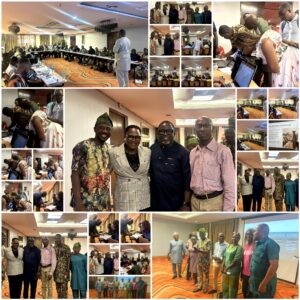
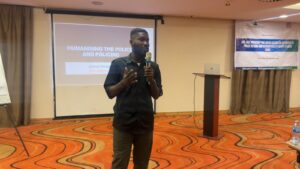
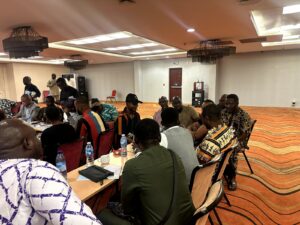
As part of this effort, PWAN on Wednesday, January 21, 2026, organised a one-day workshop for media practitioners in Ogun State at Park Inn by Radisson, IBB Boulevard, Kuto, Abeokuta. The training focused on reporting on police reform and accountability, with particular attention to the key provisions and innovations introduced by the Police Act.

Speaking on behalf of PWAN’s Executive Director, Programme Assistant Ms. Ore Fatuyi welcomed participants and underscored the importance of responsible and reform-focused journalism in shaping police-community relations.
She described PWAN as an organisation committed to promoting accountable, professional, and inclusive security governance, noting that effective policing must be responsive to the needs of citizens and grounded in respect for human rights.
According to her, the FCDO-supported project seeks to strengthen public trust in the NPF by ensuring that police reforms are not only implemented but also understood by the public. She explained that the media workshop was designed to equip journalists with the knowledge and practical tools required to report accurately, responsibly, and constructively on policing issues.

“Our expectation is that journalists will use this knowledge to promote public awareness, demand accountability, and contribute to rebuilding trust between the police and the communities they serve,” she said, urging participants to engage actively and share their professional experiences during the sessions.
One of the facilitators, Mr. Odoh Diego Okenyodo a Nigerian writer, journalist, development communication expert, media strategist, poet, and media entrepreneur delivered a candid session on the historical and structural roots of mistrust between citizens and the police.

He noted that Nigeria’s reform efforts have often suffered from a lack of continuity, with successive administrations abandoning existing initiatives in favour of new ones. According to him, this pattern has weakened institutional memory and undermined public confidence.
Okenyodo traced the lingering distrust to the colonial origins of the police, which he said were designed primarily to protect those in power rather than serve the people. He observed that this “us-versus-them” mindset continues to shape relationships between security agencies and citizens.
He also cautioned journalists to balance their constitutional duty to inform the public with ethical and legal responsibilities. Drawing attention to the Freedom of Information Act, he explained that not all documents labelled “classified” are legally exempt from disclosure, while stressing that genuine operational details such as sensitive troop movements must be handled with care.
On reportage standards, Okenyodo emphasised balance, objectivity, and fact-checking, warning against the rush to conclusions often driven by social media pressures. He reminded journalists of the legal principle of presumption of innocence and encouraged the use of qualifying terms such as “alleged” when reporting on suspects.
He further called on citizens to adopt proactive engagement with the police through dialogue and interest groups, arguing that accountability works best when expectations are clearly set before crises occur.

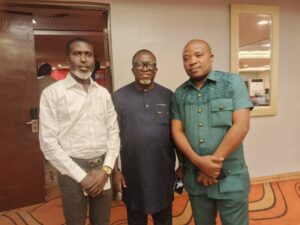
Earlier in the programme, legal practitioner Mr. Tosin Osasona examined the role of the media in Nigeria’s police reform process. He identified chronic underfunding, weak accountability mechanisms, legitimacy challenges, and poor community cooperation as key factors limiting the success of past reforms.
Osasona stressed that journalists remain critical actors in driving accountability, shaping public perception, and sustaining reform conversations, adding that informed and ethical reporting can help bridge the trust gap between the police and the public.
PWAN expressed optimism that the workshop would contribute to more rights-respecting, accountable, and reform-oriented media coverage in Ogun State and beyond.
