

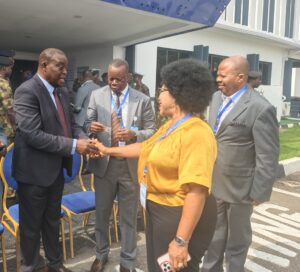
The International Maritime Institute of Nigeria (IMION) has commenced its Advanced Course in Sustainable Blue Economy, bringing together top maritime professionals, government officials, academics, and private sector leaders. The three-day training, held from 3–5 December 2025, aims to strengthen institutional capacity and empower Nigeria’s maritime sector with practical knowledge for sustainable ocean governance and economic development.
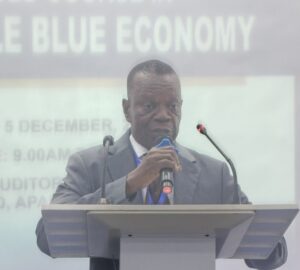
Delivering his opening remarks, Director General of IMION, Rear Admiral Thaddeus Udofia (Rtd), PhD, underscored the strategic importance of the maritime domain to Nigeria’s prosperity. He noted that oceans and related waterways remain key drivers of global and national growth, supporting critical industries including maritime transportation, fisheries, coastal tourism, renewable energy, and environmental regulation.
“This advanced course is designed to deepen understanding, foster institutional capacity, and promote a coherent approach to marine resource management,” Rear Admiral Udofia stated. “Participants will explore scientific insights, emerging innovations, and practical strategies that anchor a sustainable blue economy.”
Udofia stressed that modern maritime challenges from climate change and environmental degradation to over-exploitation and evolving security threats require informed decision-making, policy reforms, and a professionally skilled workforce. He emphasized that IMION remains committed to building the human capital needed to support Nigeria’s maritime transformation.
According to the IMION Director General, the programme will equip participants with tools to: Understand the concept and strategic value of the Blue Economy; Identify opportunities for innovation across ocean-based sectors; Develop sustainable business frameworks; Navigate international policies and regulatory instruments governing the maritime space; Apply real-world solutions that balance economic growth with environmental preservation.
“At the end of the course, participants are expected to: Articulate the importance of blue economy development; Evaluate cutting-edge technologies for sustainable use of marine resources; Implement business strategies aligned with the United Nations Sustainable Development Goals; Engage effectively with complex regulatory systems; Foster eco-friendly growth while strengthening institutional resilience.
Udofia urged participants to approach the programme with diligence and a shared commitment to safeguarding maritime ecosystems for current and future generations.
The IMION Director General also acknowledged the continuous support of the Chief of the Naval Staff, Vice Admiral Idi Abbas for nominating officers to the programme and sustaining the institute’s development. He further praised the vision of former CNS, Vice Admiral Emmanuel Ikechukwu Ogalla, whose leadership initiated the establishment of the Institute.
Udofia expressed gratitude to the Special Guest of Honour, Honourable Minister of Marine and Blue Economy, His Excellency Adegboyega Oyetola, CON, as well as IMION partners, including Paul Usoro & Co and Peace Building Development Consult, for their contributions to the course.
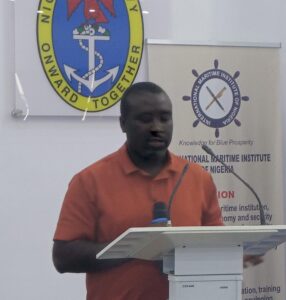
In his welcome address, Mr. Kayode Bolaji, Executive Director of Peace Building Development Consult, commended IMION for its commitment to shaping maritime professionals capable of driving sustainable development.
Bolaji remarked that the Blue Economy has evolved from an academic concept into a global imperative, offering nations like Nigeria immense opportunities across maritime transport, fisheries, biotechnology, eco-tourism, renewable energy, and ecosystem restoration.
“Unlocking these opportunities requires knowledge, collaboration, innovation, and responsible governance,” he said. “This programme empowers participants not just with theory, but with practical strategies to transform ideas into impact.”
He encouraged participants to engage deeply, build networks, explore case studies, and leverage the expertise of facilitators to foster long-term institutional and national progress.

Also speaking at the event, Director General of the Nigerian Institute of International Affairs (NIIA), Professor Eghosa Osaghae, described Nigeria’s renewed focus on the Blue Economy as a turning point for national growth.
“Nigeria has discovered gold in its new emphasis on the blue economy,” he said. “What we have been waiting for is the intellectual capacity to support this expanding sector, and that is precisely what IMION and similar efforts are building.”
Osaghae highlighted the civil-military implications of maritime governance, urging diplomatic and non-kinetic solutions to persistent security challenges in Nigeria’s maritime domain. He emphasized the need to engage community stakeholders, civil society, local cooperatives, and fisher groups to promote ownership, accountability, and collaboration.
The NIIA DG further stressed the importance of multi-stakeholder frameworks, counterpart funding models, and youth involvement, including the formation of young fishermen and fisherwomen cooperatives.
He also discussed the role of advanced technologies, satellite data and artificial intelligence in ocean monitoring, navigation, and coastal safety: “These technologies will improve ocean governance. We can track environmental changes, anticipate risks, and support safe navigation for communities that have lost traditional routes.”
Speaking to journalists on the sidelines of the event, Rear Admiral Udofia reaffirmed the Institute’s mission: “The essence of this course is to deepen our contributions to national development. IMION is a specialized maritime institution established to advance Nigeria’s blue economy.”
He noted the current shortage of marine economy specialists across the country and explained that the Institute’s programmes are designed to produce competent professionals capable of driving ocean-based industries and safeguarding Nigeria’s maritime interests.

The International Maritime Institute of Nigeria is dedicated to research, capacity building, and high-level professional training for stakeholders across the marine and blue economy sectors. It serves as a strategic platform for inter-agency coordination, policy innovation, and sustainable maritime governance.