
In a visit that underscored unity of purpose and the power of collaboration, the Secretary-General of the International Maritime Organization (IMO), Mr. Arsenio Dominguez, engaged with Nigeria’s leadership to deepen maritime partnerships, enhance capacity, and reaffirm the country’s rising influence in global maritime affairs.
From a courtesy visit to President Bola Ahmed Tinubu, GCFR, to tours of critical maritime infrastructure and academic institutions such as the Institute of Maritime Studies (IMS) at the University of Lagos, Mr. Dominguez’s engagements reflected a renewed momentum in Nigeria’s blue economy journey.
Partnership As The Anchor of Progress
“No man is an island,” the adage goes, a fitting reminder that sustainable progress thrives on collaboration. This principle mirrors the essence of the United Nations Sustainable Development Goal 17: Partnership for the Goals, which emphasizes cooperation as a cornerstone of development.
Mr. Dominguez’s visit to Nigeria, therefore, symbolized more than diplomacy, it was a powerful affirmation of how shared vision and strategic collaboration can accelerate national maritime growth while reinforcing global ocean governance.
High-Level Engagements And Strategic Tours
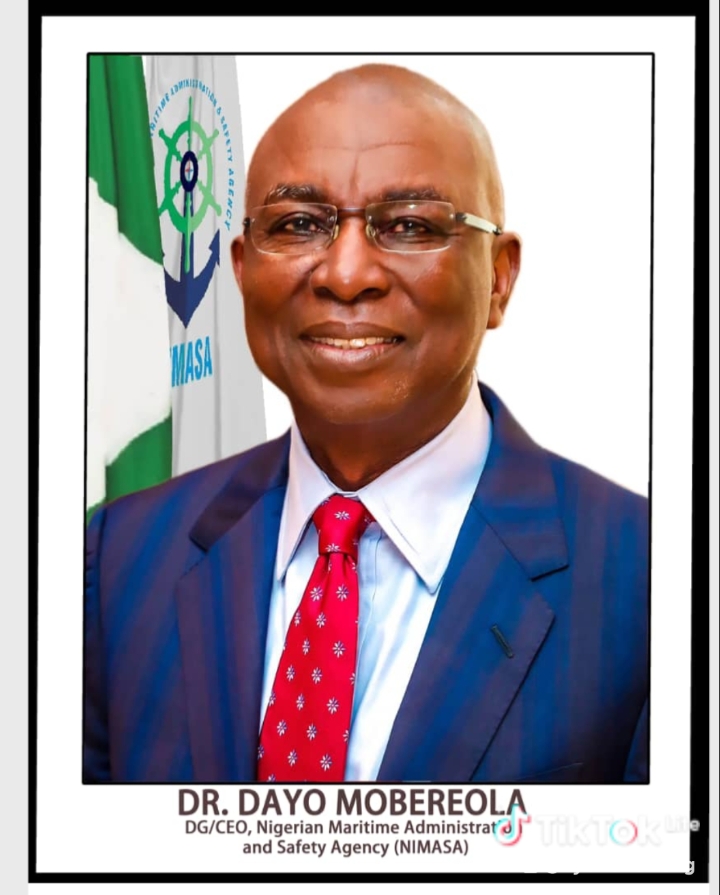
Accompanied by the Director-General of the Nigerian Maritime Administration and Safety Agency (NIMASA), Dr. Dayo Mobereola, and hosted by the Honourable Minister of Marine and Blue Economy, His Excellency Adegboyega Oyetola, CON, the IMO Secretary-General’s visit was marked by meaningful engagements with key stakeholders across Nigeria’s maritime landscape.
During his meeting with President Tinubu, discussions centred on new frontiers of cooperation to strengthen Nigeria’s position among the world’s leading maritime nations. Both leaders aligned on shared priorities safety, sustainability, and innovation underscoring the synergy between Nigeria’s Blue Economy vision and IMO’s mission for safer, cleaner seas.
Showcasing Nigeria’s Maritime Capacity
At the Nigerian Navy Ship (NNS) Lana, a 60-metre hydrographic and oceanographic research vessel, Mr. Dominguez witnessed firsthand Nigeria’s growing technical capabilities. The vessel, equipped with advanced sonar and oceanographic tools, plays a vital role in hydrographic surveying, seabed mapping, and maritime environmental monitoring.
His visit to the NIMASA C4i Centre, the operational heart of Nigeria’s maritime security architecture, further highlighted the country’s technological advancement in safeguarding its waters. Operated under the Deep Blue Project, the Centre integrates radar, satellite, and coastal surveillance systems to ensure real-time monitoring and rapid response to maritime incidents, a key factor in the significant reduction of piracy in the Gulf of Guinea.
A simulation exercise at Ojo Cantonment demonstrated seamless coordination between NIMASA’s Deep Blue assets and the Nigerian Armed Forces, showcasing the effectiveness of Nigeria’s multi-agency approach to maritime security.
Engaging The Maritime Workforce And Academia
In an interactive session with Nigerian seafarers, Mr. Dominguez commended their professionalism and resilience, emphasizing that the global shipping industry depends on the dedication of seafarers. He encouraged them to continually upgrade their skills in line with evolving international standards while reiterating IMO’s commitment to fair treatment, welfare, and equal opportunities for all maritime professionals.
At the University of Lagos, Mr. Dominguez commissioned the Institute of Maritime Studies (IMS), a NIMASA-sponsored project that stands as a beacon of maritime education and capacity building. The institute reflects Nigeria’s long-term vision to empower a new generation of maritime professionals capable of driving innovation and sustainability in the Blue Economy.
Nigeria’s Blue Economy: The Next Frontier
Honourable Minister Adegboyega Oyetola described the maritime sector as “Nigeria’s next frontier of opportunity in the post-oil era.” With 853 kilometres of coastline, a 200-nautical-mile Exclusive Economic Zone (EEZ), and over 10,000 kilometres of inland waterways, he noted that the nation is strategically positioned to harness its maritime wealth.
“Unlocking this potential begins with building local capacity,” the Minister stated, urging Nigerian youths to embrace maritime careers that can drive economic transformation.
For the IMO Secretary-General, the initiative aligns perfectly with the organization’s drive for inclusivity and sustainability. “Bringing maritime education into universities like UNILAG connects students directly with the industry. That’s how we attract and equip the next generation of maritime professionals,” Mr. Dominguez remarked.
Building Capacity For A Sustainable Future
NIMASA’s Director-General, Dr. Dayo Mobereola, reaffirmed the agency’s commitment to supporting maritime education and innovation. “This institute is a strategic investment in Nigeria’s maritime future. It’s about building knowledge that sustains growth,” he said.
The engagement between Mr. Dominguez and the students of the IMS symbolized a bridge between aspiration and opportunity linking local vision with global relevance.
Anchored In Partnership, Sailing with Purpose
Mr. Dominguez’s visit reaffirmed Nigeria’s commitment to collaboration as the foundation of maritime progress. From technology to education, and from diplomacy to security, his engagements reflected the nation’s evolving maritime ecosystem one anchored in innovation, partnership, and purpose.
Under the visionary leadership of Minister Adegboyega Oyetola and the strategic guidance of Dr. Dayo Mobereola, Nigeria is redefining its maritime narrative transforming potential into performance, and partnerships into tangible progress.
As the tide of global cooperation continues to rise, Nigeria stands ready, not just as a beneficiary of maritime partnerships, but as an equal and influential player shaping the future of global maritime governance.
By Oluwafemi Kumuyi,
Assistant Chief Public Relations Officer, NIMASA