
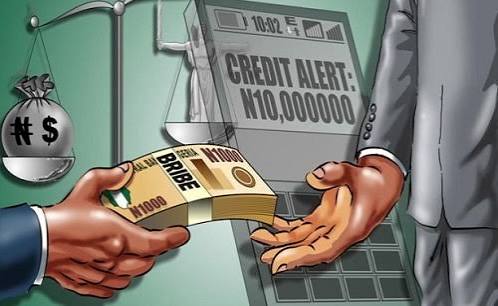
In Nigeria, corruption is no longer a distant phenomenon isolated to the political class or confined to high offices in Abuja and state capitals. It is a thread so tightly woven into the fabric of daily life that almost every Nigerian, knowingly or unknowingly, touches it. From the bustling markets of Onitsha to the quiet classrooms in Zaria, corruption lives in our systems, homes, and habits, exacting a silent toll on individuals, institutions, and the nation’s soul.
IN THE MARKETS: Bribing For Space And Safety
Market women, often hailed as the backbone of informal trade in Nigeria, pay more than the price of goods to survive. In many urban markets, they must “settle” touts, council officials, and even security personnel to secure space or avoid arbitrary levies. These unofficial payments are so normalized that those who refuse to pay are often harassed, evicted, or denied access to services like sanitation or electricity.
“A small tray of tomatoes costs me N3000 to buy, but I pay over N1000 in bribes just to set it up in the market,” says Mama Ijeoma, a trader in Mile 12 Market. “We’re paying to do our work. That’s corruption, but who do we report to when those collecting are the ones in charge?”
IN THE CLASSROOM: Corruption Kills Merit
For students, the corruption menace starts even before admission into higher institutions. Bribes for admission slots, grades, and certificates are rife in many Nigerian schools. “Sorting” the practice of paying lecturers for grades has become a slang term and an unofficial part of academic life.
Kehinde, a final year University student, confesses: “Some students don’t bother studying. They have someone in the department. Those of us who try to succeed on merit are mocked.”
Such systems destroy the value of education and reward mediocrity over merit. The long term consequence? A future workforce built on privilege and fraud, not knowledge or competence.
IN THE HOMES: The Cost To Housewives And Families
Corruption trickles down even to the household level. Households feel it in inflated school fees, rigged utility bills, or having to “tip” PHCN officials to reconnect electricity. Housemaids and domestic workers are often forced to offer sexual or financial favors to retain jobs. For housewives managing meagre budgets, surviving Nigeria’s economy means mastering the art of ‘settlement’.
“It’s not just in politics,” says Kemi, a housewife in Kaduna. “You go to the general hospital, and nurses ask you to ‘appreciate them’ before they do their jobs. If you don’t, you suffer.”
GOVERNMENT AGENCIES: Corruption As Official Policy
Public institutions have become synonymous with corruption. Getting a passport, driver’s license, or business permit often involves greasing palms. Despite years of reforms, many government agencies operate dual systems, the official route, which is slow and ineffective, and the ‘express’ route, which demands a bribe.
An entrepreneur in Lagos recounts: “To register my business officially took 9 months. When I paid someone N20,000 under the table, I got it done in 3 days.”
This duality discourages transparency and growth, particularly for startups and SMEs.
THE MEDIA: The Fourth Estate Or A Compromised Ally?
The media, often seen as society’s watchdog, is not immune. “Brown envelope journalism” accepting bribes to write or suppress stories, remains widespread. Some journalists are paid to attack political opponents or bury corruption scandals.
“When the media is compromised, who will hold the powerful accountable?” asks Mr. Frank, a veteran journalist. “Corruption thrives when the truth is for sale.”
SECURITY FORCES: Protectors Turned Predators
From police checkpoints to military roadblocks, the Nigerian public often pays for protection that should be free. Motorists recount tales of arbitrary arrests and extortion. Even gatekeepers at ministries or private establishments demand tips to allow access.
“I was once asked to ‘drop something’ before entering a government building to submit a job proposal,” says Ebere, a business consultant in Lagos. “Even the gate man was part of the chain.”
The cost of corruption in security isn’t just financial, it’s trust. When citizens no longer believe law enforcement is on their side, anarchy isn’t far behind.
DRIVERS AND TRANSPORT WORKERS: Greasing The System To Move
In the transportation sector, drivers of commercial and private vehicles budget daily for “roja” illegal payments to traffic officers, union leaders, or area boys. Without these, they risk delays, harassment, or damage to property.
“It’s built into our fare,” says Alfa, a commercial bus driver in Lagos. “If I don’t settle LASTMA or the police, they’ll look for one reason to arrest me. So, we pay, and passengers pay more.”
BUSINESS PEOPLE: Bribes As A Line Item
In the corporate world, especially among contractors and suppliers, bribes are now factored into cost estimates. Some government contracts only go to those willing to pay kickbacks, often in percentages to those in charge.
“You’re told to add 10% for the oga on top,” says a contractor in Warri. “If you don’t play the game, someone else will, and you’re out.”
This discourages integrity, promotes inflated contracts, and robs Nigeria of real development.
A CULTURE OF COMPLICITY
The tragedy is that corruption in Nigeria is no longer just systemic, it is cultural. From schools to markets, homes to boardrooms, everyone is affected, and many are involved. It has become a survival mechanism in a system that punishes honesty and rewards compromise.
Yet, the cost is enormous: poor roads, failing schools, broken hospitals, and rising poverty. But perhaps the greatest loss is intangible, a national conscience dulled by decades of normalized wrongdoing.
THE WAY FORWARD
Solving corruption in Nigeria requires more than anti-graft agencies or whistleblower programs. It demands a cultural reawakening, a nationwide moral reset. Transparency must be rewarded, impunity must be punished, and civic education must return to our schools and communities.
Corruption has many faces, the trader’s bribe, the student’s “sorting”, the journalist’s envelope, the driver’s roadside toll. To fight it, we must first recognize that in Nigeria today, the enemy is not just “out there.”
It is all of us.
This feature was produced to raise awareness about the deep-seated impact of corruption in everyday Nigerian life.