
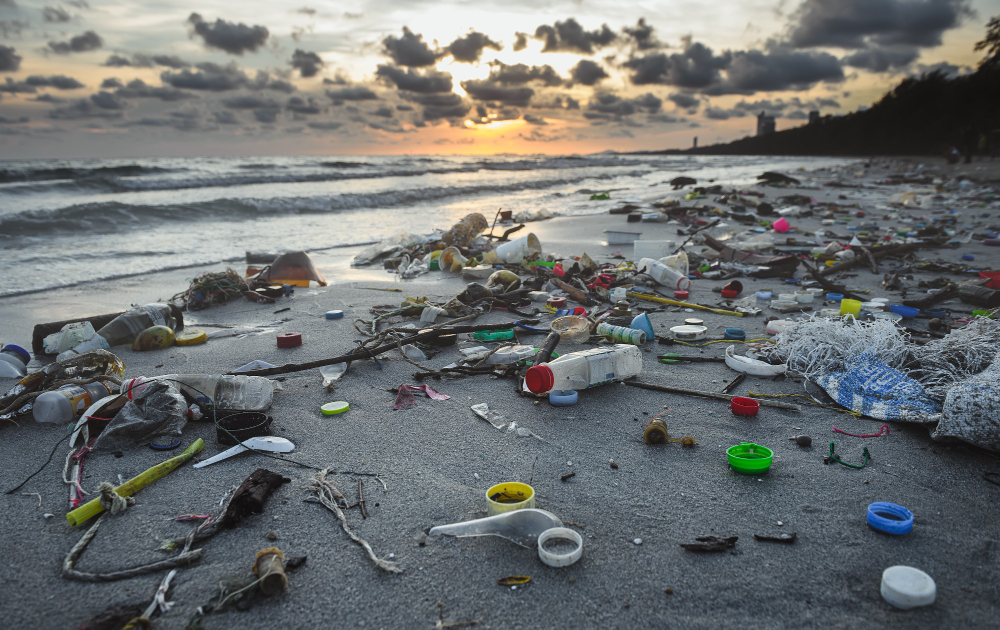
As Nigeria battles one of its most pressing environmental challenges, stakeholders have called for urgent, coordinated action to address the country’s mounting plastic pollution crisis. The call came during a high-level webinar organized by Unity Bank Plc in commemoration of this year’s World Environment Day, with the theme “Ending Plastic Pollution.”
The event, facilitated by the Bank’s Sustainability Team, brought together environmental experts, climate change advocates, and key players in waste management and finance to proffer innovative solutions and sustainable practices capable of reversing the country’s alarming plastic waste trends.
In his keynote address, Mr. Usman Abdulkadir, Executive Director, Risk Management at Unity Bank Plc, reiterated the Bank’s commitment to environmental responsibility and sustainability. He warned that environmental degradation is no longer just a corporate social issue but a major business risk.
“Plastic pollution affects lives, businesses, and the environment. We must all begin to see environmental stewardship as a shared responsibility across all sectors—finance, government, industry, and civil society,” Mr. Abdulkadir said. “Unity Bank is integrating ESG principles into its core risk frameworks to build a more resilient and sustainable future.”
The session featured industry leaders such as Sunday Kolawole Sholanke, Co-founder and CEO of PETsPoint Recycling Nigeria, who presented sobering statistics on the scale of plastic waste in the country. According to him, Nigeria generates approximately 596 million metric tonnes of plastic waste annually, with a staggering 88% of it left unrecovered or unrecycled.
“Nigeria currently ranks 9th globally in plastic pollution,” Sholanke said. “Plastic waste clogs our drainages, pollutes water bodies, and poses serious health and climate risks. Globally, over one million plastic bottles and 10 million plastic bags are produced every minute, but less than 10% are ever recycled.”
Sholanke called for increased public education, better waste management infrastructure, and greater financial sector involvement in supporting eco-friendly solutions. He challenged banks to scale up investments in green financing by providing access to low-interest credit for sustainable waste management businesses.
Echoing this stance, Omoh Alokwe, Co-founder and CEO of Street Waste Company Limited, highlighted the urgent need for stronger regulatory enforcement and policy reforms to curb plastic pollution. “We need updated laws and stricter enforcement mechanisms to control the production and disposal of plastics,” she stated.
Adding the perspective of financial innovation, Mr. Ibukun Coker, Head of Strategy and Innovation at Unity Bank Plc, emphasized the intersection between environmental health and economic sustainability. “Plastic pollution is not only an environmental concern but also a growing economic and public health crisis,” he noted. “Sustainability should define how we lend, operate, and partner across communities.”
The webinar also spotlighted Unity Bank’s ongoing green initiatives, including its annual Earth Day clean-up drive at Royal Beach in Elegushi, Lagos in collaboration with nonprofit organization RESWAYE. In its most recent campaign, the Bank mobilized staff across 32 states to plant trees, driving a nationwide reforestation movement and promoting environmental consciousness.
As conversations continue beyond World Environment Day, the webinar served as a platform for robust stakeholder engagement and policy advocacy. It further reinforced Unity Bank’s role as a champion for environmental sustainability in Nigeria’s financial sector and called on both public and private institutions to act swiftly and collectively in curbing plastic pollution.
With plastic waste continuing to choke ecosystems and threaten livelihoods, the message from Unity Bank and its partners was clear: collaboration, innovation, and financing are critical to building a cleaner, safer, and more sustainable environment for future generations.