
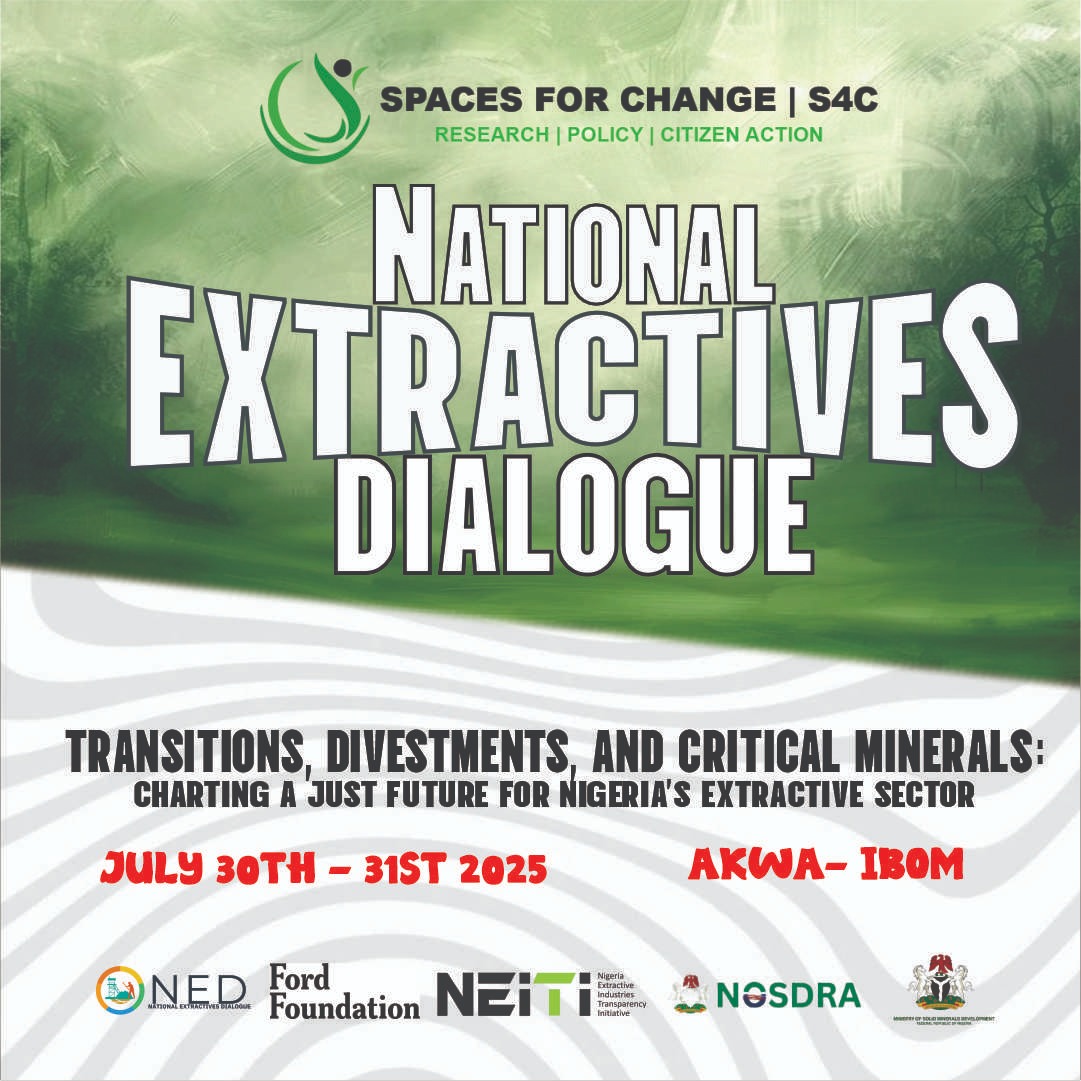
As Nigeria’s extractive sector undergoes rapid transformation, Spaces for Change (S4C), in collaboration with the Nigeria Extractive Industries Transparency Initiative (NEITI), National Oil Spill Detection and Response Agency (NOSDRA), and the Ministry of Solid Minerals Development (MSMD)—with support from the Ford Foundation—is set to host the fourth edition of the National Extractives Dialogue (NED2025) in Uyo, Akwa Ibom State.
The event, scheduled for July 30–31, 2025, will convene over 150 high-level participants from across West Africa, including government representatives, regulators, civil society organizations, host communities, private sector stakeholders, and academia. This year’s theme, “Transitions, Divestments, and Critical Minerals: Charting a Just Future for Nigeria’s Extractive Sector,” reflects the evolving landscape of extractive governance amid divestments by oil majors and a global surge in demand for critical minerals like lithium and cobalt.
According to a press statement signed by Victoria Ibezim-Ohaeri, Executive Director of S4C, Nigeria stands at a pivotal juncture. “The sector is witnessing a seismic shift,” she noted, “with divestments raising concerns about environmental remediation, community protection, and the responsible management of natural resources.”
The Dialogue aims to critically examine how Nigeria is managing this transition and what institutional frameworks are needed to ensure justice, equity, and sustainability in extractive activities. Key questions to be addressed include:
* How are divestment processes structured and who benefits?
* What legal and regulatory safeguards exist for impacted communities and ecosystems?
* How can Nigeria avoid repeating extractive injustices of the past?
* What role should critical minerals play in the country’s energy transition and economic development?
NED2025 will also explore cross-border learning and regional collaboration, recognizing that Nigeria’s extractive journey is linked to broader West African dynamics. Discussions will spotlight key issues such as climate justice, host community rights, investor accountability, and the importance of robust regulatory oversight.
Since its inception, the National Extractives Dialogue has become a vital platform for elevating marginalized voices, fostering community-led action, and catalyzing policy reforms. The 2025 edition seeks to deepen this impact by not only interrogating the future of extractive governance, but also offering practical strategies for achieving a just and inclusive transition.
As the global narrative on energy and mineral transitions gathers pace, NED2025 serves as a clarion call for Nigeria to reflect on its past, reassess its priorities, and make bold, informed decisions that will shape the country’s extractive future for generations to come.