
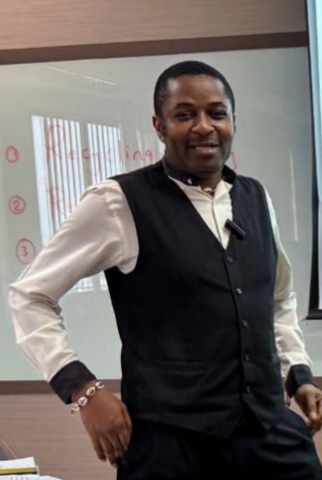
A community leader and political commentator, Dr. Emmanuel Okafor, has decried what he described as the persistent political marginalisation of Nteje town in Oyi Local Government Area, alleging that the town has been used over the years as a political buffer zone in the area.
Dr. Okafor made the observation in a statement made available to journalists on Sunday, where he described Nteje’s political situation as one of deliberate exclusion masked as neutrality.
According to him, while politics is fundamentally about power distribution and decision-making, Nteje has continuously been sidelined despite its contributions to local governance and electoral success in Oyi LGA.
“In the political context of Anambra State, especially within Oyi LGA, Nteje has unfortunately evolved into what I term a political buffer zone—a town strategically used to ease tensions and broker compromises between more politically aggressive neighbours,” he stated.
Dr. Okafor explained that Nteje is often perceived as neutral and peaceful, making it a go-to choice when political stakeholders seek to douse tensions among larger towns such as Nkwele, Ogbunike, Awkuzu, and Umunya. However, this role, he argued, rarely translates into political benefits or leadership positions for Nteje indigenes.
“When rivalry builds between towns like Ogbunike and Awkuzu, stakeholders may agree to award the position to one of them—not necessarily because of merit, but to avoid conflict. Meanwhile, Nteje, the neutral and peaceful town, is ignored. Again, no Onye Nteje,” he lamented.
He also accused some influential individuals from the town of compromising Nteje’s political interest in exchange for personal appointments and access to power, which has further deepened the town’s marginalisation.
“Nteje is politically comatose. We are fragmented, voiceless, and leaderless,” he said.
Dr. Okafor further linked the political neglect to the state government’s delay in issuing a certificate of recognition to the elected traditional ruler of Nteje, noting that it reflects a larger pattern of sidelining the town in both political and traditional matters.
He called on sons and daughters of Nteje to rise up, unite, and demand inclusion in both political and traditional leadership structures.
“We must install and support our own Igwe. We must demand full political participation and representation. We must stop allowing individuals to trade our future for personal gain,” he urged.
The community leader concluded by calling for political awareness, peaceful mobilisation, and strategic advocacy to ensure that Nteje no longer plays the role of a pawn in the political chessboard of Oyi LGA.