
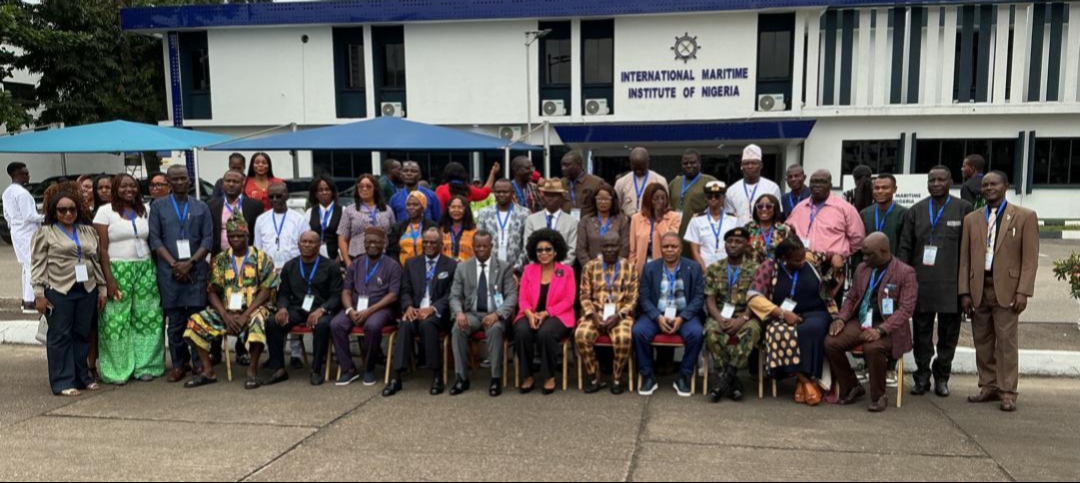
The International Maritime Institute of Nigeria (IMION) has successfully executed its Executive Course on the Blue Economy for Media Practitioners, a strategic capacity-building initiative aimed at enhancing media understanding and coverage of maritime affairs.
Speaking at the opening of the course, Commodore Isa Abubakar Ahmed, Executive Director (Administration) of IMION, welcomed participants, emphasizing the critical role of media professionals in shaping public understanding of ocean-related issues. He praised the diverse group of attendees and expressed hope that the training would inspire responsible storytelling and advocacy for sustainable ocean governance.
“The Blue Economy is a vital and rapidly growing sector that touches everything from sustainable fisheries and maritime transport to renewable energy and marine conservation,” he said. “It offers tremendous opportunities but also poses significant challenges—challenges that require informed and responsible reporting.”
In his keynote address, the Director General of IMION, Rear Admiral Thaddeus Christopher Udofia (Rtd), officially declared the course open. He described the initiative as a “timely and vital conversation” connecting journalism with the immense opportunities and challenges within ocean-based economies.
He urged journalists to see themselves not only as reporters, but also as storytellers and change agents. “The way the world perceives the ocean, its challenges, and its future is largely influenced by how you choose to tell its story,” Rear Admiral Udofia said.
He outlined the course’s key learning objectives, which include understanding the Blue Economy concept, examining critical sectors and regulatory frameworks, and learning best practices in sustainability and resource management.
President of the Maritime Reporters Association of Nigeria (MARAN), Mr. Godfrey Bivbere, delivered a goodwill message on behalf of maritime journalists. He commended IMION and the Nigerian Navy for the initiative and called for continued collaboration.
“We believe that sustained collaboration between maritime journalists and the Navy is vital in promoting transparency, national security, and the development of Nigeria’s Blue Economy,” he stated.
The course featured presentations and interactive sessions with expert facilitators and policymakers. Participants explored topics such as marine conservation, sustainable fisheries, blue energy, and climate resilience.
In his closing remarks, Rear Admiral Udofia (Rtd) expressed gratitude to all participants and facilitators for their commitment. He reiterated the crucial role of the media in promoting ocean stewardship, public awareness, and national development.
“Your work is not just journalism—it is advocacy, it is education, and it is nation-building,” he said. “Let us continue to build on this momentum, telling the stories that matter and strengthening the bridge between maritime policy and public awareness.”
The course was supported by key stakeholders including the Nigerian Navy and legal partners Paul Usoro & Co., and marks a significant step toward fostering a well-informed media corps capable of advancing Nigeria’s maritime agenda and regional leadership in the Gulf of Guinea.