
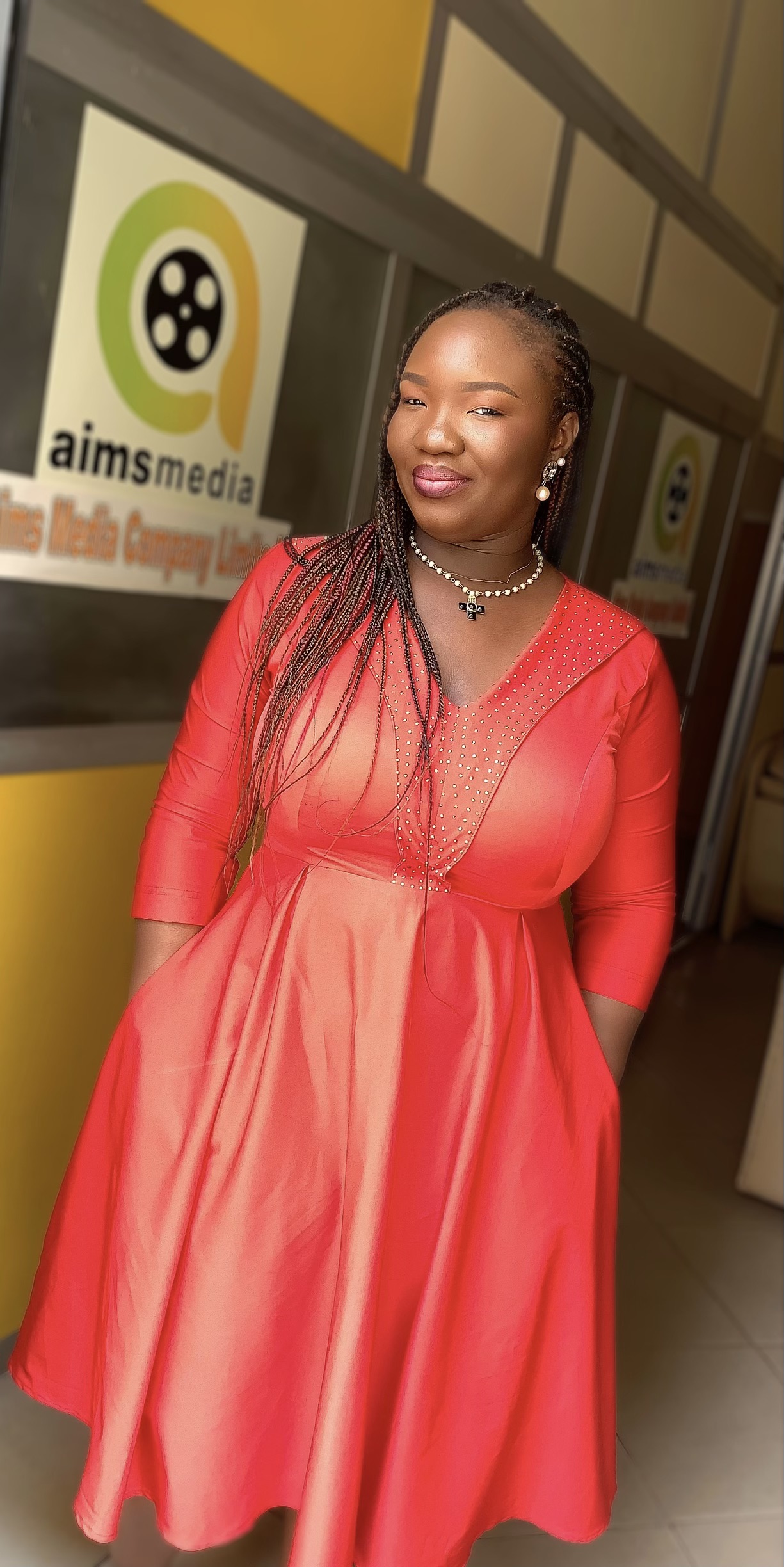
After more than a decade in communications, media, hospitality and public relations, Halimat Abike Idowu is pursuing a new path in Marriage and Family Therapy in the United States. In this interview, she reflects on her upbringing in Lagos and Ogun State, her academic journey, professional experiences, the decision to change careers, her clinical training, and her passion for helping individuals, couples and families build healthier relationships.
Can you tell us about your early life? Where were you born, and where did you grow up? Did you move around much as a child?
I was born in Lagos and lived there until I was about nine years old, when my family moved to Ota, Ogun State. However, I continued moving between Ota and Lagos for a while, particularly during my secondary school years.
After secondary school, I went to university and subsequently completed my National Youth Service Corps (NYSC) programme at the University of Ibadan. By then, my family had relocated to Abeokuta, where they are still based. I personally returned to Lagos after completing my master’s degree in the UK.
So, in a way, I have lived in different parts of southwestern Nigeria at different stages of my life, and each place has contributed to my experiences and sense of identity.
What was your family environment like growing up? Who were the people around you, and what did your parents do?
I grew up with my siblings, and we also had neighbours who were very much part of our childhood experiences. My mother ran a school, which was actually named after me, while my father was a civil servant before retiring. He also had an accounting firm that he ran with some friends.
Growing up in a family where education was very much part of our environment probably influenced me in many ways. Having my mother run a school and my father work in the public service and accounting space exposed me to different aspects of discipline, responsibility and work.
Tell us about your educational journey. What kind of student were you growing up?
I attended Abbey Junior Mixed and Infant School. I honestly do not know if the school still exists today. For secondary school, I attended Home Science Association, a private school in Alakuko, Lagos.
I initially attended as a day student, but I became a boarder in my senior secondary school years.
Looking back, I would say I was quite studious. I was even a library prefect, and I remember that my Biology notebook was sometimes used by teachers as a reference for subsequent classes.
I was somewhat of a goody-two-shoes, a rule follower most of the time. However, in my final secondary school years, I also became a rather lonely and, perhaps, mean senior. I had very few friends and did not trust people easily.
It is interesting to look back at those different sides of myself because they were all part of the person I was becoming.
Where did you pursue your undergraduate and postgraduate education, and what did you study?
I studied Mass Communication at Babcock University, Ogun State, Nigeria, and graduated with First Class Honours in 2013.
I completed my NYSC at the University of Ibadan in 2014. A few years later, I pursued a master’s degree in Marketing Communications at London South Bank University in the United Kingdom, graduating in 2017.
My academic background and professional experience initially positioned me firmly within the communications and media industry, which was where I spent a significant part of my career.
You are currently pursuing a graduate degree in Marriage and Family Therapy. Tell us about the programme and when you expect to graduate.
I am currently a Master of Science student in Marriage and Family Therapy at the University of Southern Mississippi (USM), in Hattiesburg, Mississippi, United States.
I started the programme in August 2025, and I expect to graduate in May 2027.
It is a programme that provides both academic and clinical training, equipping us with the knowledge, skills and practical experience needed to work with individuals, couples and families in therapeutic settings.
Before beginning your therapy training, you had quite an extensive career in communications and media. Can you take us through that journey?
Yes, it has been a long and colourful journey!
I spent over a decade working across communications, media, hospitality and public relations.
While in London, I worked as a Paid Social Intern with Starcom MediaVest Group between 2016 and 2017. During that period, I worked on digital campaigns for brands such as Jack Daniel’s, Procter & Gamble and Pizza Hut.
When I returned to Lagos, I ventured into hospitality and worked at Legend Hotel, Curio Collection by Hilton, between 2018 and 2019.
In 2019, I joined the Nigerian Shippers’ Council, now known as the Nigerian Ports Economic Regulatory Agency, as a Communications Specialist and Senior Information Officer. My responsibilities included managing the organisation’s digital presence, publications and press relations.
From 2020, I also produced and presented the Council’s television programme, The Shipper, which aired on TVC and NTA.
I am currently on study leave from the organisation as I pursue my graduate degree in Marriage and Family Therapy.
What inspired you to transition from communications and media into Marriage and Family Therapy? Was this something you had always wanted to do?
I would say there had always been a pull towards helping couples and families, although I did not necessarily have a clear pathway to it initially.
At some point, I read The Purpose Driven Life by Rick Warren, and I highly recommend it. The book challenged me to think more deeply about purpose, why I am here and what I am meant to contribute to the world.
Over time, I became increasingly drawn to the idea of helping people navigate relationships, family dynamics and some of the difficult experiences that shape their lives.
I wanted to do more than simply have an interest in helping people. I wanted to acquire the professional knowledge, skills and clinical training to do it properly.
Today, I can say that I am living to work rather than simply working to live, because this feels like something I was made for.
When it came to choosing a programme, location was not necessarily the most important consideration. It could have been Alabama or somewhere else, but I was looking for a programme that would provide meaningful clinical training and opportunities to begin working with clients under supervision. The University of Southern Mississippi offered that, and it was the right fit for me.
When did you relocate to the United States, and what has settling into Hattiesburg been like?
I moved to Hattiesburg, Mississippi, in August 2025 to begin my programme at the University of Southern Mississippi.
Relocating for school meant adjusting to a new environment, a different academic system and a new phase of life. It has been an experience of growth, learning and, of course, navigating the realities of being away from home.
I currently live in Hattiesburg and complete my clinical training through the University of Southern Mississippi’s Center for Family Therapy and Forrest General Hospital’s Pine Grove Behavioral Health.
What has your experience in clinical training been like so far? What are some of the roles and responsibilities you have undertaken?
When I arrived in the United States, I began working as a Graduate Assistant in the Department of Human Development and Family Science at USM. I supported five undergraduate courses focused on child and family development.
I subsequently began my clinical training at the university’s Center for Family Therapy around February 2026. In April, I began shadowing in preparation for my internship placement at Pine Grove Behavioral Health, before resuming full-time in June.
The experience has been an important part of my professional development, as it has allowed me to connect what I learn in the classroom with practical clinical experiences.
I am also the Public Relations and Recruitment Officer of the Marriage and Family Therapy Student Organization (MFTSO). In that role, I helped relaunch the organisation’s digital presence. I have also been involved in organising peer study groups for first-year students and serving as a liaison between my cohort and faculty.
It has been interesting bringing my communications background into my new academic and professional environment. I may be transitioning into a different field, but some of the skills I developed over the years are still very useful.
Beyond your academic and clinical training, have you been involved in any initiatives, mentorship programmes or community projects?
Yes, I have always had an interest in supporting people, particularly women and young people.
In 2024, I founded Hallie’s Hoppers and Counselling. It was a platform through which I supported people planning vacations and also provided a listening ear and guidance to individuals who needed someone to talk to. I am somewhat of an Ajala traveller myself, so the travel aspect was also something I enjoyed.
I have also been a mentor with the Ovie Brume Foundation since 2021, where I support a female mentee.
In 2022, I volunteered with MentorHerToGreatness, where I was involved in evaluation and supervision. It also gave me an opportunity to mentor young women.
When I think about these experiences collectively, I realise that empowering women has always been something I have been drawn to, even before I consciously recognised it as a recurring theme in my life.
I am also a member of the Nigerian Institute of Public Relations (NIPR) and a student member of the American Association for Marriage and Family Therapy (AAMFT).
Have you undertaken any additional professional training or certifications as part of your preparation for clinical practice?
Yes. I have completed certificate trainings in Dialectical Behaviour Therapy (DBT) and other clinical areas through PESI.
I am also considering further training in Eye Movement Desensitisation and Reprocessing (EMDR) or Brainspotting. Those are areas I am interested in exploring as I continue developing my clinical knowledge and skills.
I believe professional development is an ongoing process, particularly in a field where you are working with people’s experiences, emotions, relationships and wellbeing.
You have continued to write and communicate publicly despite your career transition. What platforms have you used to share your work?
I recently started writing Abeg, Let’s Talk, a monthly LinkedIn newsletter focused on love, family and relationships across cultures.
I am also contributing feature articles on relationships and mental health to some news media platforms. Additionally, I co-authored a paper on mental wellness outcomes and social media.
Here in the United States, I was featured in a student spotlight on the University of Southern Mississippi Graduate School website in May 2026.
With my communications background, I also recently produced a video about the university’s Center for Family Therapy, where I interviewed a colleague about the training programme. The video is available on the MFTSO Instagram page.
And, of course, back when I was in Lagos, I produced and presented The Shipper on TVC and NTA.
Communication has always been a part of me, and I do not see myself abandoning it. I believe it can also be a valuable tool for creating awareness about relationships, mental health and family wellbeing.
What are some of the awards, scholarships or recognitions you have received throughout your academic and professional journey?
My First Class Honours degree in Mass Communication from Babcock University in 2013 is one of the recognitions I am particularly proud of.
In 2012, I was selected for UNESCO’s Investigative Journalism Training for Female Student Journalists. That was a memorable experience.
At the Nigerian Shippers’ Council, I was also selected for the organisation’s succession leadership track, which was another significant professional milestone.
More recently, in May 2026, I received the Dr Bertha Fritzsche Child and Family Science Graduate Scholarship Endowment.
I am also grateful for my Graduate Assistantship at the University of Southern Mississippi, which I have held since 2025.
When I look back at these opportunities, I am grateful to God for His mercy, grace and the people who have contributed to my journey.
Outside work, school and your professional commitments, what do you enjoy doing? How do you unwind?
I used to love reading romance novels, particularly Mills & Boon and Harlequin books. At one point, I probably had an entire Ghana-Must-Go bag filled with books! Unfortunately, I rarely have as much time to read as I used to.
I love travelling and experiencing new things, especially different foods, places and people.
I also enjoy movies, particularly science fiction, fantasy and action films. Recently, I have become interested in K-dramas, although I have not watched many of the popular ones. I particularly enjoyed The Glory and Teach You a Lesson.
When I am stressed, I cook. I could spend two or three days cooking. I find the chopping process therapeutic, and I genuinely enjoy being in the kitchen.
What is your full name, and what do you prefer to be called?
My full name is Halimat Abike Idowu, but I go by Abike.
Only a few people call me Halimat. In fact, my late grandfather was the only person who consistently called me by that name.
My friends call me Hallie, Abby, Ria or Ricky, while my close family calls me Abk.
My name is pronounced Ha-LEE-mat Ah-BEE-keh Ee-DOH-woo.
Looking back at your journey so far, what would you say to the younger version of yourself or someone considering a career change later in life?
I would probably tell them not to be afraid of evolving.
Sometimes, we become so attached to the path we have chosen or the career we have built that we struggle to imagine doing anything else. But I think it is important to give yourself permission to grow, explore and discover new things about yourself.
A career change does not necessarily mean that your previous experiences were wasted. In my case, my background in communications, media, public relations, mentorship and community engagement has continued to shape how I approach my current training.
I think every season of life contributes something. You may not immediately understand how all the pieces fit together, but sometimes, when you look back, you realise that your experiences were preparing you for something you had not yet imagined.
For me, this journey is about purpose, service, learning and trusting God through every stage of the process.



Join the conversation
No comments yet. Share your thoughts and start the conversation.
Leave a comment