
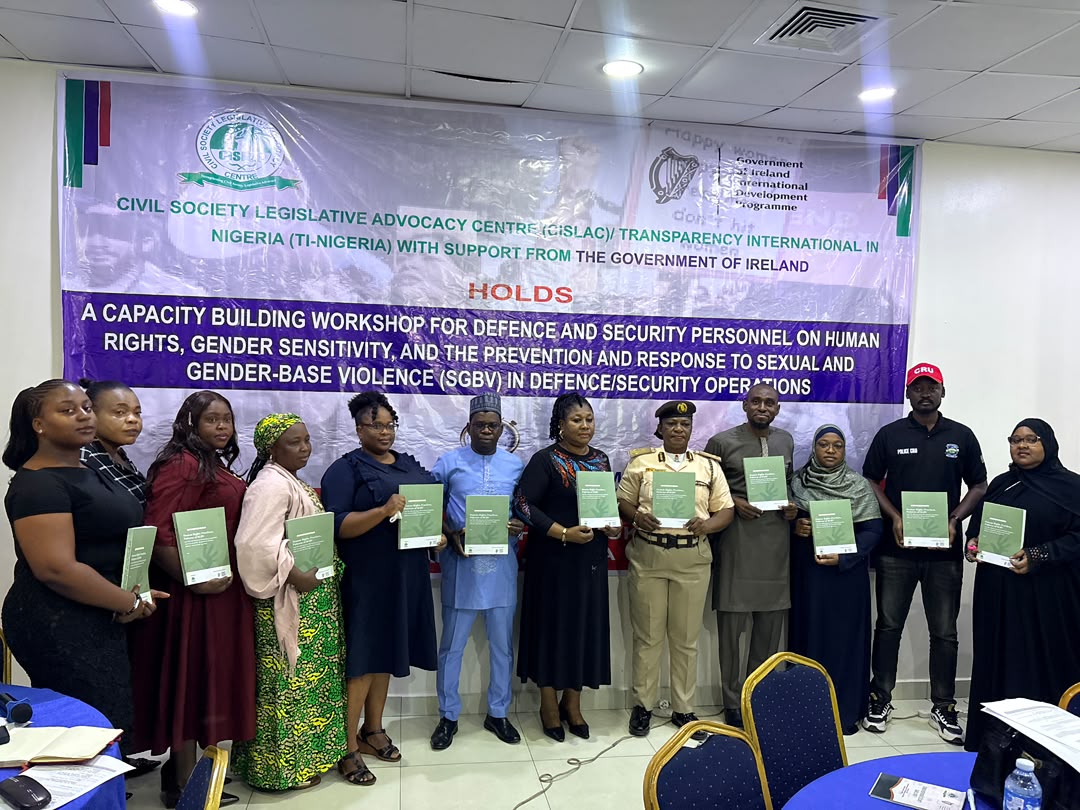
The Civil Society Legislative Advocacy Centre (CISLAC) and Transparency International Nigeria have called for stronger accountability, confidential reporting channels and improved protection of women within Nigeria’s defence and security institutions to address sexual and gender-based violence (SGBV).
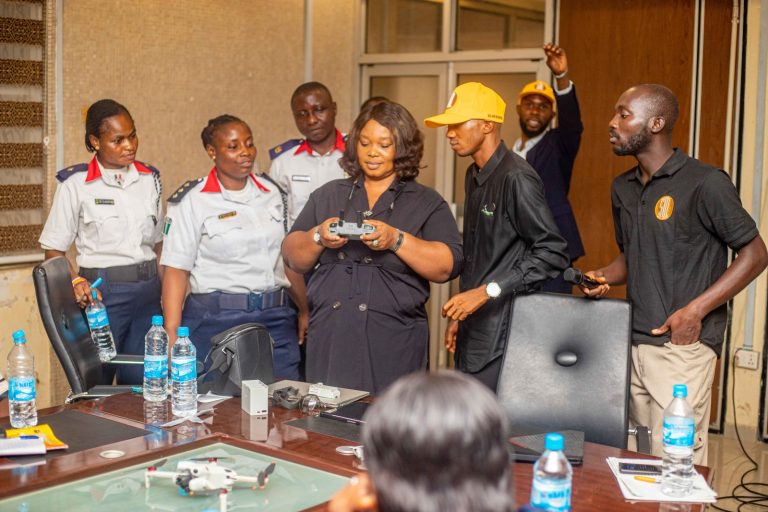
The organisations made the call in a communiqué issued after a capacity-building workshop for defence and security personnel on human rights, gender sensitivity and the prevention and response to sexual and gender-based violence in security operations.
The workshop, organised by CISLAC/TI-Nigeria with support from the Government of Ireland, was held on Wednesday, November 18, 2026, at Hawthorn Suites by Wyndham, Garki 2, Abuja.
It focused on strengthening the practical application of human rights principles, gender sensitivity and survivor-centred approaches, while equipping security personnel with measures to prevent, identify and respond appropriately to sexual and gender-based violence.
Participants also examined ways to improve institutional complaint and referral mechanisms, promote gender-responsive security operations and ensure that the rights, dignity and safety of affected persons are protected.
The workshop brought together defence and security personnel, representatives of the Ministries of Defence, Interior and Women Affairs, the National Human Rights Commission (NHRC), Independent Corrupt Practices and Other Related Offences Commission (ICPC), National Drug Law Enforcement Agency (NDLEA), civil society organisations, women’s rights advocates and journalists.
In his welcome remarks, the Executive Director of CISLAC/TI-Nigeria, Comrade Auwal Ibrahim Musa, popularly known as Rafsanjani, emphasised the importance of strengthening institutional capacity to address human rights violations and gender-based abuses within security operations.
A major highlight was the official launch of a validated baseline assessment report titled Human Rights Practices, Patterns of SGBV and the Effectiveness of Existing Complaint and Accountability Mechanisms Within Defence and Security Agencies.
The report was launched by the Executive Secretary of the NHRC, Chief Anthony Okechukwu Ojukwu, represented by the Director of Women and Children Department, Mrs Ngozi Okore.
The assessment examined human rights practices, patterns of sexual and gender-based violence and the effectiveness of existing complaint and accountability mechanisms across the defence and security agencies covered by the study.
During group discussions, participants identified barriers to women’s participation and career advancement, weaknesses in confidential reporting systems and institutional and operational risks that could expose personnel and civilians to sexual exploitation, harassment and abuse.
They observed that gender stereotypes, discrimination and unequal power relations between senior and junior officers could create opportunities for intimidation, harassment and abuse of authority, particularly where career progression depends heavily on recommendations from superior officers.
The communiqué also identified inadequate supervision during night duties and field operations, poor accommodation arrangements, unsafe working conditions and inappropriate search procedures as factors that could increase the risk of gender-based abuse.
Participants further expressed concern over potential exploitation of women and other vulnerable persons at security checkpoints and operational locations, alongside delayed investigations, weak disciplinary processes and limited access to healthcare, psychosocial support, legal assistance and safe accommodation for survivors.
To address these challenges, the workshop recommended that defence and security institutions review their recruitment, promotion, appointment and training policies to eliminate gender discrimination and improve women’s representation in leadership and decision-making positions.
It also called for stronger Gender Desks, confidential reporting channels, independent and timely investigations, improved operational supervision, survivor-centred referral systems and regular human rights training, urging participating agencies to develop measurable action plans to ensure implementation of the recommendations.
The participants stressed that prevention must become an integral part of institutional operations through regular risk assessments, effective monitoring, gender-balanced duty arrangements, adequate accommodation and strict enforcement of professional conduct standards.
They also recommended stronger collaboration between security agencies, the NHRC, civil society organisations and healthcare providers to ensure survivors have access to appropriate protection, legal remedies and support services, including protection under the Violence Against Persons (Prohibition) Act, 2015, where applicable.
The communiqué was jointly signed by Rafsanjani, Executive Director of CISLAC/TI-Nigeria, and Mr Maurice Chukwu, Researcher at Amnesty International in Nigeria.
The organisations reaffirmed the need for participating agencies to translate the recommendations into concrete policies, operational guidelines and measurable institutional commitments, stressing that respect for human rights and gender equality must be reflected in the daily conduct of security personnel.

Join the conversation
No comments yet. Share your thoughts and start the conversation.
Leave a comment