
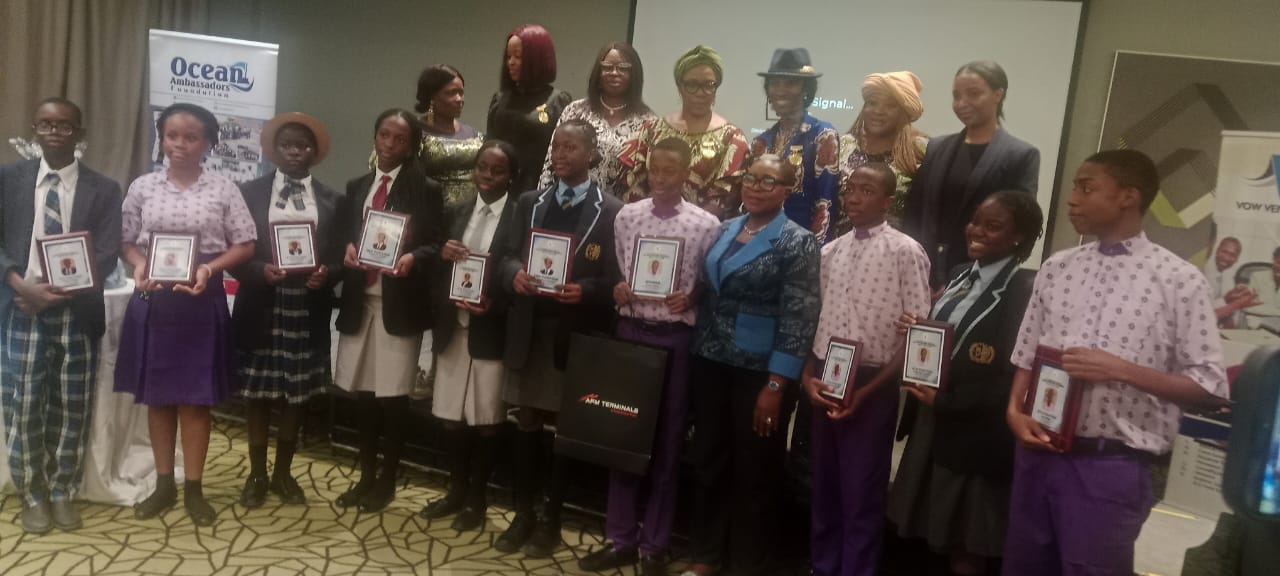
Maritime stakeholders have called for stronger supply chain education in schools, urging educational institutions to establish maritime clubs and expose students to career opportunities across the maritime industry as part of efforts to develop the next generation of professionals for Nigeria’s blue economy.
The stakeholders made the call at the 7th Educators and Maritime Stakeholders Lecture and Awards, held in Lagos on Tuesday, with the theme, “The Role of Supply Chain in the Blue Economy.”
The event brought together educators and maritime professionals to examine the relationship between supply chain management and the blue economy, while promoting collaboration between schools and industry players through the inauguration of the OAF Career Advisory Board and maritime clubs.
Speaking at the event, the President of the National Association of Proprietors of Private Schools (NAPPS), Lagos State, and Special Guest of Honour, Dr. Lukman Alaka-Yusuf, expressed concern over the limited awareness of maritime career opportunities among private school proprietors.
He disclosed that fewer than 20 per cent of school proprietors were aware of maritime student societies, describing the situation as a major gap that needed to be addressed through increased engagement with educational institutions.
Alaka-Yusuf pledged to promote the establishment of maritime clubs across schools in Lagos, noting that the state’s private schools had a student population of more than 780,000 who could benefit from early exposure to the industry.
He urged students to take an active role in creating awareness by informing their parents, teachers and school authorities about opportunities in the maritime sector.
The NAPPS president also clarified that maritime careers were not limited to sailing and seafaring, explaining that the industry offered opportunities in medicine, catering, administration and several other professional and support services.
Delivering the keynote presentation, the Deputy President of the Chartered Institute of Logistics and Transport (CILT), Dr. Juliana Obiageli Saka, represented by Mrs. Fumnilola Afolabi, described effective supply chain management as critical to the movement of goods and services from their points of origin to final consumers.
She explained that supply chain management encompassed procurement, manufacturing, transportation, warehousing, inventory management and final delivery, stressing that the efficiency of each component determined the overall performance of the chain.
According to her, an effective supply chain reduces transportation and storage costs, prevents delays and shortages, improves customer satisfaction and facilitates trade and economic growth.
Using a bottle of water to illustrate the concept, Afolabi explained how manufacturers, transporters, ports, ships and consumers were interconnected in ensuring that products reached their intended destinations.
She warned that a disruption at any stage could affect the entire process, emphasising that every participant had a responsibility to ensure the smooth operation of the supply chain.
“Everyone in the supply chain has an important role to play. If one person is delayed, everyone is affected,” she said.
On the blue economy, she described it as the sustainable utilisation of oceans, seas, rivers and other water resources to stimulate economic growth, create employment and improve livelihoods without compromising the marine environment.
She identified shipping, port operations, marine transportation, fisheries and tourism as major components of the blue economy, urging schools to organise educational excursions to ports to enable students to gain practical knowledge of maritime operations.
Afolabi also cautioned against the indiscriminate disposal of plastics and other waste materials into drainage systems, rivers and seas, warning that environmental pollution threatened marine ecosystems and the sustainability of the blue economy.
She identified shipping, logistics, supply chain management, fisheries, marine technology, environmental management and maritime law as some of the career opportunities available in the sector.
She further stressed the need for students to develop strong academic foundations, communication and technological skills, teamwork and creativity to remain competitive in the evolving industry.
Also speaking, maritime lawyer and member of the OAF Career Advisory Board, Dr. Alban Igwe, said opportunities in the maritime industry were not restricted to science students or individuals seeking careers at sea.
He explained that the sector provided opportunities across trade, transportation, tourism, maritime law, technology and other professional services, noting that greater awareness would help young Nigerians appreciate the diversity of careers available.
Igwe observed that Nigeria’s historical concentration on oil had limited public understanding of the economic potential of its marine resources and the opportunities within the wider maritime industry.
“Unfortunately, many of us are struggling on land. Now that awareness is increasing, I find younger people trying to reach out into careers in the maritime industry,” he said.
In her remarks, the Convener and President of OAF, Hon. Olaitan Williams, said preparing young Nigerians for future leadership positions in the maritime industry required deliberate succession planning and sustained collaboration between educational institutions and industry stakeholders.
She described maritime clubs as a strategic platform for bridging the gap between schools and the maritime industry, noting that the initiative would introduce students to the sector early enough to influence their career choices.
Williams disclosed that the Blue Economy Quiz Competition attracted more than 1,800 registrations, with 1,005 students participating in the three-day exercise.
She said the top 10 participants were recognised at the event, adding that the competition was designed to stimulate students’ interest and deepen their understanding of the blue economy.
The OAF president also disclosed that APM Terminals sponsored three students for maritime-related studies, describing the gesture as an important investment in developing future industry professionals.
As part of efforts to institutionalise career guidance and industry engagement, members of the OAF Career Advisory Board were inaugurated at the event.
The board is chaired by Captain Tajudeen Alao, a Master Mariner, while Dr. Alban Igwe, a dangerous goods, supply chain and logistics expert, serves as Vice Chairman.
Other members include Hon. S. Olayinka Oladunjoye, with expertise in law, education and insurance; Mrs. Ekeoma Ezeibe, President of the Nigerian Council of Registered Insurance Brokers (NCRIB); Dr. Odunayo Ani, President of Women’s International Shipping and Trading Association (WISTA) Nigeria; Chief (Mrs.) Carol Ufere, with expertise in port administration; Mrs. Seyi Adejuyigbe, maritime law expert; Mrs. Funmilayo Olotu, port administration professional; Dr. Juliana Saka, with expertise in exports, supply chain and logistics; and Mrs. Funmilayo Omowumi Loremikan, FCILT.
The inauguration of the board and maritime clubs is expected to strengthen career guidance, mentorship and knowledge-sharing between maritime professionals and students.
The stakeholders maintained that integrating supply chain education into the school system and strengthening partnerships between educators and industry players would position young Nigerians to explore emerging opportunities, contribute to maritime development and participate meaningfully in the country’s blue economy.