
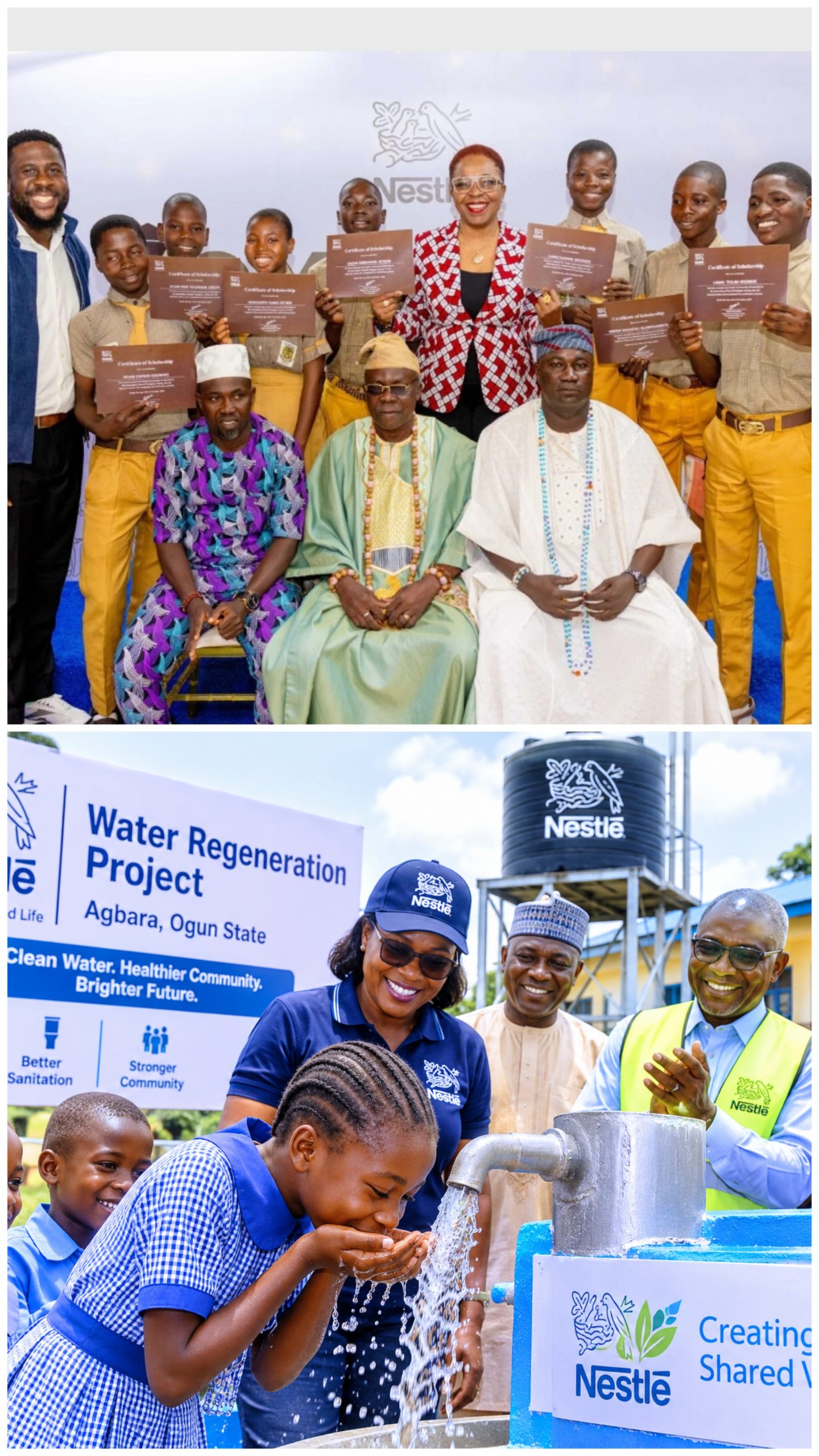
Many Nigerian communities struggle to access clean water. Families often have to look hard to find a reliable source of clean water, children in school may lack proper sanitation facilities and some communities lack clean water facilities.
Having a working borehole and water system can help improve hygiene, help children learn in school, ease pressure off families and help create a healthier lifestyle.
Nestlé Nigeria Plc have invested in providing water, sanitation and community facilities.
Just recently, in October 2026, Nestlé commissioned eight intelligent boreholes and water treatment systems in the Agbara axis of Ogun state. These facilities are part of a larger Water Regeneration Project in Agbara and Abaji in the Federal Capital Territory.
These facilities provide clean water to the community. They include water treatment, conservation and community management to help ensure the facilities are working and helping the community.
This shows Nestlé Nigeria are taking their Creating Shared Value seriously. They understand that while trying to grow as a company, they should also be improving the communities they are present in.
This is important because of the issues communities face.
In 2024, Nestlé donated water and sanitation facilities to the Local Government Primary School, Adie Owe in Ado-Odo-Ota, Ogun State. This should help over 500 people including children, teachers and community members.
They were installed as part of Nestlé’s Nestlé for Healthier Kids initiative which helps encourage healthy eating, drinking, exercise and hygiene habits in children.
Children now have access to clean water and separate toilets for boys and girls to make it easier to practice good hygiene and create a better learning environment.
This follows similar work done in other schools in Ogun State and the Federal Capital Territory. By 2022 Nestlé had provided 14 water, sanitation and hygiene projects in Ogun State and Abaji.
In 2023, they completed facilities at Wesley School 2 in Sagamu and the Local Government Primary School, Ketu Adie Ovie in Ado-Odo-Ota. This provided over 930 children and teachers with clean water and sanitation facilities.
The importance of community involvement has been recognised.
The Water Regeneration Project in 2026 includes water, sanitation and hygiene committees in the community. This helps increase local management and ensures the facilities are maintained. If there is no system to repair the facilities, check the quality of the water and manage them responsibly then they won’t be very useful.
This shows a more rounded approach to helping the community.
Nestlé are showing how the private sector can help improve communities. However, if the facilities aren’t regularly maintained, there is no independent checks on the water quality and there is no proof that the facilities are helping the people then they won’t be successful in the long term.
Community development isn’t just about how many facilities are installed but how much easier life is for those living there.
Children no longer have to walk far for water, families have access to a cleaner source of water and children can learn better hygiene habits in school.
Nestlé Nigeria’s investment in communities shows how the private sector can work alongside the government to improve quality of life. However, they will only be successful in the long term if the facilities are continuing to help the people they were installed for.