
In bustling Lagos, plastic packaging, wrappers and bottles can be seen scattered around in the area surrounding markets, bus stops and drains. Some will be washed into the gutters by rain while others will sit on the side of the road until they are picked up by waste collectors.
This becomes a common issue for many in the community. Clogged up drains, poor cleanliness and a lack of waste management can cause issues.
However, there is a bigger issue to overcome. Plastic waste is posing an environmental and economic issue and highlights areas where waste collection needs improving and who is responsible for creating the waste.
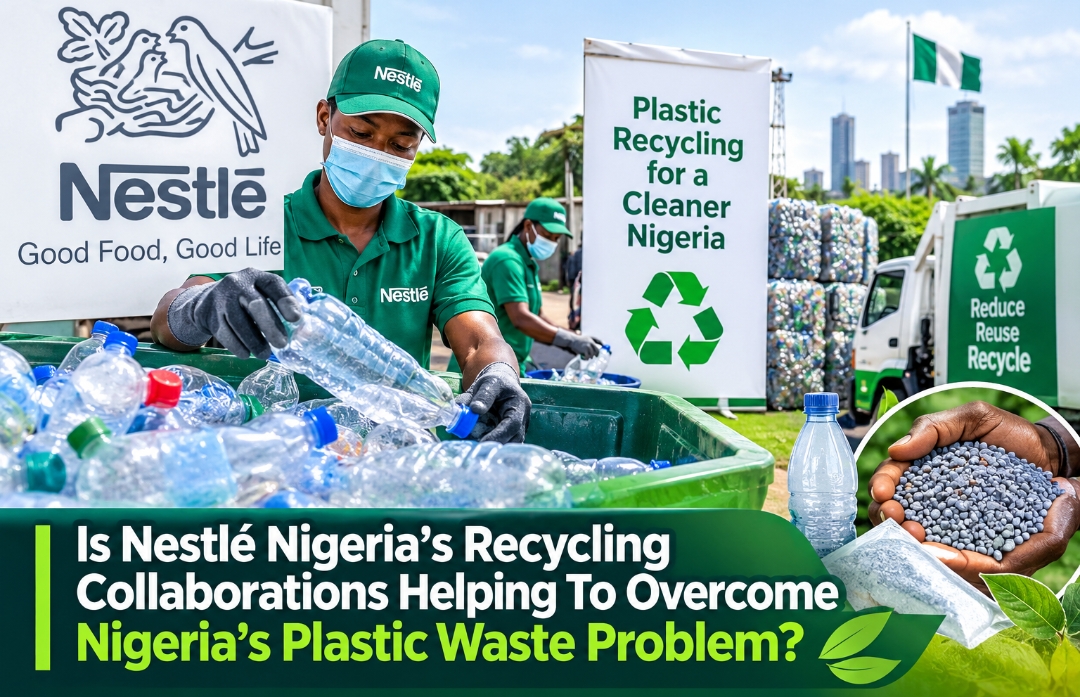
To combat the issue, Nestlé Nigeria Plc have been increasing their eco-friendly initiatives. This includes clean up days and collaborations with recycling groups, waste collectors and public institutions.
This is a good example of how the private sector can help overcome the waste issue in Nigeria. However, more importantly, it highlights what happens to the plastics after the volunteers have finished cleaning!
Going Beyond The Factory
In June 2025 Nestlé Nigeria announced that 516 employees had volunteered for their annual environmental campaign.
Working with The African Clean Up Initiative and local authorities, the clean up took place in several markets across the country including Oke-Arin (Lagos), Utako (Abuja), Bodija (Ibadan), Abubakar Rimi (Kano) and Mile 3 (Port Harcourt).
The volunteers picked up 5601kg of solid waste and 379.2kg of recyclable waste.
This was the sixth year Nestlé Nigeria have held a national clean up and community awareness day.
By cleaning up these bustling markets, which receive a high volume of traders, customers, transportation and food sellers, Nestlé were able to increase awareness of waste management in the community.
Cleaning can help to reduce the amount of waste currently in the area. However, it can also increase awareness of how the waste is being managed. By having employees engage with the community, Nestlé have increased the awareness of waste management beyond just the sanitation workers and government.
However, just because they collected a certain amount of waste doesn’t necessarily mean the environment has improved. The recycling of recyclable items, waste returning to the same areas and reliable waste management are all key factors to consider.
Therefore, programmes should aim to improve environmental issues by increasing public awareness and making sure there are reliable waste management and recycling systems.
Working With Recycling Groups
The sustainability initiatives have also increased in recent years with Nestlé Nigeria working with recycling organisations.
They have supported the recycling of plastic by working with recyclers like Wecyclers, Chanja Datti and Maladase Ecopreneurs Management Limited. Alongside this, Nestlé have also worked with the Food and Beverage Recycling Alliance. This was created to improve responsible packaging waste management in the industry.
In June 2026 Nestlé Nigeria announced they were launching a multi stakeholder initiative to improve the environmental initiatives. This will work with government institutions, regulators, industry, recyclers and development partners. The initiative will work with the community to clean up 12 locations across the country.
This shows they are trying to improve the situation beyond just clean up days.
Since 2019 Nestlé have partnered with recycling groups to recover over 60,000 metric tonnes of plastic. They have also recovered over 12,000 kg of plastic through their Employee Plastics Collection Scheme, which was launched in 2022.
This shows that their environmental initiatives go beyond just picking up litter. They have been able to recover a large amount of plastic through their partnerships.
However, just because a large amount of plastic has been collected doesn’t necessarily mean the plastic has been fully recycled. The plastic could have to be sorted, cleaned and processed. Therefore not all waste collected may actually be recyclable.
From a public perspective, the aim is to reduce the amount of plastic going into the environment. However, it is important to know where the plastic is going. Having clear information on how much plastic has been collected, processed, recycled and where it has gone will help to understand how effective the partnerships are.
The Humans Behind The Recycling Figures
Often environmental initiatives are mentioned using tonnes of waste, packaging goals and company commitments. However, those at the start of the recycling chain face many challenges.
Across the country, waste collectors and recyclers are doing the hard work in picking up waste. This can help them earn a living and provide raw materials to recycling businesses. However, this can expose them to dangerous objects, unhygienic waste, poor handling techniques and fire hazards.
In July 2025 Nestlé Nigeria announced they were providing 100 plastic waste workers in Lagos and Abuja with Safety, Health and Environment training.
The initiative, which was supported by the National Environmental Standards and Regulations Enforcement Agency, Recyclers Association of Nigeria and the Food and Beverage Recycling Alliance, focused on safe working practices, responsible handling of recyclable materials, fire prevention and rescue and correct use of PPE.
This shows they are focusing on improving sustainability.
If those making the recycling process possible are putting themselves at risk unnecessarily then the recycling isn’t sustainable. By improving safety and providing PPE to these workers, the sector can be improved. It also helps to recognise the contribution made by these workers who are often unseen.
However, training is only one element. To make long term improvements, they need access to PPE. They also need reliable waste management, fair pay and safe working conditions.
Overall, the programmes will help improve the lives and opportunities of those working in the recycling chain.
Packaging Responsibilities
Although clean ups and recycling partnerships are important, they don’t fully solve the plastic pollution issue.
Companies selling consumer goods will package their products. Therefore, they have a responsibility to think about what happens to the packaging once the products have been used. Nestlé Nigeria have announced they have been working to improve plastic neutrality and adding recycled materials to certain packaging. In December 2024 they announced their Nestlé Pure Life water bottles now contain 50% recycled polyethylene terephthalate (rPET). They have also achieved plastic neutrality by collecting the equivalent amount of plastic to put back into recycling.
This can help improve a circular economy.
However, plastic neutrality shouldn’t be confused with removing plastic pollution. Just because they have collected the same amount of plastic doesn’t mean all the packaging they produce is being collected. It also doesn’t mean plastic isn’t leaking into the environment.
This is important to consider in a country where there are not reliable waste management and recycling systems.
A realistic way to see if they are making progress is to consider if they are using less virgin plastic in their packaging, making it easier to collect and recycle and if they are using recycled materials in new products. They also need to consider if they are reaching areas where there isn’t reliable waste management.
This will give a better insight into how their packaging commitments are helping the environment.
It will also help customers and regulators understand if the initiatives are reducing waste after it has been created or if they are preventing unnecessary waste from being created.
Why Collaboration Is Important
The waste management issue in Nigeria is too big for one organisation to overcome alone.
Government agencies will provide regulation and public infrastructure. Manufacturers will influence packaging, recyclers will turn the waste into useful materials and community organisations and individuals will influence how waste is managed.
Nestlé Nigeria have decided to bring these different interests together by forming a coalition in 2026.
Working with institutions such as the Federal Ministry of Environment, NESREA, Lagos State Ministry of Environment and Lagos State Waste Management Authority means they can link their initiatives with public environmental goals.
However, they will need to ensure the coalition makes a difference. Whilst it provides a platform to work together, they still need to have clear responsibilities, reliable funding, measurable goals and public reporting.
The community need to know if waste collection is improving. Recyclers need reliable sources of usable materials. Waste workers need safe working conditions and manufacturers need to have systems to show they are accountable for the packaging they are putting into the market.
Without these connections, the initiatives could become a one off.
How Businesses Can Help
Nestlé Nigeria have many ways they can help fight plastic pollution. They have volunteer schemes, partnerships with recyclers, training for waste workers and encouraging more responsible packaging.
They have collected over 60,000 metric tonnes of plastic since 2019 which is a large figure to consider. However, we need to continue to look into how effective they are. As they are moving towards a more partnership based strategy.
Ultimately, the most important factor is how much plastic they are successfully recycling. If waste collection is improving, waste leakage is reducing and the recycling economy is helping people earn a living then they will be making a difference.
Having independent verification and clear public reporting will help to understand how effective they are.
Plastic waste in Nigeria is causing issues with drainage, waterways, public health and leaving a poorer environment for future generations. Therefore, having companies involved is valuable. However, they need to be accountable, have efficient policies in place and change how products are designed, used and disposed of.
Nestlé Nigeria have changed their approach and we can look into how effective this has been. Can the partnerships, waste collection and packaging help create measurable improvements?
As the true test of environmental sustainability is how much less waste there will be tomorrow.