
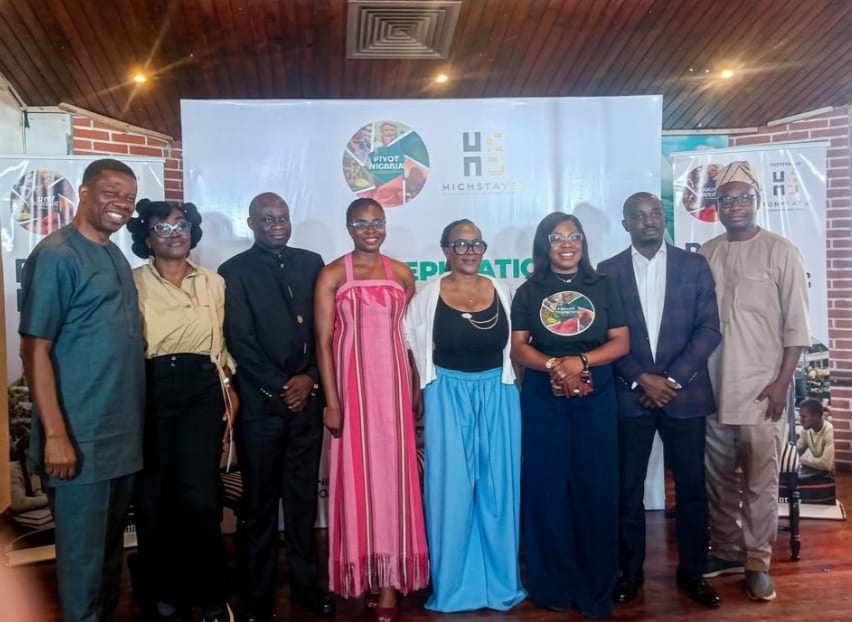

The second edition of the Pivot Nigeria Conference has called for deliberate action by citizens, institutions, businesses, the media and government to strengthen Nigeria’s reputation and project a more balanced national narrative.
The conference, held on Tuesday, September 29, 2026, at La Scala, MUSON Centre, Lagos, brought together voices from the creative, media, communications and corporate sectors to examine the theme, “The Reputation Dividend: Who Pays for Nigeria’s Perception?”
Convener of Pivot Nigeria and Lead Consultant at HighStakes PR Professionals, Victoria Uwadoka, said reputation should not be treated as a superficial concept, stressing that it is closely connected to trust, credibility and long-term sustainability.
According to her, individuals, organisations and nations depend on reputation as a foundation upon which trust is built and sustained.
Uwadoka said the conversation was particularly important as Nigeria prepares to mark its 66th Independence Anniversary on October 1, noting that the country became independent on October 1, 1960.
She said the responsibility for Nigeria’s reputation could not be left to government alone, insisting that citizens, media organisations, institutions and corporate bodies all have roles to play.
“There is a lot about us that is great. We have made progress in so many ways,” she said, adding that Nigerians must recognise their collective responsibility for shaping the country they want to see.
Uwadoka argued that Nigeria’s age should be measured not only in years but also by what the country has achieved, learnt and built over time.
She said the country had developed policies and institutional frameworks in several areas but needed sustained implementation to translate them into tangible benefits for citizens.
According to her, efforts to improve Nigeria’s reputation must begin from within, with Nigerians developing greater confidence in their abilities and creating solutions that can compete internationally.
She urged government to provide an enabling environment through sound policy, infrastructure and other conditions required for businesses and citizens to thrive.
“Trust is also an infrastructure. Perception is an infrastructure,” Uwadoka said, arguing that both should be deliberately strengthened as part of Nigeria’s national development efforts.
She also called on the media to tell balanced stories about Nigeria by reporting the country’s challenges alongside its achievements, rather than presenting a one-sided picture.
Uwadoka said Pivot Nigeria was established to interrogate how Nigerians perceive themselves and how those perceptions influence the way the country is experienced by others.
“If you say you’re a lion, behave like a lion,” she said, urging Nigerians to demonstrate through their conduct the values they associate with the country’s reputation as the “Giant of Africa.”
She challenged Nigerians to examine their individual conduct, including professionalism, punctuality, discipline, ethics and respect, noting that every citizen represents Nigeria whenever they interact with others.
“When people meet me, I am the Nigeria that they meet,” she said, urging citizens to consider the impression created by their everyday actions.
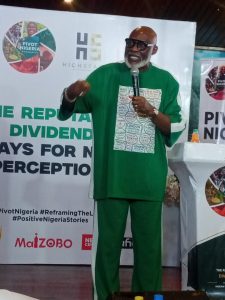
Veteran actor and filmmaker Richard Mofe-Damijo, popularly known as RMD, said Nigerians should distinguish between honestly acknowledging the country’s problems and condemning Nigeria without contributing to solutions.
Mofe-Damijo said reframing Nigeria’s image did not require ignoring its challenges, but demanded a willingness to confront them and work towards practical solutions.
He urged citizens to see themselves as ambassadors of Nigeria and said national development required citizens to take responsibility for the kind of country they wanted to build.
The actor cited the growth of Nigeria’s Afrobeats industry and the achievements of Nigerian entrepreneurs as examples of how local talent, enterprise and persistence could influence perceptions of the country internationally.
Mofe-Damijo also called for greater accountability from leaders, arguing that citizens have a responsibility to demand accountability from those entrusted with public office.
On Nigeria’s 66 years of independence, he said the country remained a work in progress and that its age should not excuse shortcomings but should reinforce the need for patience, consistent effort and deliberate nation-building.
At the conference, Head, Corporate Affairs and Sustainability, Rite Foods Limited, Ekuma Eze, said changing Nigeria’s narrative required a paradigm shift beginning from the family and extending to institutions and society.
Eze said Nigerian companies should be built to meet international standards rather than limiting themselves to the perception of locally made products, arguing that globally competitive businesses could attract investment, create employment and contribute to economic growth.
He added that citizens had a responsibility to identify areas where they could contribute differently to national development, stressing that sustainable progress could not be achieved by waiting for solutions from outside the country.
The Pivot Nigeria gathering therefore placed reputation within the broader context of citizenship, leadership, business, media, culture and national development, with speakers calling for Nigerians to combine honest storytelling with measurable action. The conference was organised to deepen conversations around Nigeria’s image and the social and economic implications of how the country is perceived locally and internationally.