
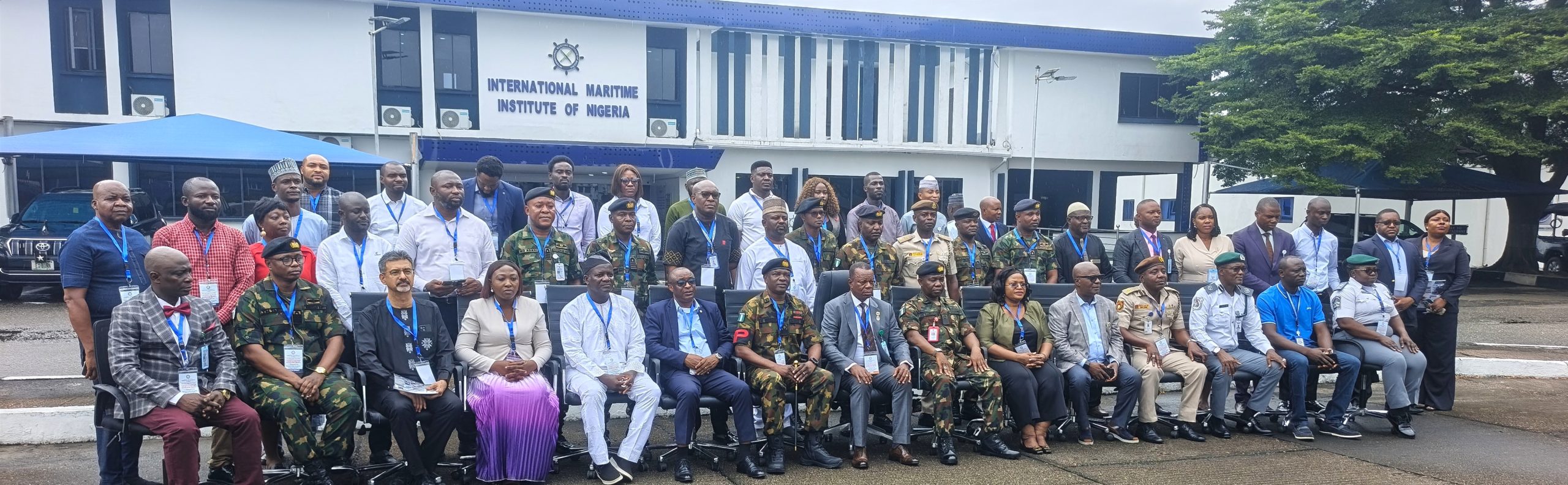
The International Maritime Institute of Nigeria (IMION) has commenced a three day executive programme aimed at addressing logistics bottlenecks and strengthening trade facilitation as critical drivers of Nigeria’s blue economy.
The programme, titled “Logistics and Trade Facilitation for Blue Economy Growth,” began on Monday, September 7, 2026, at the IMION Auditorium, NNS Quorra, Apapa Road, Lagos, and will end on Wednesday.
The opening brought together senior representatives of the Nigerian Navy, Nigeria Customs Service, Nigeria Ports Economic Regulatory Agency, port authorities, government institutions, maritime organisations, logistics companies, academia and other stakeholders in the maritime value chain.
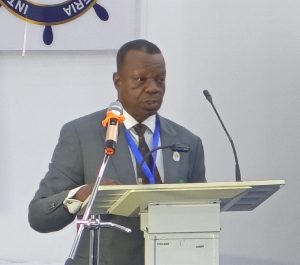
Declaring the programme open, the Director General of IMION, Rear Admiral Thaddeus Udofia (rtd), said efficient logistics remained central to unlocking the enormous economic opportunities embedded in Nigeria’s maritime domain.
Udofia said Nigeria’s blue economy offered significant prospects for sustainable economic growth, job creation, trade expansion and regional integration, stressing that the country must develop the capacity to efficiently move people, goods, information and services across its maritime corridors.
According to him, Nigeria possesses an extensive maritime domain, including its coastline, Exclusive Economic Zone, inland waterways, creeks, estuaries and the Niger Delta Basin, with enormous living and non living resources.
He, however, noted that the availability of these resources alone could not guarantee economic prosperity without efficient logistics, infrastructure, trade systems and coordinated institutional frameworks to connect maritime assets to the wider economy.
“Logistics is the backbone of the maritime industry. The blue economy is a trade driven economy, of which 80 to 90 per cent of global trade by volume goes by sea,” Udofia told journalists.
He said the inability to establish efficient logistics systems would continue to constrain the capacity of the blue economy to generate its full economic value.
Udofia explained that the executive programme was therefore designed to examine the challenges affecting the movement of goods and services within Nigeria’s maritime environment and develop practical strategies for addressing them.
He said the programme would expose participants to industry knowledge, practical logistics solutions, direct interaction with experienced maritime professionals and networking opportunities capable of strengthening the sector.
The IMION Director General said the ultimate objective was to equip participants with knowledge and practical tools that could be applied within their respective organisations to improve maritime efficiency and contribute to national development.
He also called for stronger collaboration among Customs, port authorities, regulators, shipping companies, freight forwarders, transport operators, technology providers and financial institutions.
Udofia said Nigeria could no longer afford institutional silos, arguing that the future of the blue economy depended on collaboration, digitalisation, transparency, interoperability and effective implementation of policies.
He said the programme would examine ways of reducing port delays and transaction costs, improving cargo clearance and supply chain visibility, promoting investment and ensuring that maritime trade generated greater employment, financial inclusion and socioeconomic development.
Speaking on the foundation of the blue economy and its logistics framework, the Dean, School of Transport and Logistics, Lagos State University, Prof. Ogochukwu Ugboma, said logistics was the mechanism that transformed the various components of the blue economy into economic value.
Ugboma explained that the blue economy extended beyond maritime trade to coastal resources, tourism and other activities, noting that the value of these activities depended heavily on the efficient movement of cargo, people, information and finances.
She stressed that logistics should not be viewed merely as the physical movement of goods, but as an integrated system involving information and financial flows that determine the efficiency of the entire supply chain.
On the challenges of moving cargo from Lagos ports to the hinterland, Ugboma said improving operations inside individual terminals would not be sufficient without fixing the wider connectivity system.
She said efficient port operations must be complemented by functional access roads, improved gate turnaround times and effective connections to the hinterland, describing logistics efficiency as a product of an interconnected system rather than isolated improvements.
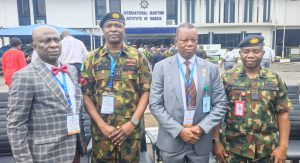
Also speaking, the Founder and Chief Executive Officer of Supply Chain War Room and Director General of the African Centre for Supply Chain, Dr Obiora Madu, said Nigeria was losing significant economic value because of inefficiencies within its port and logistics systems.
Madu said the country needed to begin viewing ports as economic corridors rather than mere gateways, stressing that the effectiveness of a port ultimately depended on the strength of its connection with the hinterland.
He said inefficiencies and congestion at the ports generated additional costs for importers, which were eventually transferred to consumers, adding that cost reduction and improved customer service should remain central to supply chain reforms.
Madu urged IMION to sustain research into Nigeria’s performance on the World Bank’s Logistics Performance Index and develop practical recommendations that could help improve the country’s standing and competitiveness.
He expressed confidence that participants would derive significant value from the programme because of its practical orientation, noting that lessons from comparative experiences at other ports could provide useful models for improving Nigeria’s maritime logistics.
The programme also featured discussions on modern logistics systems, customs procedures, port operations, multimodal transportation, supply chain management, trade facilitation and sustainable blue economy development, with participants drawn from across the maritime ecosystem.
Udofia used the occasion to appreciate the Chief of the Naval Staff, Vice Admiral Idi Abbas, for his support to IMION and for facilitating the participation of Nigerian Navy officers in the programme.
He also unveiled the second edition of the IMION Newsletter, which he described as a platform for documenting developments, innovations and emerging issues within Nigeria’s maritime industry and the wider Gulf of Guinea.
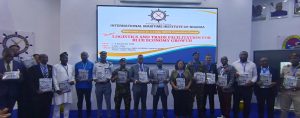
The executive programme is expected to develop practical knowledge and professional networks capable of supporting a more efficient, competitive, resilient and sustainable blue economy in Nigeria and across Africa.