
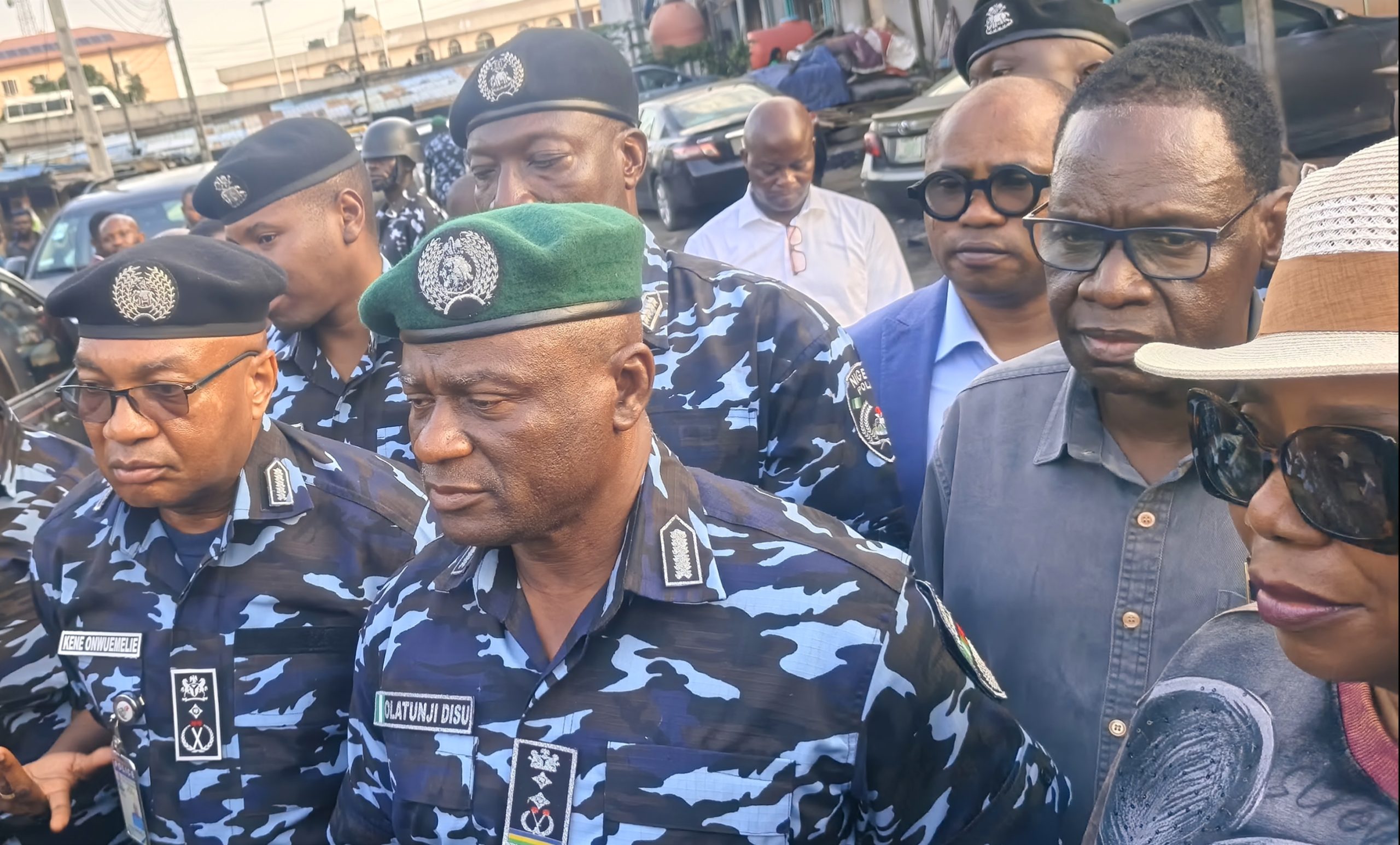
The Inspector General of Police, IGP Olatunji Rilwan Disu, has said the Nigeria Police Force will take full advantage of funds available through the Police Mortgage and the Federal Mortgage Bank of Nigeria to address the housing needs of its personnel, particularly officers in the lower ranks.
The IGP disclosed this during an inspection of police barracks and housing projects across Lagos, where he visited about 21 locations at various stages of redevelopment.
He said the Force was already engaging strategic partners to unlock mortgage financing and other funding opportunities for the construction of affordable and befitting homes for police personnel.
“We have a lot of money in the Police Mortgage, in the Federal Mortgage Bank, and we should take full advantage of it,” the IGP said.
According to him, the focus would be on the rank and file because junior officers constitute the bulk of personnel deployed daily for policing duties across the country.
He explained that access to decent accommodation was not merely a welfare issue but an important component of police effectiveness, noting that officers require a stable place to rest and prepare for the demanding task of protecting lives and property.
Disu said the Force would work with private developers and other partners to convert available financing opportunities into actual housing projects rather than allow resources earmarked for police accommodation to remain underutilised.
He expressed concern over the condition of several police barracks visited during the Lagos inspection, saying many structures had become severely dilapidated after decades of use and had to be demolished to pave the way for modern developments.
The inspection covered parts of Ikeja and Lagos Island, with the IGP saying the condition and pace of some of the projects required urgent attention.
He said the visit was intended to enable him to assess the projects personally, engage development partners and understand the challenges delaying their completion.
The IGP acknowledged the support of the Lagos State Government, describing the partnership as important to the ongoing efforts to improve police accommodation in the state.
He also disclosed plans to redevelop the Falomo Police Hospital, including upgrading its facilities and equipment as part of a broader strategy to improve welfare infrastructure for police personnel.
According to him, some abandoned portions of former barracks had become occupied by unauthorised persons following the demolition of the old structures and the delay in commencing redevelopment.
He said the Force would immediately take steps to reclaim its properties and prevent further encroachment, invoking the Broken Windows Theory to explain how neglected public facilities could gradually become vulnerable to further deterioration and illegal occupation.
On the relocation of officers and their families during reconstruction, the IGP said the Force would conduct a comprehensive headcount and provide appropriate relocation allowances to affected occupants.
He explained that the approach would also include phased construction in large barracks, allowing new buildings to be developed in available spaces while existing occupants remain nearby and subsequently move into the completed units.
The strategy, he said, would help build confidence among personnel and reassure them that the barracks were being redeveloped for their benefit rather than sold or converted to other uses.
The IGP said he was dissatisfied with the pace of some of the projects but expressed optimism that parts of the Ikeja development could become habitable from December or January, subject to the completion schedule agreed with the developers.
He promised to maintain regular visits to Lagos to monitor progress and ensure that contractors and development partners remained focused on delivering the projects.
Also speaking, Lagos State Commissioner for Tourism, Arts and Culture, Toke Benson-Awoyinka, said the state’s partnership with the police was designed to combine government support with private sector equity to deliver modern accommodation.
Benson Awoyinka, who said the initiative began when she served as Special Adviser to the Lagos State Governor on Housing, explained that the state wanted to extend its housing intervention to police officers because of their critical role in maintaining security.
She said the project had experienced delays arising from headcounts, relocation, demolition, illegal shops and other issues associated with securing vacant possession, but disclosed that full possession had now been secured at Ijeh Barracks.
She said the Lagos State Government was working with private developers to accelerate the redevelopment, adding that the swampy nature of some project sites had also necessitated land reclamation and careful engineering to prevent structural failures.
The commissioner expressed optimism that about 1,000 housing units could be ready for police officers at Ijeh by February next year, stressing that the government would continue to work closely with the police and private developers to deliver the project.
She said the redevelopment programme, which ordinarily could take between 24 and 36 months, required proper planning and construction standards to ensure that officers received safe, durable and decent homes.
The housing initiative, she added, represents a broader effort to place police welfare at the centre of security administration, with access to mortgage finance, private investment and government partnerships expected to provide a sustainable pathway for expanding police accommodation beyond the current projects in Lagos.