
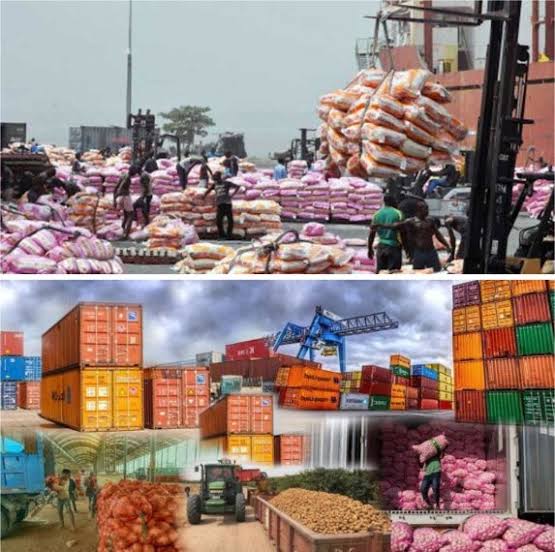
Import duty waivers remain an important fiscal policy tool in Nigeria, particularly as the Federal Government seeks to attract investment, promote industrialisation and reduce the cost of machinery and equipment required for productive activities.
However, the concession is not a blanket privilege for importers. It applies to specified goods, projects, sectors and government programmes under approved laws and fiscal incentive frameworks. The Federal Ministry of Finance administers the Import Duty Exemption Certificate, while the Nigeria Customs Service implements approved exemptions within the customs clearance process.
An import duty waiver allows an eligible importer to bring approved goods into the country without paying the applicable customs duty, subject to the conditions attached to the approval. It is therefore different from simply refusing to pay Customs duty or declaring imported goods as duty free.
The Federal Government uses the incentive largely to reduce the cost of investment in strategic sectors. Agricultural machinery, manufacturing equipment, power projects, renewable energy, solid minerals, iron and steel, automotive production, textiles, aviation and qualifying LPG projects are among areas covered by the existing framework.
The policy is particularly significant for manufacturers that require expensive machinery and specialised equipment that are not readily available locally. By reducing the cost of importing such productive assets, government can encourage new investments, factory expansion, job creation and technology transfer.
The Import Duty Exemption Certificate, commonly known as IDEC, is central to the process. Applications are now processed electronically through the IDEC platform, replacing the previous manual application system. The digital process is expected to improve transparency, documentation, monitoring and accountability in the administration of exemptions.
Applicants are required to provide relevant information about their projects and proposed imports, including the project location, sector, description and quantity of goods, value and applicable Harmonised System codes. Supporting documents may include company registration documents, tax clearance certificates, proforma invoices, shipping documents and other evidence required under the applicable guidelines.
The accuracy of HS codes is particularly important. The classification of imported goods determines their tariff treatment and can affect eligibility for an exemption. An incorrect classification could lead to Customs queries, delays, additional assessments or disputes between an importer and the authorities.
An approved waiver also does not eliminate other import requirements. Importers may still be required to comply with applicable Form M procedures, customs documentation, regulatory approvals and other requirements imposed by relevant government agencies. An exemption from duty should therefore not be mistaken for a general exemption from Nigerian import laws.
The distinction between IDEC and the de minimis regime is also important. Nigeria’s de minimis framework provides relief for qualifying low value consignments, while IDEC is primarily designed as a fiscal incentive for eligible projects, sectors and categories of goods. The two mechanisms have different requirements and should not be treated as the same.
Import duty waivers can provide significant economic benefits when properly targeted. Lowering the cost of industrial machinery can free capital for factory construction, employment, training, technology acquisition, infrastructure, working capital and expansion. In the long term, such investments can strengthen domestic production and improve Nigeria’s competitiveness.
But the policy also carries risks. Excessive or poorly monitored waivers can reduce government revenue, undermine domestic manufacturers and create opportunities for abuse. Misclassification, false documentation, diversion of exempt goods, manipulation of invoices and the improper transfer of concessions can defeat the purpose of the policy.
This is where Customs verification becomes critical. The goods presented at the port must correspond with the approved description, quantity, value and classification. Where discrepancies exist between the exemption approval, shipping documents and customs declaration, the importer may face delays, queries or enforcement action.
The broader policy question is whether an import waiver creates productive capacity in Nigeria. Waivers granted for machinery that establishes or expands factories can have a strong developmental justification because the imported equipment supports local production. Conversely, indiscriminate concessions on finished products could weaken local manufacturers and encourage continued dependence on imports.
Nigeria therefore needs a more targeted and measurable waiver regime. The effectiveness of an exemption should not be judged simply by the number of certificates issued or the amount of duty forgone, but by the investment attracted, jobs created, production generated, technology transferred, exports increased and local value added.
Ultimately, import duty waivers should serve as an investment incentive rather than an avenue for cheap imports. The objective should be to make it cheaper for businesses to produce in Nigeria, create employment and expand productive capacity, rather than simply make it cheaper to import into Nigeria. A transparent, properly monitored and economically targeted waiver regime can support industrialisation while protecting government revenue and ensuring fair competition.